

Introduction: A Place That Looks Too Beautiful to Be Real
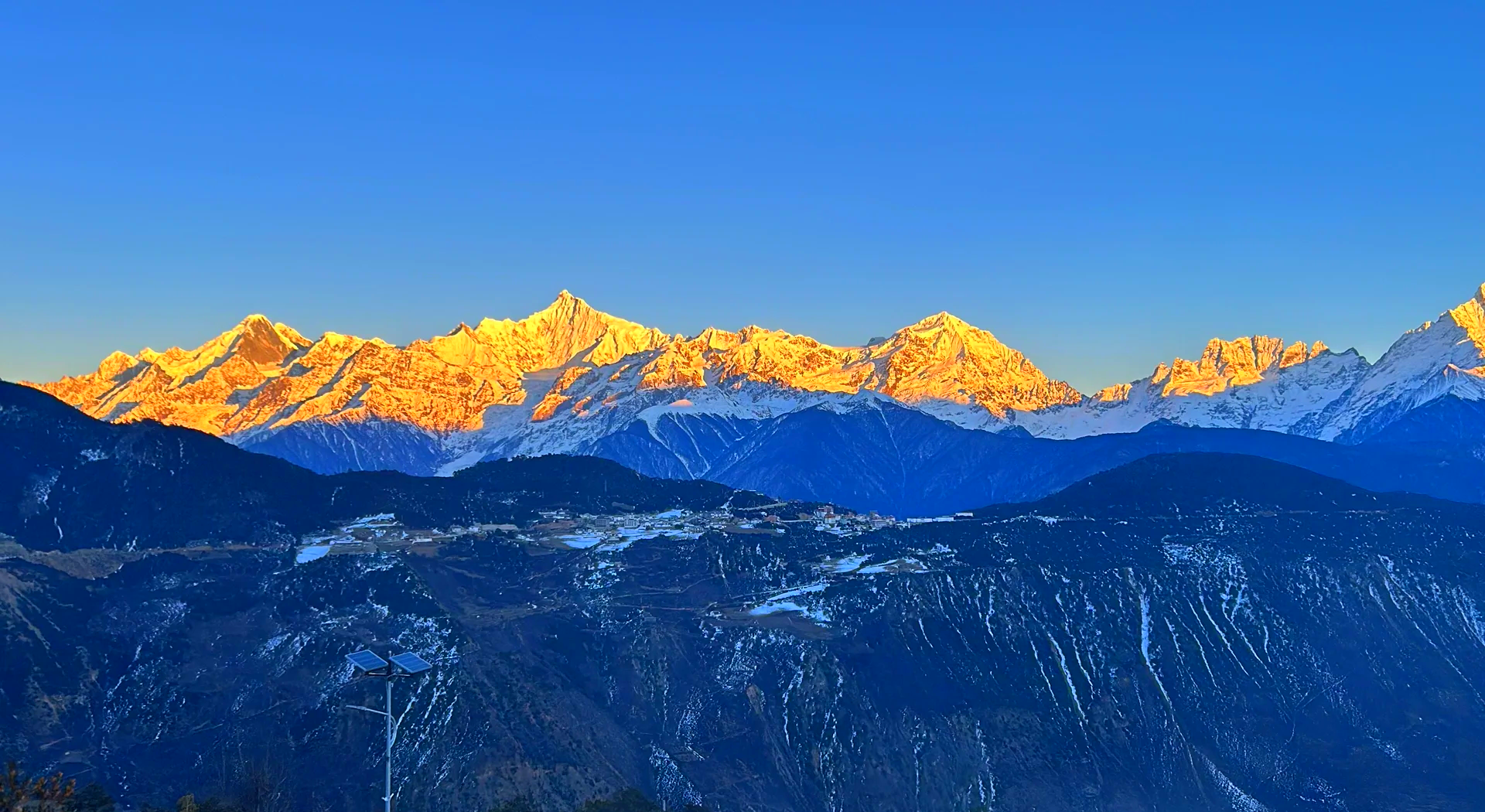
Imagine a landscape where snow-covered mountains rise into an impossibly blue sky.
Glacial lakes shimmer like jewels.
Ancient forests blanket remote valleys.
Prayer flags flutter in the wind.
The air is thin, the silence profound, and the scenery so breathtaking that many visitors struggle to describe it.
For some, it feels like stepping into a dream.
For others, it feels like discovering another planet.
This is Daocheng Yading.
Hidden high in the mountains of southwestern China, Daocheng Yading has earned many titles.
It has been called:
- The Last Shangri-La
- The Last Pure Land on Earth
- China’s Most Beautiful Landscape
- The Soul of the Tibetan Plateau
While such descriptions may sound exaggerated, visitors often find themselves agreeing with them.
There are beautiful places around the world.
But very few possess the spiritual atmosphere, natural grandeur, and sense of isolation that define Daocheng Yading.

The Search for Shangri-La
To understand Daocheng Yading’s global reputation, we must begin with a novel.
In 1933, British writer James Hilton published Lost Horizon.
The book introduced readers to a hidden paradise called Shangri-La.
Located somewhere among the mountains of Asia, Shangri-La was imagined as a place of harmony, peace, wisdom, and timeless beauty.
For decades, travelers debated whether such a place existed.
Many regions claimed inspiration for Hilton’s fictional paradise.
Yet among Chinese travelers and photographers, Daocheng Yading has emerged as perhaps the strongest candidate.
Standing among its mountains and lakes, it becomes easy to understand why.
The landscape feels almost mythical.

Where Is Daocheng Yading?
Daocheng Yading is located in the Garzê Tibetan Autonomous Prefecture of Sichuan Province.
The region lies on the eastern edge of the Tibetan Plateau.
This is a land of extreme elevations.
Many areas exceed 4,000 meters (13,000 feet) above sea level.
The journey itself is part of the experience.
Travelers leave behind crowded cities and enter a world dominated by:
- Snow mountains
- High grasslands
- Deep valleys
- Alpine forests
- Traditional Tibetan villages
Every kilometer brings a greater sense of remoteness.
The modern world begins to feel far away.

The Sacred Mountains of Yading
At the heart of the reserve stand three sacred mountains.
For local Tibetans, these peaks are not merely geological formations.
They are holy places.
They are believed to represent spiritual guardians.
The three mountains are:
Chenrezig
Often associated with compassion.
Its elegant pyramid shape has made it one of China’s most photographed peaks.
Jampayang
Traditionally connected with wisdom.
Its rugged ridges dominate the surrounding skyline.
Chanadorje
Associated with strength and protection.
Its dramatic appearance leaves a lasting impression on visitors.
Together, these mountains form the spiritual center of the region.
For pilgrims, they are objects of devotion.
For travelers, they are objects of wonder.

A Landscape Sculpted by Ice and Time
The scenery of Daocheng Yading was shaped over millions of years.
Glaciers carved valleys through the mountains.
Rivers transported sediment.
Weather gradually sculpted the peaks.
The result is a landscape of extraordinary diversity.
Within a relatively small area, visitors encounter:
- Snowfields
- Forests
- Meadows
- Wetlands
- Lakes
- Rocky cliffs
Each environment contributes to the reserve’s unique character.
The transitions between ecosystems can be dramatic.
A short hike may pass through several entirely different worlds.
Milk Lake: The Jewel of Yading
Among all of Yading’s natural attractions, none is more famous than Milk Lake.
Known in Chinese as Niunai Hai, the lake sits at an altitude of approximately 4,600 meters.
Its waters display an astonishing blue color.
Surrounded by mountains, the lake resembles a precious gemstone embedded within the landscape.
The name comes from the milky appearance sometimes created by glacial minerals suspended in the water.
Reaching the lake requires effort.
The altitude makes hiking challenging.
Yet many visitors consider the journey worthwhile.
The first glimpse of Milk Lake often becomes the defining memory of their trip.

Five Color Lake: Nature’s Masterpiece
Nearby lies another remarkable body of water.
Five Color Lake is smaller than Milk Lake but equally captivating.
Under changing light conditions, its surface appears to display multiple shades simultaneously.
Visitors may observe:
- Deep blue
- Emerald green
- Turquoise
- Golden reflections
- Silver highlights
Local Tibetan traditions regard the lake as sacred.
The atmosphere surrounding it is quiet and contemplative.
Many travelers spend long periods simply sitting beside the shore and absorbing the scenery.
Luorong Pasture: A Window Into the Plateau
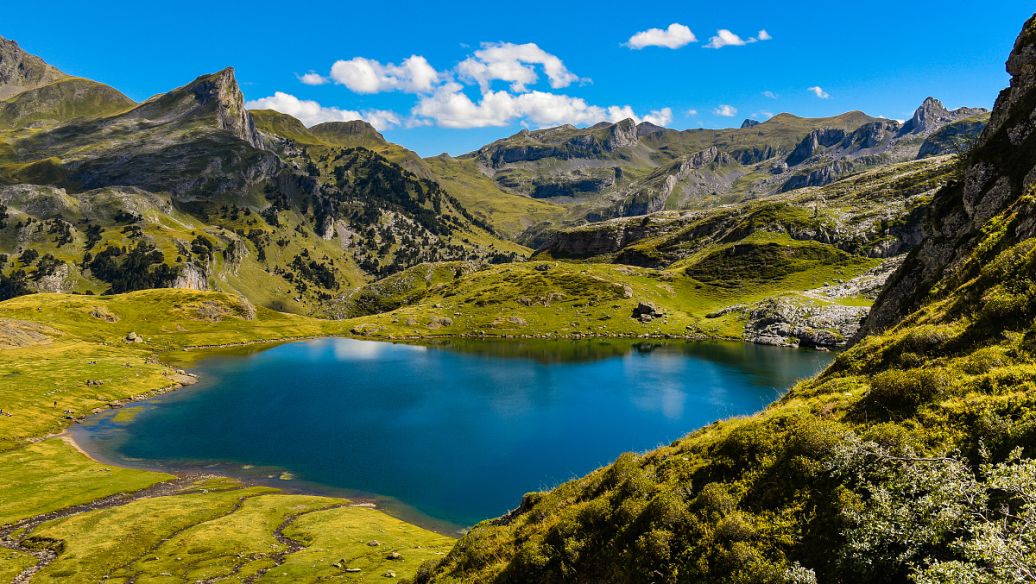
One of the most iconic locations within Yading is Luorong Pasture.
This broad alpine meadow lies beneath towering snow mountains.
During summer, wildflowers bloom across the grasslands.
Yaks graze peacefully.
Streams wind through the landscape.
Photographers love the area because it captures the essence of the Tibetan Plateau.
The combination of mountains, meadows, and open skies creates unforgettable images.
For many visitors, Luorong Pasture embodies the spirit of Shangri-La.

The Spiritual Dimension
Unlike many natural destinations, Daocheng Yading possesses a powerful spiritual atmosphere.
Religion remains deeply woven into daily life.
Visitors frequently encounter:
- Prayer flags
- Mani stones
- Pilgrims
- Monasteries
- Religious rituals
For Tibetan Buddhists, the mountains are sacred.
Some pilgrims complete long journeys to perform kora, the ritual act of walking around holy sites.
Observing these traditions provides valuable insight into a culture shaped by both nature and spirituality.
The landscape is not merely admired.
It is revered.
Why Photographers Are Obsessed With Yading
Daocheng Yading has become one of China’s premier photography destinations.
Several factors contribute to its popularity.
Extraordinary Light
The high altitude creates intense clarity and vibrant colors.
Dramatic Weather
Clouds move rapidly through the mountains.
Conditions change constantly.
Diverse Landscapes
Mountains, lakes, forests, and meadows offer endless compositions.
Seasonal Variety
Every season transforms the scenery.
The result is a location where photographers can return repeatedly and discover something new each time.
Wildlife of the High Plateau
Although scenery dominates most discussions, the reserve also supports diverse wildlife.
Species include:
- Yaks
- Marmots
- Blue sheep
- Birds of prey
- Various alpine mammals
The region’s relative isolation has helped preserve important habitats.
Nature enthusiasts often appreciate the opportunity to experience ecosystems that remain largely intact.
The Challenge of High Altitude
One aspect visitors should never underestimate is altitude.
Many attractions exceed 4,000 meters.
The thin air can affect even experienced travelers.
Common symptoms include:
- Fatigue
- Headaches
- Shortness of breath
Proper acclimatization is essential.
Yet many visitors feel that the physical challenge enhances the experience.
The effort required to reach places like Milk Lake makes the reward even greater.
Why Foreign Travelers Are Amazed
Many international visitors arrive with limited expectations.
Outside Asia, Daocheng Yading remains relatively unknown.
This often makes the experience more powerful.
Travelers discover:
- World-class scenery
- Rich Tibetan culture
- Extraordinary biodiversity
- Spiritual traditions
- Genuine remoteness
The region challenges common assumptions about China.
It reveals a landscape unlike anything found in the country’s major cities.
For many foreigners, Yading becomes one of the biggest surprises of their journey.
Best Time to Visit
Spring (April–May)
Fresh vegetation and fewer crowds.
Summer (June–August)
Lush landscapes and vibrant meadows.
Autumn (September–October)
Often considered the most spectacular season.
Golden forests contrast beautifully with snow-covered peaks.
Winter (November–March)
Harsh but magical.
The scenery becomes stark, quiet, and unforgettable.
Why Daocheng Yading Matters
In a rapidly changing world, truly wild places are becoming increasingly rare.
Daocheng Yading reminds us that some landscapes still possess the power to inspire awe.
It offers more than scenic beauty.
It offers perspective.
Standing beneath sacred mountains, surrounded by vast wilderness, visitors often feel a sense of humility.
The scale of nature becomes impossible to ignore.
The distractions of modern life seem distant.
This emotional impact explains why so many people describe Yading as transformative.
Conclusion: The Closest Place to Shangri-La
For nearly a century, people have searched for Shangri-La.
Whether the legendary paradise ever existed is ultimately beside the point.
What matters is the idea it represents.
A place of beauty.
A place of peace.
A place where humanity and nature remain connected.
Daocheng Yading comes remarkably close to that vision.
Its mountains inspire reverence.
Its lakes astonish the eye.
Its culture enriches the spirit.
Its wilderness awakens curiosity.
For travelers seeking one of the most extraordinary destinations in China, few places can compare.
And perhaps that is why so many visitors leave believing the same thing.
If Shangri-La exists anywhere on Earth, it might just be here.