
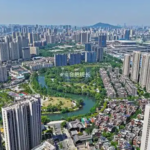


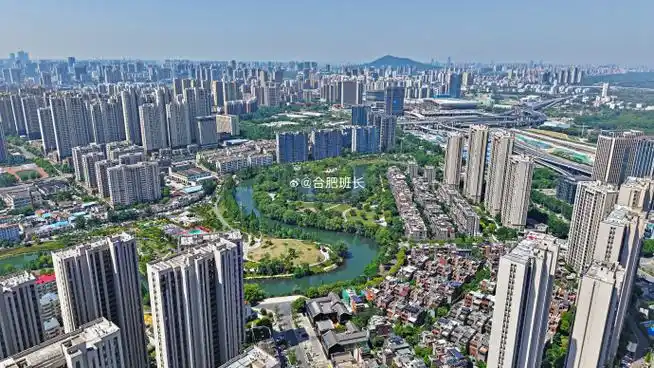
If you’ve ever flown into a major Chinese city, one thing is immediately striking: endless rows of high-rise apartment buildings stretching toward the horizon.
Whether you’re in Beijing, Shanghai, Shenzhen, Chengdu, or Wuhan, tall residential towers dominate the skyline. For many visitors from Europe or North America, where detached houses and low-rise neighborhoods are more common, the obvious question is:
Why are apartment buildings in China so tall?
The answer involves population, urbanization, land policy, and the extraordinary speed of China’s development over the past four decades.
China Has a Huge Urban Population
China is home to more than 1.4 billion people, and hundreds of millions now live in cities.
Since the economic reforms began in the late 1970s, China has experienced one of the fastest urbanization processes in human history. Millions of people moved from rural villages to cities in search of education and better jobs.
Housing so many people requires using land efficiently.
Instead of spreading cities outward with detached homes, Chinese cities largely grew upward through apartment towers.
Land Is Limited in Major Cities
Although China is geographically vast, not all land is suitable for urban development.
Large areas consist of mountains, deserts, forests, farmland, or protected ecological zones. Meanwhile, cities must preserve agricultural land to help ensure food security.
As a result, urban land is both valuable and carefully planned.
Building 30-story residential towers allows far more families to live on the same plot of land than rows of single-family homes.
Public Transportation Works Better with High Density
Chinese cities are designed around density.
High-rise neighborhoods make it easier to support:
- Metro systems
- Public buses
- Schools
- Hospitals
- Shopping malls
- Restaurants
- Parks
A single residential complex may house tens of thousands of residents within walking distance of a subway station.
This concentration of people helps public services operate more efficiently than they often could in sprawling suburbs.
Most New Housing Was Built Recently
One reason Chinese cities look so modern is that much of the housing is relatively new.
Unlike many European cities with centuries-old residential neighborhoods, a large share of China’s urban housing has been constructed since the 1990s.
Entire districts have been planned and built within just a few years, often using similar high-rise designs.
This gives many Chinese cities a uniform skyline of residential towers.
Buying an Apartment Is the Norm
In many Western countries, owning a detached house is often seen as a long-term goal.
In China, purchasing an apartment is far more common.
For many families, an apartment is not only a place to live but also:
- A major financial asset
- A long-term investment
- An important milestone before marriage
- Something that can be passed on to future generations
As a result, apartment living is considered completely normal rather than a compromise.
Modern Apartment Complexes Are Like Small Towns
Chinese apartment compounds are often much more than clusters of residential buildings.
Many include:
- Landscaped gardens
- Children’s playgrounds
- Convenience stores
- Fitness areas
- Basketball courts
- Kindergartens
- Underground parking
Some larger developments even have supermarkets, clinics, cafés, and community centers, allowing residents to meet many daily needs without leaving the neighborhood.
Are There Detached Houses in China?
Yes—but they’re relatively uncommon in cities.
Detached homes and villas are usually found:
- In rural villages
- On the outskirts of major cities
- In luxury residential communities
Because urban land is expensive, detached houses are generally much less common than apartment buildings in China’s largest cities.
Is This Changing?
Not dramatically.
While some newer developments feature lower-density housing, China’s major cities are expected to remain dominated by apartment towers for the foreseeable future.
At the same time, architects are increasingly focusing on improving quality of life through greener neighborhoods, larger communal spaces, better energy efficiency, and more family-friendly designs.
Final Thoughts
The towering apartment buildings that define China’s cities are not simply an architectural choice—they are the result of rapid urbanization, efficient land use, and the need to house hundreds of millions of people.
For visitors, these skylines may seem overwhelming at first. But for most Chinese residents, high-rise living is simply everyday life.
Looking up at those rows of apartment towers offers a glimpse into one of the world’s largest urban transformations—one that continues to shape how modern China lives, works, and grows.