

On the northwestern border of ancient China, there is an art sanctuary that attracts worldwide attention – the Mogao Caves in Dunhuang. And the Dunhuang Murals, as the core treasure of the Mogao Caves, are like a historical masterpiece spanning thousands of years. They vividly depict the social features, religious beliefs, cultural exchanges, and artistic achievements of different dynasties, carrying a profound historical and cultural heritage.
Historical Origins
The history of Dunhuang Murals can be traced back to the Sixteen Kingdoms period. They were continuously painted for over a thousand years through dynasties such as the Sixteen Kingdoms, Northern Dynasties, Sui, Tang, Five Dynasties, Western Xia, and Yuan. At that time, Dunhuang was located at a crucial point on the Silk Road and was an important hub for trade and cultural exchanges between the East and the West. Caravans, monks, artists, etc. from the Central Plains, the Western Regions, and even more distant areas gathered here, bringing diverse cultural elements. This cultural integration provided rich materials and inspiration for the creation of Dunhuang Murals, giving them a unique and inclusive style.

Religious and Cultural Connotations
Most of the Dunhuang Murals are themed around Buddhism and are an artistic display of Buddhist doctrines, stories, and beliefs. A large number of Buddha statues, Bodhisattva statues, and Buddhist story paintings are depicted in the murals. For example, the “Story Painting of the Nine – colored Deer’s Previous Life” tells the story of the kind nine – colored deer saving a person’s life but being betrayed, promoting values such as justice, kindness, and gratitude. The “Transformation of the Western Pure Land” depicts the wonderful scene of the Western Paradise, making believers yearn for it and inspiring them to pursue liberation through practice. These murals are not only masterpieces of religious art but also important media for the spread of Buddhism, playing a positive role in the development and spread of Buddhism in China.

Portrayal of Social Life
In addition to religious content, the Dunhuang Murals are like a mirror, truly reflecting the various aspects of social life at that time. The murals show the life scenes of people from all walks of life, from the feasts and outings of princes and nobles to the farming, weaving, and hunting of ordinary people. Through these images, we can see the gorgeous costumes of women in the Tang Dynasty, which are bright in color and diverse in style, reflecting the fashion trends and the high – level textile craftsmanship of that time. We can also see the ancient architectural styles, such as pavilions, towers, temples, and pagodas, providing precious visual materials for the study of ancient architecture. These detailed images outline a vivid historical picture for future generations, allowing us to glimpse the real appearance of ancient society.
Artistic Achievements
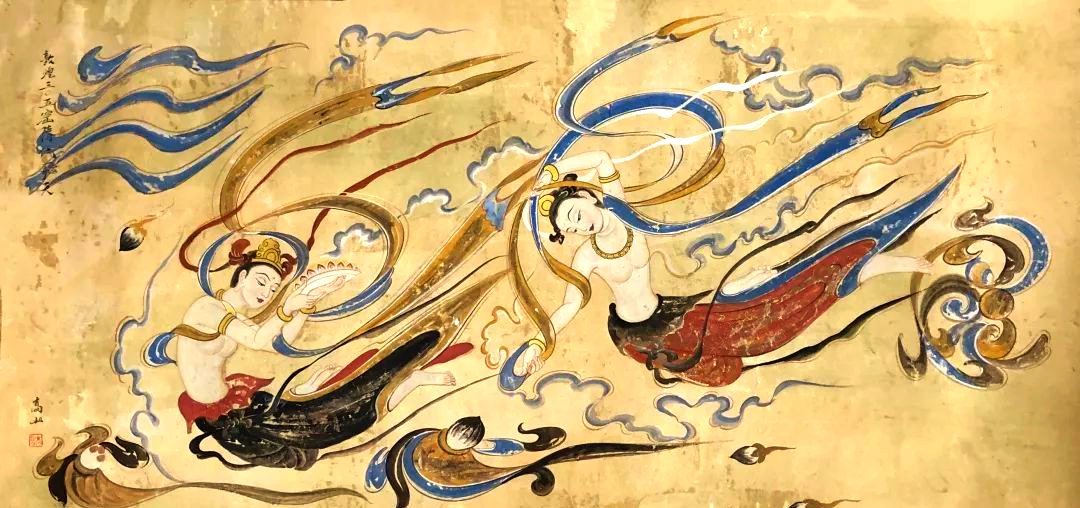
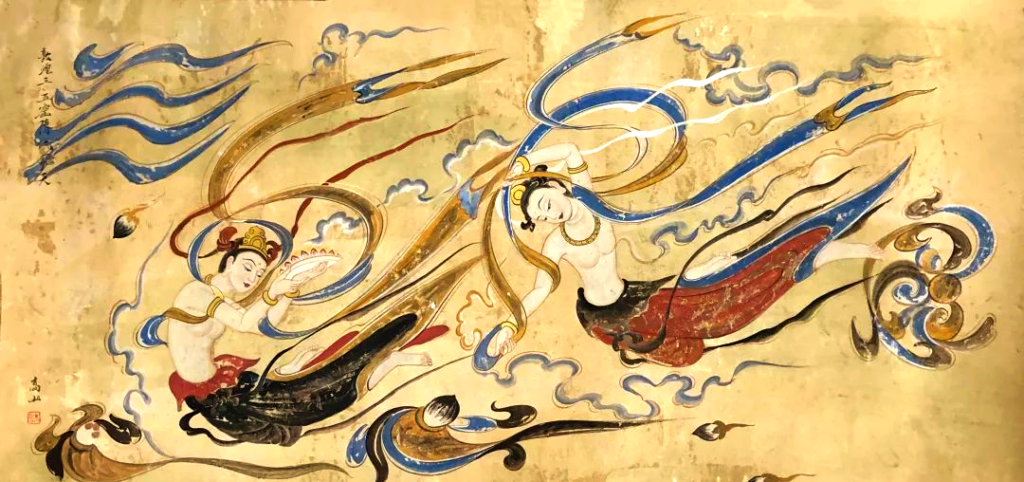
The Dunhuang Murals have achieved extremely high artistic achievements. Their painting techniques integrate the characteristics of traditional Central Plains painting and Western Regions painting, with both delicate line drawing and rich color rendering. The painters used various line techniques such as iron – wire lines and orchid – leaf lines to vividly express the figures’ shapes, the texture of their costumes, and the charm of their movements. In terms of color, mineral pigments such as azurite, malachite green, and cinnabar were boldly used, and they still remain bright in color after thousands of years. The figures in the murals are vivid and have different expressions. Whether it is the solemn and compassionate Buddha statues or the lively and agile flying apsaras, they all demonstrate the painters’ superb skills and profound understanding of art. Especially the image of the flying apsaras, with their graceful figures, floating ribbons, and free – flying postures in the sky, seem to bring people into a fantasy fairyland, becoming a typical representative of the artistic charm of Dunhuang Murals.
The Dunhuang Murals, this millennium – old art treasure trove, attract people from all over the world to explore with their rich historical and cultural connotations and outstanding artistic achievements. It is not only an outstanding representative of ancient Chinese art but also a common cultural heritage of all mankind, providing an endless treasure for us to understand ancient civilizations, cultural exchanges, and artistic development.