



Introduction: The Most Mysterious Forest in China
Every country has its legends.
In North America, there is Bigfoot.
In the Himalayas, there is the Yeti.
In Scotland, there is the Loch Ness Monster.
And in China, there is the Yeren.
For decades, stories have circulated about a mysterious human-like creature roaming the dense forests of central China.
Witnesses describe a large, hairy figure walking upright through remote mountain valleys.
Some claim to have seen footprints.
Others report strange sounds echoing through the wilderness.
Scientific expeditions have searched for evidence.
Photographs have been analyzed.
Footprints have been measured.
Yet no definitive answer has ever emerged.
The legend is centered in a place called Shennongjia.
Located in western Hubei Province, Shennongjia is one of the most remote and biologically diverse regions in China.
It is a land of towering mountains, ancient forests, hidden valleys, rare wildlife, and enduring mysteries.
For many travelers, it represents a side of China that few outsiders ever imagine exists.

Where Is Shennongjia?
Shennongjia lies deep within the mountains of central China.
Unlike the crowded tourist destinations that attract millions of visitors each year, this region remains relatively isolated.
The landscape is dominated by:
- Dense forests
- Steep mountains
- Deep ravines
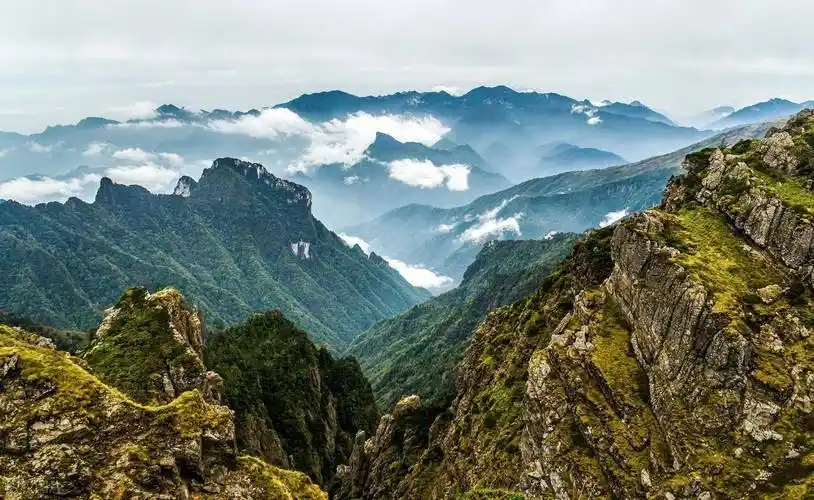
- Mist-covered peaks
- Remote wilderness
Because of its rugged terrain, many areas remained difficult to access for centuries.
This isolation helped preserve both the natural environment and the legends associated with it.
Even today, parts of Shennongjia feel remarkably untouched.
Visitors often describe the region as one of the last true wilderness areas in China.

The Meaning Behind the Name
The name Shennongjia translates roughly as “The Ladder of Shennong.”
Shennong is a legendary figure in Chinese mythology.
Often referred to as the Divine Farmer, he is credited with teaching ancient people how to cultivate crops and use medicinal plants.
According to legend, Shennong traveled through these mountains searching for herbs.
To reach difficult areas, he supposedly constructed wooden ladders along the cliffs.
Whether the story is historical or mythical, it reflects the deep cultural significance of the region.
For thousands of years, Shennongjia has occupied a special place in the Chinese imagination.

The Legend of the Yeren
No mystery associated with China is more closely linked to Shennongjia than the Yeren.
The word Yeren means “wild man.”
Descriptions vary, but witnesses commonly report:
- Height exceeding two meters
- Thick reddish or brown hair
- Human-like facial features
- Upright walking posture
- Strong body odor
Some accounts describe a creature resembling a giant ape.
Others suggest something closer to an ancient human ancestor.
Stories have circulated for generations among local communities.
Long before modern cryptozoology became popular, residents of the region told tales of mysterious creatures inhabiting the mountains.

The Wave of Sightings
Interest in the Yeren exploded during the twentieth century.
Throughout the 1950s, 1960s, and 1970s, reports emerged from various parts of Shennongjia.
Witnesses included:
- Farmers
- Hunters
- Forestry workers
- Soldiers
- Local officials
Several sightings attracted national attention.
Some observers insisted they had seen large hairy creatures crossing roads or disappearing into forests.
Others reported unusual footprints.
The consistency of certain descriptions intrigued researchers.
Although eyewitness testimony alone cannot prove the creature’s existence, the volume of reports helped transform the Yeren into one of China’s most famous mysteries.
China’s Bigfoot Expeditions
In the 1970s and 1980s, the Chinese government sponsored scientific investigations into the phenomenon.
Research teams entered the forests seeking evidence.
They collected:
- Hair samples
- Footprint casts
- Eyewitness accounts
- Environmental data
Some findings generated excitement.
Several footprints appeared unusually large.
Certain hair samples could not immediately be identified.
Yet none of the evidence provided conclusive proof of an unknown primate.
Despite extensive efforts, the mystery remained unresolved.
For believers, the lack of evidence suggested the creature was elusive.
For skeptics, it suggested the creature did not exist at all.
Possible Explanations
Over the years, researchers have proposed several theories.
Misidentified Animals
Large animals viewed briefly in dense forests can appear surprisingly human-like.
Possible candidates include:
- Bears
- Monkeys
- Other wildlife
Folklore and Oral Tradition
Stories often evolve over generations.
Legends can become increasingly detailed as they are retold.
Unknown Species
Some enthusiasts argue that a previously undiscovered primate could survive in remote mountain habitats.
Ancient Human Relatives
A more speculative theory suggests surviving populations of an ancient human lineage.
However, no credible evidence currently supports this idea.
The truth remains uncertain.
Why the Mystery Persists
One reason the Yeren legend continues to fascinate people is the environment itself.
Shennongjia feels mysterious.
The forests are vast.
Mist frequently blankets the mountains.
Visibility can change within minutes.
Strange sounds echo through the valleys.
Ancient trees create an atmosphere unlike that of modern urban life.
In such a setting, the imagination naturally becomes active.
Whether or not the Yeren exists, the landscape itself encourages wonder.
A UNESCO World Heritage Site
While the Yeren attracts headlines, Shennongjia’s true significance extends far beyond folklore.
The region is internationally recognized for its ecological importance.
In 2016, the area received UNESCO World Heritage status.
The designation acknowledged its exceptional biodiversity and unique ecosystems.
Shennongjia protects one of the largest remaining forest systems in central China.
For conservationists, it is a national treasure.
The Kingdom of Rare Wildlife
The forests of Shennongjia support an extraordinary range of species.
Scientists have documented thousands of plants and animals.
Many are rare or endangered.
The region functions as an ecological refuge where species have survived for millennia.
Its varied elevations create diverse habitats ranging from subtropical forests to alpine environments.
As a result, biodiversity flourishes.
For wildlife enthusiasts, Shennongjia is one of China’s most important destinations.
The Golden Snub-Nosed Monkey
Perhaps the most famous resident of Shennongjia is the golden snub-nosed monkey.
These remarkable primates are among the rarest monkeys in the world.
They are instantly recognizable because of:
- Bright golden fur
- Blue facial skin
- Distinctive appearance
Living in mountainous forests, they have adapted to harsh winter conditions that few primates can tolerate.
For many visitors, observing these animals is a highlight of any trip to Shennongjia.
Their survival represents a major conservation success.
The Ancient Forests
Some parts of Shennongjia contain forests that have remained relatively undisturbed for centuries.
Walking through these woodlands feels like entering another era.
Towering trees create dense canopies.
Moss covers rocks and fallen logs.
Streams flow through secluded valleys.
The environment offers a glimpse of what much of China may have looked like before large-scale development.
Such ecosystems have become increasingly rare around the world.
Their preservation is invaluable.
The Sea of Clouds
One of Shennongjia’s most spectacular natural phenomena occurs at higher elevations.
After rain or during certain weather conditions, clouds fill the valleys below.
Mountain peaks emerge above the mist like islands in a white ocean.
Locally known as the “Sea of Clouds,” this sight attracts photographers from across China.
The experience feels almost surreal.
Many visitors describe it as one of the most beautiful landscapes they have ever seen.
Why Adventure Travelers Love Shennongjia
Unlike highly developed tourist destinations, Shennongjia retains a sense of exploration.
Travelers come for:
- Hiking
- Wildlife observation
- Photography
- Nature immersion
- Mountain scenery
The region rewards patience and curiosity.
Every trail offers the possibility of discovery.
Whether searching for rare animals or simply enjoying the silence of the forest, visitors often leave with a renewed appreciation for the natural world.
The Cultural Importance of Wilderness
In Chinese culture, mountains and forests have long symbolized more than physical landscapes.
They represent:
- Wisdom
- Spiritual retreat
- Harmony with nature
- Escape from worldly concerns
For centuries, poets, scholars, and monks sought inspiration in remote environments.
Shennongjia embodies these traditions.
Its forests remind people that nature remains larger and older than human civilization.
This perspective contributes significantly to the region’s appeal.
Why Foreign Visitors Are Surprised by Shennongjia
Many international travelers associate China with:
- Megacities
- Ancient monuments
- Crowded tourist attractions
Few expect to find a vast wilderness filled with biodiversity and mystery.
Shennongjia challenges these assumptions.
It demonstrates the incredible environmental diversity of the country.
The region reveals a side of China that remains largely unknown outside Asia.
For curious travelers, that sense of discovery is part of the attraction.
Best Time to Visit
Spring (April–May)
Fresh vegetation and blooming wildflowers create beautiful scenery.
Summer (June–August)
Ideal for hiking and wildlife observation.
Autumn (September–November)
Often considered the most spectacular season.
Forests display brilliant colors across the mountains.
Winter (December–March)
Snow transforms the landscape into a quiet wilderness.
The atmosphere becomes especially mysterious.
Conclusion: Between Myth and Reality
The legend of the Yeren may never be fully resolved.
Perhaps the creature exists.
Perhaps it does not.
Yet focusing solely on the mystery risks overlooking something even more remarkable.
Shennongjia itself is extraordinary.
Its forests preserve ancient ecosystems.
Its mountains support rare wildlife.
Its landscapes inspire wonder.
The region demonstrates that mystery is not always about finding answers.
Sometimes it is about preserving the possibility of discovery.
In an age when satellites map every corner of the Earth and information travels instantly across continents, places like Shennongjia remain rare.
They remind us that nature still holds secrets.
And whether visitors arrive searching for Bigfoot, biodiversity, or breathtaking scenery, they leave having encountered something equally valuable:
A sense of wonder.
Because in the end, the greatest mystery of Shennongjia may not be the Yeren.
It may be how such a wild and beautiful place still exists in the modern world.