



Introduction: The Place Everyone Has Heard Of but Few Can Find
Some places exist on maps.
Others exist in dreams.
For nearly a century, Shangri-La has occupied a unique position somewhere between the two.
The name evokes images of:
- Snow-covered mountains
- Hidden monasteries
- Eternal peace
- Timeless wisdom
- A paradise untouched by the modern world
Today, hotels, resorts, and travel companies around the world use the name “Shangri-La.”
But few people know where the idea actually came from.
Even fewer know that there is a real place in China that claims to be the original Shangri-La.
So what is Shangri-La?
A myth?
A novel?
A marketing invention?
Or a real destination hidden among the mountains of southwestern China?
The answer is surprisingly complicated.
The Novel That Created a Legend
The story begins in 1933.
That year, British author:
James Hilton
published a novel called:
Lost Horizon
The book tells the story of travelers who discover a mysterious valley hidden deep within the Himalayas.
This secluded paradise is called:
Shangri-La
In the novel, Shangri-La is a place where:
- People live extraordinarily long lives
- War and conflict seem distant
- Nature remains untouched
- Spiritual wisdom flourishes
Readers around the world became fascinated.
The name quickly entered popular culture.
Over time, Shangri-La became synonymous with an earthly paradise.
But Was Shangri-La Based on a Real Place?
This question has fascinated historians and travelers for decades.
James Hilton never explicitly revealed a single location that inspired Shangri-La.
However, many researchers believe he drew inspiration from several places in the eastern Himalayas.
One region consistently appears in these discussions:
Northwestern Yunnan Province.
Specifically, the area now known as:
Shangri-La
formerly called Zhongdian.
China’s Decision to Find Shangri-La
In 2001, something remarkable happened.
Chinese authorities officially renamed Zhongdian County as Shangri-La.
The decision was not random.
The region matched many descriptions from Lost Horizon:
- High mountains
- Tibetan culture
- Remote valleys
- Ancient monasteries
- Extraordinary landscapes
Local leaders argued that if Shangri-La existed anywhere, it existed here.
Today, millions of visitors come to judge for themselves.
Where Exactly Is Shangri-La?
Shangri-La lies in northwestern:
Yunnan
near the borders of:
- Tibet
- Sichuan
The region forms part of a larger Tibetan cultural area historically known as Kham.
Unlike the crowded megacities often associated with modern China, this landscape feels entirely different.
Many first-time visitors are shocked by how little it resembles their expectations of China.
A Different Side of China
For many foreigners, China means:
- Skyscrapers
- High-speed trains
- Massive cities
Shangri-La offers another reality.
Here you find:
- Yak herders
- Prayer flags
- Buddhist monasteries
- Alpine meadows
The culture, architecture, and lifestyle often feel closer to Tibet than to Beijing or Shanghai.
This contrast is one reason the region fascinates travelers.
The Land of the Khampa Tibetans
Most residents belong to the:
Khampa Tibetan
culture.
Historically, the Khampa people developed a reputation for:
- Horsemanship
- Independence
- Strong regional identity
Their traditions differ in many ways from those found in central Tibet.
Understanding Shangri-La means understanding the diversity of the Tibetan world.
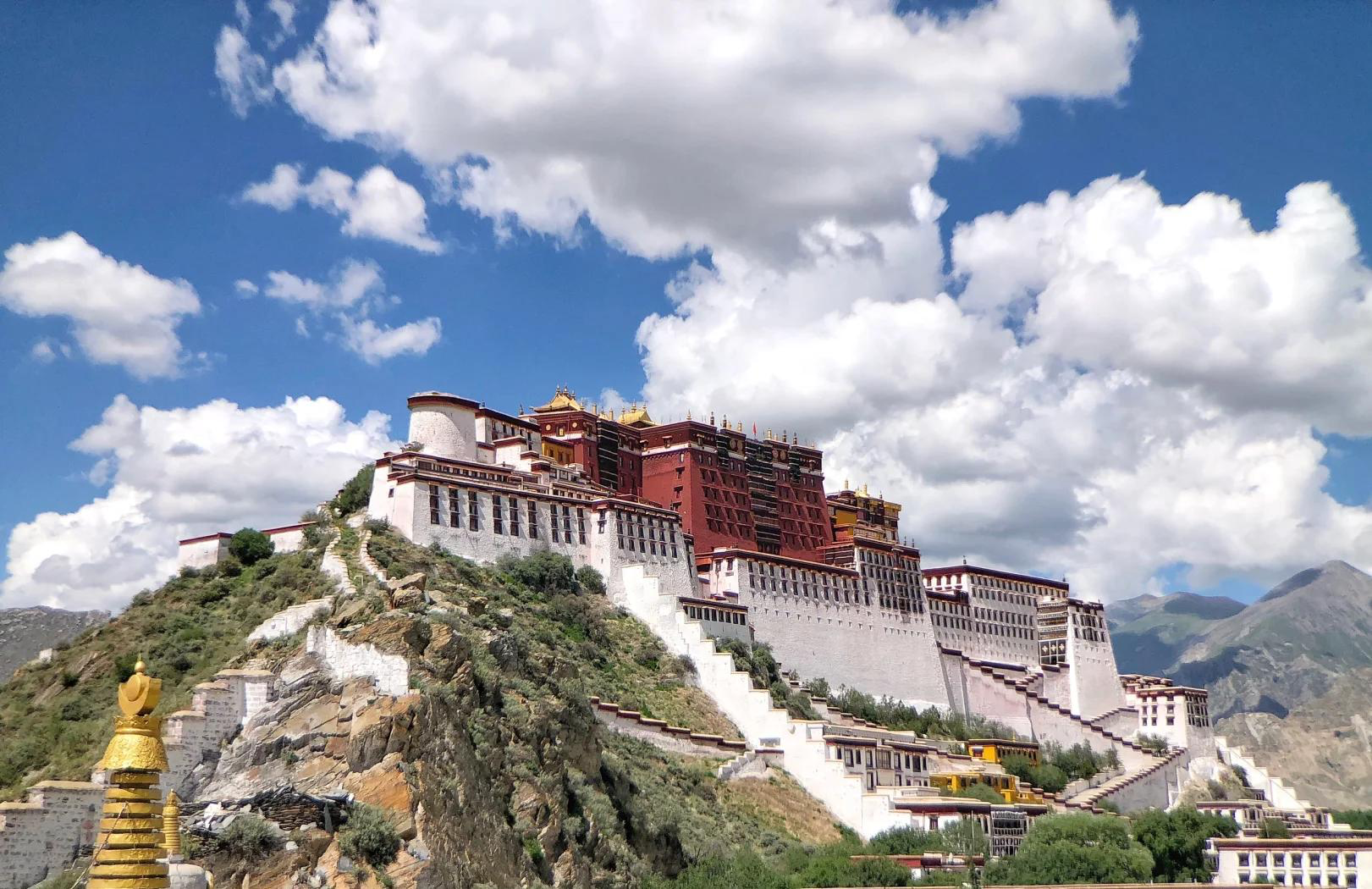
Songzanlin: The Little Potala Palace
The most famous landmark in Shangri-La is:
Ganden Sumtseling Monastery
often called:
The Little Potala Palace
because of its resemblance to the famous monastery complex in Lhasa.
Built in the seventeenth century, it remains one of the most important Tibetan Buddhist monasteries outside Tibet.
Its golden roofs dominate the surrounding landscape.
For many visitors, this is the spiritual heart of Shangri-La.
The Mountains That Touch the Sky
The region is surrounded by some of China’s most spectacular mountains.
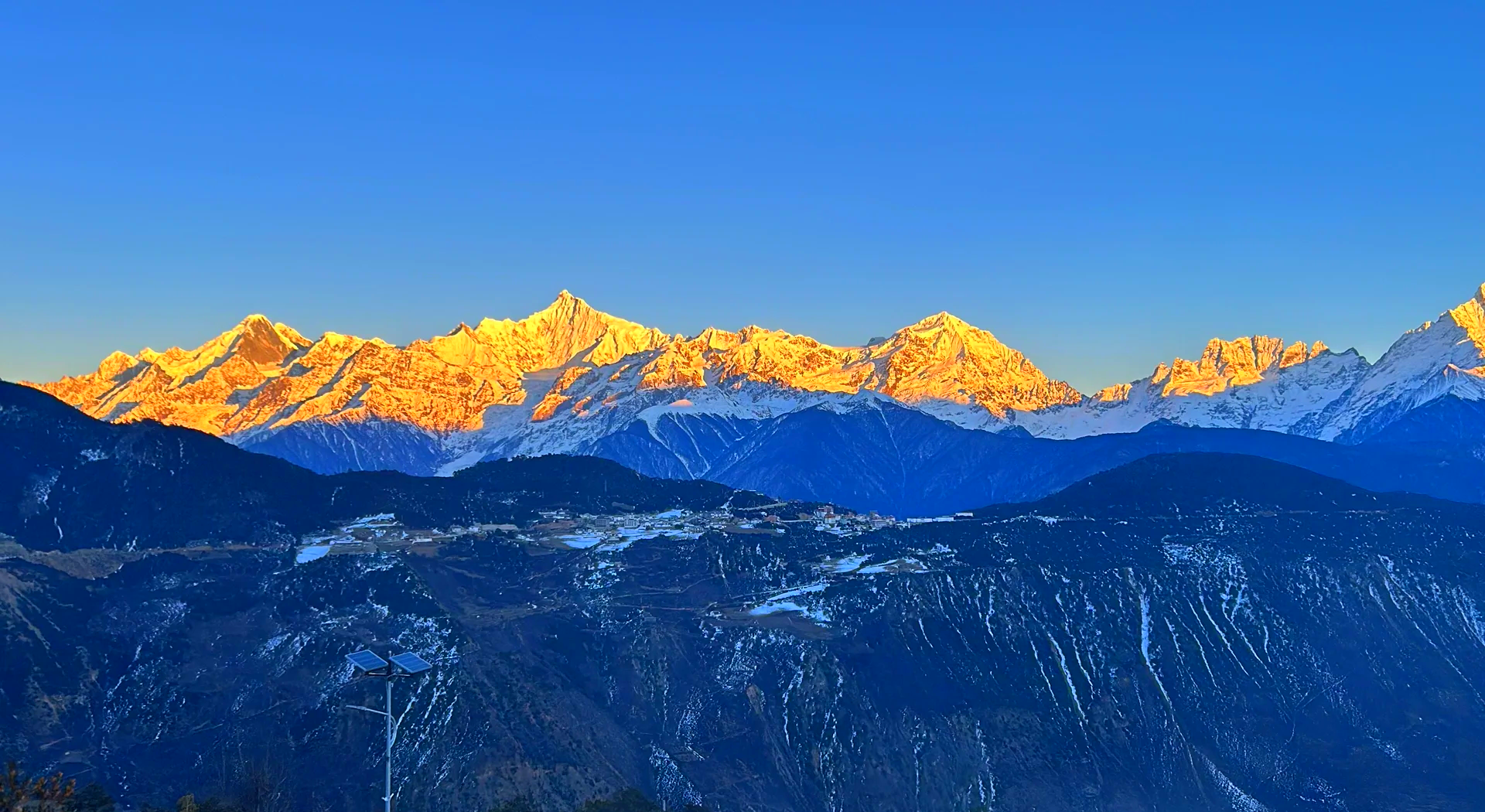
Nearby lies:
Meili Snow Mountain
one of the most sacred mountains in Tibetan Buddhism.
Unlike many famous peaks around the world, Meili remains relatively unknown internationally.
Yet many travelers consider it among the most beautiful mountains on Earth.
Why No One Is Allowed to Climb Meili
In 1991, a tragic climbing expedition resulted in the deaths of seventeen mountaineers.
Following public concern and religious objections, climbing was prohibited.
Today, the mountain remains unconquered.
For local Tibetans, this is entirely appropriate.
Sacred mountains are meant to be respected, not conquered.
The Ancient Tea Horse Road
Long before modern highways existed, Shangri-La sat along one of Asia’s most important trade routes:
The Tea Horse Road.
For centuries, traders transported:
- Tea from Yunnan
- Horses from Tibet
across some of the world’s most challenging terrain.
This exchange connected different civilizations and helped shape the region’s culture.
Why Shangri-La Feels Timeless
Part of the region’s appeal lies in its atmosphere.
Visitors often describe a feeling of stepping into another era.
Ancient traditions remain visible in everyday life.
Prayer wheels spin.
Monks chant.
Families maintain customs passed down through generations.
The pace of life feels slower.
This quality closely matches the image of Shangri-La that captivated readers decades ago.
Is Shangri-La Really a Paradise?
The answer depends on expectations.
Shangri-La is not a magical kingdom where people never age.
It is not a utopia free from modern challenges.
It is a real place inhabited by real people.
Yet many travelers discover something equally valuable.
A landscape of extraordinary beauty.
A rich spiritual tradition.
A culture that feels remarkably different from the world they know.
Why Foreign Travelers Love Shangri-La
Shangri-La combines several powerful attractions:
- Tibetan culture
- Stunning mountains
- Spiritual heritage
- Beautiful scenery
- A legendary name
Few destinations possess such a compelling combination.
Even people who know little about China often recognize the word “Shangri-La.”
The Global Legacy of a Fictional Place
Few fictional locations have influenced the real world as profoundly as Shangri-La.
The name appears on:
- Luxury hotels
- Travel agencies
- Restaurants
- Resorts
Yet its strongest connection remains here in northwestern Yunnan.
A place where myth and reality continue to overlap.
Conclusion: The Paradise That Became Real
Perhaps the most fascinating thing about Shangri-La is that it exists in two forms simultaneously.
There is the fictional paradise imagined by James Hilton.
And there is the real Shangri-La hidden among the mountains of Yunnan.
They are not identical.
Yet they share something important:
The promise of a world that feels distant from everyday life.
Whether you believe Shangri-La is a myth, a metaphor, or a real destination, one thing is certain.
Few places in China capture the imagination quite like this remote corner of the Himalayas.
And for travelers searching for beauty, mystery, and a different side of China, the journey to Shangri-La may be the closest thing to discovering paradise on Earth.