



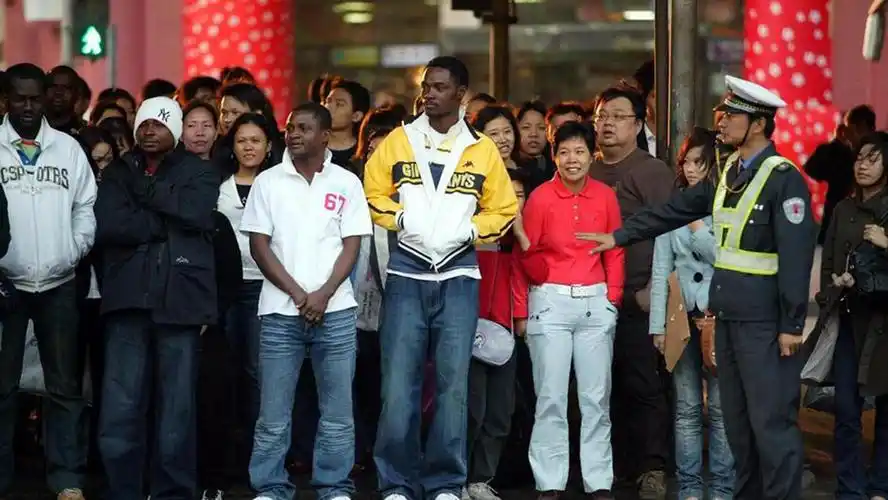
Walk through certain neighborhoods in Guangzhou and you may hear English, French, Arabic, Swahili, or Yoruba spoken alongside Cantonese and Mandarin.
Restaurants serve Nigerian dishes. Shops advertise in multiple African languages. Import-export companies help ship products from China to dozens of countries across Africa.
For many first-time visitors, it raises an unexpected question:
Why are there so many Africans living in Guangzhou?
The answer lies in globalization, trade, and the unique role Guangzhou plays in connecting China with Africa.
Guangzhou Became the Gateway to China’s Factories
For decades, Guangzhou has been one of China’s most important commercial cities.
Located near the manufacturing hubs of Guangdong Province, it provides easy access to factories producing everything from clothing and electronics to cosmetics and household goods.
As China’s manufacturing industry expanded in the 1990s and 2000s, entrepreneurs from around the world began arriving to source products.
African traders were among the most active.
Many discovered that buying directly from Chinese suppliers could significantly reduce costs and improve profits back home.
As a result, Guangzhou gradually became a major destination for African businesspeople.
The Rise of “Little Africa”
Over time, clusters of African-owned businesses appeared in several districts of Guangzhou.
Areas around Xiaobei and Sanyuanli became particularly well known.
Foreign journalists eventually nicknamed these neighborhoods:
“Little Africa”
or
“Chocolate City.”
Unlike traditional immigrant neighborhoods in Europe or North America, Guangzhou’s African community was largely driven by commerce rather than permanent settlement.
Many residents were traders who regularly traveled between China and African countries.
What Are Africans Doing in Guangzhou?
Most Africans in Guangzhou are involved in business.
Common activities include:
- Purchasing goods from Chinese factories
- Managing export companies
- Operating trading offices
- Quality inspection
- Logistics and shipping
- Cross-border e-commerce
A trader from Nigeria, for example, might purchase electronics in Guangdong and sell them in Lagos.
A merchant from Kenya may source beauty products for distribution across East Africa.
Others specialize in fashion, machinery, furniture, or consumer goods.
Why Guangzhou Instead of Beijing or Shanghai?
Many foreigners assume Beijing or Shanghai would attract the largest African communities.
In reality, Guangzhou offered several advantages.
Proximity to Manufacturing
Factories throughout Guangdong Province can often be reached within a few hours.
Lower Business Costs
Historically, operating expenses were lower than in Shanghai.
Established Trade Networks
Once African traders began succeeding in Guangzhou, they encouraged friends, relatives, and business partners to follow.
This created powerful business networks that reinforced the city’s importance.
How Large Is the African Community?
Estimating the size of Guangzhou’s African population has always been difficult.
Many people stay temporarily on business visas.
Others travel back and forth several times each year.
As a result, estimates have varied significantly over time.
At its peak during the 2000s and early 2010s, some media reports suggested that tens of thousands of Africans were living or conducting business in Guangzhou at any given moment.
The exact number remains uncertain, but the city’s influence on China-Africa trade is undeniable.
How Has China-Africa Trade Changed the Community?
China is now one of Africa’s largest trading partners.
The growth of trade has transformed Guangzhou into a meeting point between two continents.
Products sourced in Guangzhou can be found in markets across:
- Nigeria
- Kenya
- South Africa
- Ghana
- Ethiopia
- Tanzania
At the same time, African culture has become more visible in parts of the city.
Visitors can find:
- African restaurants
- Import businesses
- Churches
- Cultural organizations
This exchange has made Guangzhou one of the most internationally diverse cities in China.
What Challenges Have Africans Faced in Guangzhou?
Like immigrant communities anywhere in the world, Africans in Guangzhou have faced various challenges.
These have included:
- Visa regulations
- Language barriers
- Cultural differences
- Business uncertainties
Some traders stay only a few weeks, while others build long-term careers in China.
Experiences vary widely depending on nationality, business sector, and individual circumstances.
Is Guangzhou Still Africa’s Main Business Hub in China?
The city remains important, but the landscape has changed.
Today, African entrepreneurs also operate in:
- Shenzhen
- Yiwu
- Shanghai
- Hangzhou
The rise of e-commerce and digital sourcing platforms has reduced the need for some traders to live in China full-time.
Nevertheless, Guangzhou continues to hold a special place in China-Africa commercial relations.
Its business networks, logistics infrastructure, and long history of international trade remain difficult to replace.
So Why Are There So Many Africans in Guangzhou?
The answer is simple:
Trade.
Guangzhou became one of the easiest places in the world for African entrepreneurs to connect directly with Chinese manufacturers.
Over time, those business relationships evolved into communities, cultural exchanges, and lasting economic ties.
What began as commercial activity eventually created one of the most fascinating international communities in modern China.
A Bridge Between Two Continents
The story of Africans in Guangzhou is not primarily about immigration.
It is about globalization.
For decades, the city has served as a bridge linking Chinese factories with African markets.
Walking through Guangzhou today, visitors can witness a unique meeting of cultures that few people would have imagined a generation ago.
In many ways, “Little Africa” is one of the clearest examples of how trade can reshape cities, communities, and even entire regions of the world.