



Most travelers have heard of Antelope Canyon in Arizona, famous for its smooth sandstone walls and magical beams of light. But few realize that China has its own spectacular slot canyon—one that remained virtually unknown until just a few years ago.
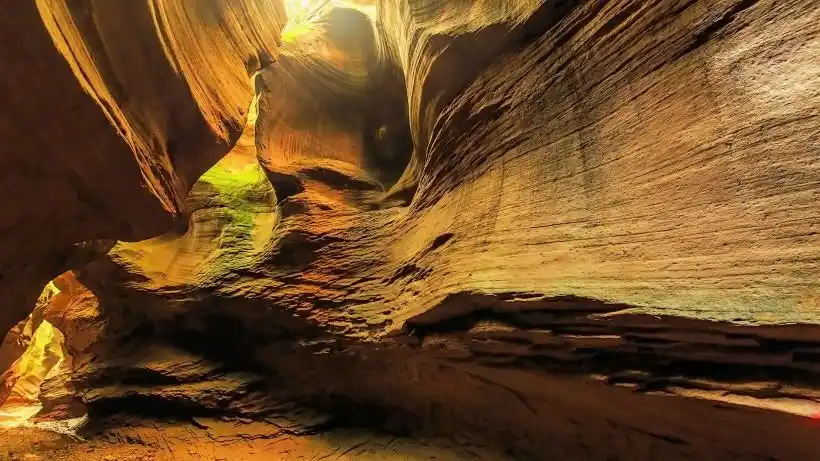
Hidden among the loess hills of northern Shaanxi Province, Yucha Grand Canyon (雨岔大峡谷) is one of China’s newest natural attractions. Its winding sandstone corridors, vibrant colors, and sculpted rock formations have earned it the nickname “China’s Antelope Canyon.”
Although the comparison is inevitable, Yucha has its own unique beauty. Combined with the rugged landscapes of the Loess Plateau, it offers visitors an unforgettable glimpse into one of China’s lesser-known natural wonders.
Where Is Yucha Grand Canyon?
Yucha Grand Canyon is located in Ganquan County, near Yan’an in Shaanxi Province.
The canyon lies roughly 300 kilometers (186 miles) north of Xi’an, making it possible to visit as part of a multi-day trip through northern Shaanxi.
For decades, the canyon was known mainly to local residents. Improved roads and social media exposure have transformed it into one of China’s fastest-growing hidden destinations.
Despite its increasing popularity among domestic tourists, relatively few international visitors have discovered it.
A Canyon Created by Water
Unlike limestone caves or mountain gorges, Yucha Grand Canyon was carved into soft sandstone by powerful seasonal floods over millions of years.
As rushing water squeezed through narrow cracks in the rock, it gradually polished the canyon walls into graceful curves and flowing shapes.
Today, visitors walk through passages that can be just a few meters wide while towering rock walls rise 20 to 30 meters (65 to 98 feet) overhead.
Every twist in the canyon reveals new textures, colors, and patterns created entirely by nature.
Why Is It Compared to Antelope Canyon?
The comparison is easy to understand.
Both canyons feature:
- Narrow slot passages
- Smooth sandstone walls
- Flowing rock formations
- Changing colors throughout the day
- Incredible photography opportunities
However, Yucha also has its own personality.
The sandstone here often displays warm shades of red, orange, and golden yellow that contrast beautifully with the blue sky above.
After rainfall, small pools of water create stunning reflections, while sunlight filtering through the narrow openings produces dramatic shadows across the canyon walls.
Rather than being a copy of Arizona’s famous attraction, Yucha is a remarkable destination in its own right.
A Photographer’s Dream
Photography is one of the main reasons people visit Yucha Grand Canyon.
Almost every turn offers another striking composition.
Popular subjects include:
- Curving sandstone walls
- Light streaming into narrow passages
- Reflections after rain
- Abstract rock textures
- Tiny figures walking through enormous stone corridors
Morning and late afternoon generally provide the softest light, while cloudy weather often produces richer colors on the sandstone.
Even smartphone photographers can capture impressive images here.
Several Canyons to Explore
The Yucha Scenic Area is not a single canyon but a collection of several separate slot canyons.
Each has its own distinctive appearance.
Some are extremely narrow, requiring visitors to walk sideways through tight passages.
Others open into wider chambers where sunlight illuminates the colorful rock walls.
Wooden walkways and staircases make many sections accessible, while guided routes help protect the fragile landscape.
Exploring multiple canyons gives visitors a variety of experiences within the same scenic area.
The Landscape Beyond the Canyon
The surrounding Loess Plateau is one of China’s most historically significant regions.
Its rolling hills, deep ravines, and distinctive yellow soil have shaped Chinese civilization for thousands of years.
Nearby attractions include traditional cave dwellings, rural villages, and historical sites associated with Yan’an, an important city in modern Chinese history.
Many travelers combine Yucha Grand Canyon with visits to the Hukou Waterfall on the Yellow River or other destinations across northern Shaanxi.
Best Time to Visit
Spring (April–May)
Comfortable temperatures and clear skies make spring an excellent season.
Summer (June–August)
Warm weather attracts the largest number of visitors, though occasional rain enhances the canyon’s colors.
Autumn (September–October)
Cool temperatures and crisp air create ideal conditions for photography.
Winter visits are possible but can be cold, and some sections may be affected by ice.
Travel Tips
To enjoy your visit:
- Wear shoes with good grip, as some surfaces can become slippery.
- Avoid touching the sandstone walls unnecessarily.
- Bring a wide-angle camera lens if possible.
- Visit early in the morning for fewer crowds.
- Check weather conditions before visiting, as heavy rain may temporarily close parts of the canyon for safety reasons.
Why Yucha Grand Canyon Deserves Global Recognition
China is often associated with giant mountains, ancient temples, and bustling megacities.
Yucha Grand Canyon reveals another side of the country—one shaped quietly by nature over countless centuries.
Its flowing sandstone walls rival some of the world’s most famous slot canyons, yet it remains far less crowded.
For photographers, hikers, and travelers searching for hidden destinations, Yucha offers an unforgettable experience that feels both adventurous and surprisingly peaceful.
As more people discover this remarkable landscape, it is likely to become one of China’s next internationally recognized natural attractions.
Frequently Asked Questions
Is Yucha Grand Canyon worth visiting?
Yes. It is one of China’s most unique geological attractions and offers spectacular scenery for photographers and nature lovers.
Is it really like Antelope Canyon?
The two landscapes share similar sandstone formations, but Yucha has its own distinctive colors, terrain, and atmosphere.
How long does it take to visit?
Most visitors spend between three and five hours exploring the scenic area.
Is Yucha suitable for families?
Yes. Most routes are relatively easy, although some narrow sections may require extra care.
When is the best time to visit?
Spring and autumn generally provide the most comfortable weather and excellent lighting for photography.