

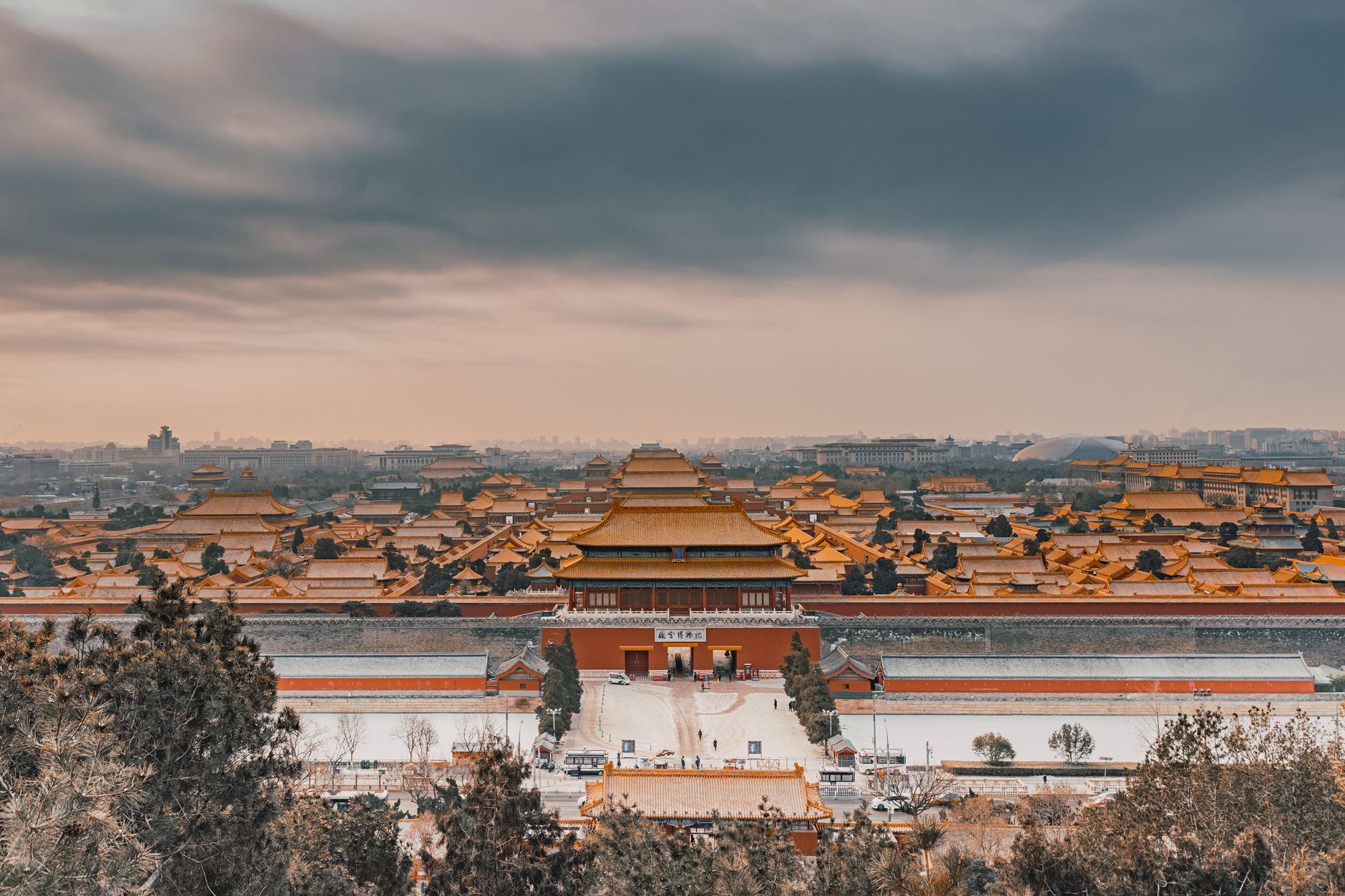
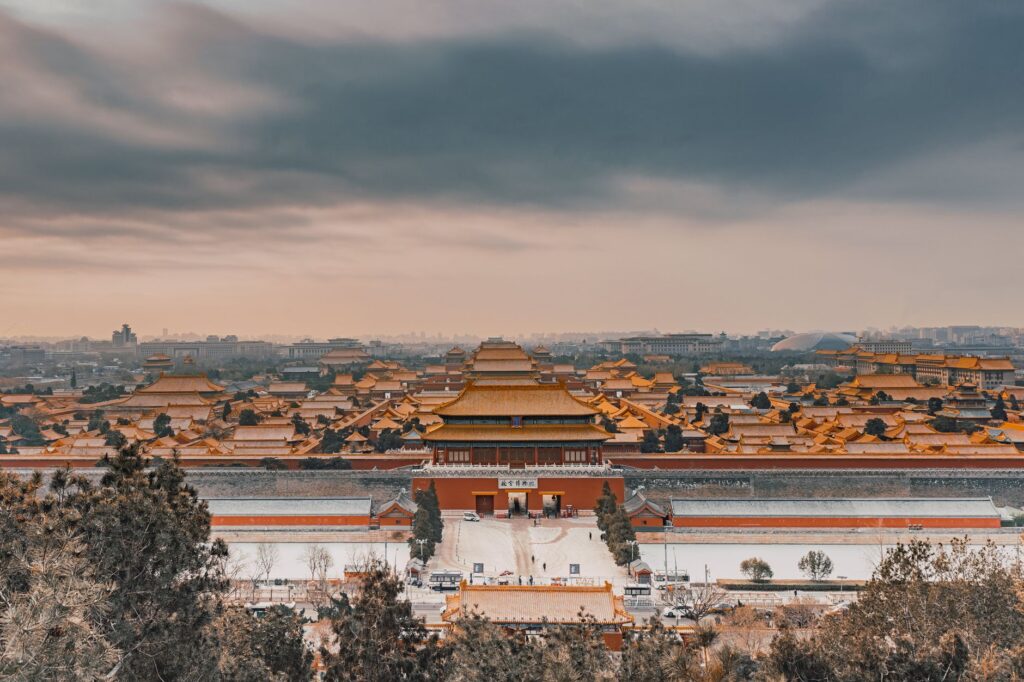
At the heart of Beijing stands one of the world’s most extraordinary palaces: the Forbidden City.
With nearly 1,000 buildings and more than 8,000 rooms, it served as the home of Chinese emperors for almost 500 years. Today, it attracts millions of visitors each year and remains one of China’s most recognizable landmarks.
But why did China build such a massive palace in the first place?
The answer reveals a fascinating story about power, politics, architecture, and the Chinese view of the universe.
What Is the Forbidden City?
The Forbidden City is a vast palace complex located in the center of Beijing.
It was the imperial residence of 24 emperors from the Ming and Qing dynasties between 1420 and 1912.
Today it is known as the Palace Museum, but for centuries it was the political center of China, where emperors ruled one of the world’s largest empires.
The name “Forbidden City” comes from the fact that ordinary people were not allowed to enter without permission from the emperor.
For most Chinese citizens, seeing the inside of the palace was impossible.
Why Was It Built?
The story begins with Emperor Yongle of the Ming Dynasty.
Originally, China’s capital was located in Nanjing. However, Yongle had gained power through a civil war and wanted to strengthen his control over northern China.
In 1406, he ordered the construction of a new imperial capital in Beijing.
The project required hundreds of thousands of workers, craftsmen, engineers, and laborers. Construction lasted for 14 years and was completed in 1420.
The Forbidden City became the center of the new capital and the symbolic heart of the Chinese empire.
A Palace Designed to Show Absolute Power
The Forbidden City was not simply a place to live.
It was designed to demonstrate the emperor’s authority.
In traditional Chinese political philosophy, the emperor was known as the “Son of Heaven.” He was believed to rule under a divine mandate and serve as the link between Heaven and Earth.
Every aspect of the palace reinforced this idea.
The complex covers approximately 720,000 square meters and is surrounded by high walls and a wide moat.
Visitors entering the palace would pass through enormous gates and courtyards before reaching the main halls where the emperor held ceremonies and received officials.
The architecture was meant to inspire awe and remind visitors of the emperor’s status.
Why Is Everything So Symmetrical?
One of the first things visitors notice is the extraordinary symmetry of the Forbidden City.
This was intentional.
Traditional Chinese architecture emphasized order, balance, and harmony.
The main buildings are arranged along a central north-south axis, reflecting ancient Chinese ideas about cosmic order.
According to traditional beliefs, the emperor occupied the center of the world, and the palace layout symbolized this position.
In many ways, the Forbidden City was designed as a miniature representation of the universe.
Did It Really Have 9,999 Rooms?
A famous legend claims that the Forbidden City contains 9,999 and a half rooms.
The story comes from the belief that Heaven’s palace had 10,000 rooms, and no earthly ruler could equal Heaven.
Therefore, the emperor’s palace supposedly had one room fewer.
Modern surveys suggest the complex contains around 8,700 rooms.
Although the legend is not literally true, it reflects how closely imperial power was connected to traditional Chinese beliefs.
Who Lived Inside?
Life inside the Forbidden City was highly restricted.
The emperor lived there with:
- Members of the imperial family
- Empresses and concubines
- Eunuchs
- Palace maids
- Guards
- Officials
At its peak, thousands of people lived and worked inside the palace walls.
Despite its luxury, life in the palace could be surprisingly isolated.
Many residents rarely left the complex for years.
Why Did the Forbidden City Survive So Long?
Many royal palaces around the world have been destroyed by wars, revolutions, or natural disasters.
The Forbidden City survived largely because successive dynasties continued to use and maintain it.
Even after the fall of the Qing Dynasty in 1912, much of the complex remained intact.
In 1925, it was transformed into the Palace Museum and opened to the public.
Today it is one of the best-preserved imperial palace complexes anywhere in the world.
Why Does the Forbidden City Matter Today?
The Forbidden City is more than a tourist attraction.
It provides a unique window into:
- Chinese imperial history
- Traditional architecture
- Ancient political systems
- Court life
- Chinese philosophy and symbolism
For nearly five centuries, decisions affecting hundreds of millions of people were made within these walls.
Understanding the Forbidden City helps explain how China was governed for much of its history.
Final Thoughts
China built the Forbidden City because emperors needed more than a residence—they needed a symbol of authority.
Designed as the political and spiritual center of the empire, the palace demonstrated the power of the emperor and reflected traditional Chinese ideas about order and harmony.
More than 600 years later, the Forbidden City remains one of the most remarkable architectural achievements in human history and a powerful reminder of China’s imperial past.