



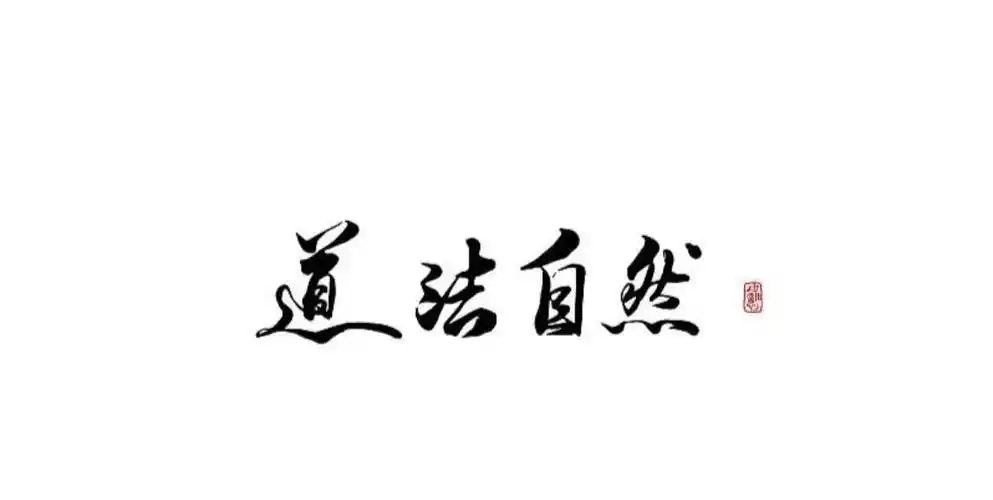
To many foreigners, Chinese writing looks like a collection of mysterious symbols.
Yet in China, writing is more than a way to communicate. For over two thousand years, it has also been considered one of the highest forms of artistic expression.
This art is known as Chinese calligraphy.
Unlike handwriting in many parts of the world, Chinese calligraphy is not judged solely by whether words are easy to read. The beauty of each stroke, the rhythm of the characters, and the personality of the writer are equally important.
In China, great calligraphers have often been admired as much as famous painters, poets, or scholars.
More Than Just Beautiful Handwriting
At first glance, Chinese calligraphy may appear to be elegant handwriting.
In reality, it is a highly respected art form with its own techniques, theories, and traditions.
A calligrapher uses a brush, ink, paper, and an inkstone—collectively known as the “Four Treasures of the Study.”
Every brushstroke requires careful control of pressure, speed, direction, and balance.
A single character can reveal whether the writer is calm, energetic, disciplined, or expressive.
For this reason, calligraphy has often been described as a visual representation of a person’s character.
Why Is Chinese Calligraphy So Important?
One reason is the nature of the Chinese writing system itself.
Unlike alphabetic languages, Chinese characters are composed of individual strokes arranged within a square structure.
This allows writers to express creativity while still preserving the meaning of the character.
Over centuries, scholars transformed writing into an artistic practice that combined language, philosophy, and aesthetics.
In traditional China, mastery of calligraphy was considered an essential skill for educated people.
Government officials, scholars, poets, and intellectuals were all expected to practice it.
Different Styles of Chinese Calligraphy
Chinese calligraphy evolved into several major styles over the centuries.
Some of the most important include:
Seal Script (Zhuanshu)
An ancient style characterized by elegant and symmetrical forms.
Clerical Script (Lishu)
A style widely used during the Han Dynasty, known for its broad and graceful strokes.
Regular Script (Kaishu)
The most common and readable style today.
Running Script (Xingshu)
A semi-cursive style that balances readability with artistic freedom.
Cursive Script (Caoshu)
A highly expressive style that can appear almost abstract to untrained eyes.
Each style reflects a different period of Chinese history and artistic philosophy.
The Influence of Philosophy
Chinese calligraphy is closely connected to traditional philosophies such as Confucianism, Daoism, and Buddhism.
Calligraphers often view the practice as a form of self-cultivation.
The goal is not simply to create beautiful characters but to develop concentration, patience, and inner balance.
Many practitioners compare calligraphy to meditation.
The movement of the brush is expected to flow naturally, reflecting harmony between the mind and the body.
Famous Chinese Calligraphers
Throughout history, certain masters achieved legendary status.
Among the most famous is Wang Xizhi of the Eastern Jin Dynasty, often referred to as the “Sage of Calligraphy.”
His work influenced generations of artists and remains widely studied today.
Other celebrated figures include Yan Zhenqing, Ouyang Xun, and Su Shi, whose calligraphy continues to be admired centuries after their deaths.
Is Calligraphy Still Popular Today?
Although computers and smartphones have reduced the need for handwritten communication, Chinese calligraphy remains highly respected.
Students continue to learn brush writing in schools.
Calligraphy exhibitions attract large audiences.
Many people practice calligraphy as a hobby, a cultural activity, or a way to relax.
Traditional works are also displayed in homes, temples, museums, and public buildings across China.
Why Do Chinese People See It as Art?
The answer lies in the brushstroke itself.
A painting creates images.
A poem creates meaning.
Chinese calligraphy does both at the same time.
Every stroke carries visual beauty while also conveying language and emotion.
For this reason, calligraphy occupies a unique position in Chinese culture—somewhere between writing, painting, and philosophy.
A Living Tradition
In an age dominated by digital screens, Chinese calligraphy remains a powerful reminder that writing can be more than communication.
It can be a form of art, a reflection of personality, and a connection to thousands of years of cultural tradition.
That is why Chinese calligraphy continues to be celebrated as one of the greatest artistic achievements in Chinese civilization.