

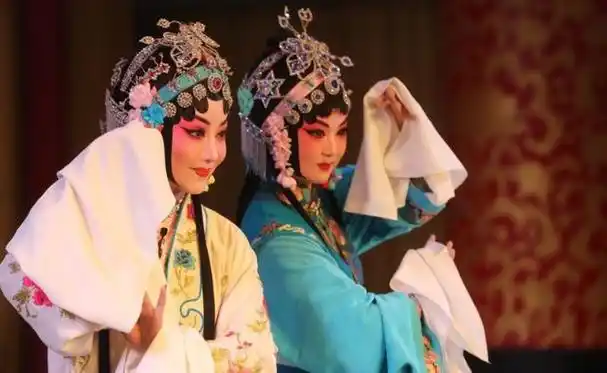
Bright costumes, painted faces, acrobatic movements, and high-pitched singing—few traditional art forms are as visually striking as Peking Opera.
Known in Chinese as Jingju (京剧), Peking Opera is often considered one of the most recognizable symbols of Chinese culture. For many foreigners, it is their first introduction to traditional Chinese performing arts.
Yet first-time viewers are often surprised by how different it feels from Western theater.
So why does Peking Opera look and sound so unusual to Western audiences?
The answer lies in its unique history, artistic philosophy, and performance style.
What Is Peking Opera?
Despite its name, Peking Opera is not actually China’s oldest form of theater.
It emerged in Beijing during the late 18th century when several regional opera troupes performed for the imperial court.
Over time, different performance traditions merged and evolved into what became known as Peking Opera.
By the 19th century, it had become the most influential theatrical form in China and remained enormously popular for generations.
Why Do Performers Wear Painted Faces?
One of the most famous features of Peking Opera is its colorful facial makeup.
Unlike Western theater, where actors usually aim for realistic appearances, Peking Opera uses symbolic makeup to reveal a character’s personality.
For example:
- Red often represents loyalty and bravery.
- Black symbolizes integrity and honesty.
- White is frequently associated with cunning or treachery.
- Gold and silver are used for gods, spirits, and supernatural beings.
An experienced audience can often understand a character’s role before they even speak.
Singing Is Only Part of the Performance
Western theater typically separates acting, singing, and dancing into different genres.
Peking Opera combines them all.
A skilled performer must master:
- Singing.
- Acting.
- Dance-like movement.
- Martial arts.
- Acrobatics.
This combination makes Peking Opera closer to a complete performance art than a conventional stage play.
Years of training are required before performers can appear on stage professionally.
Why Is the Stage So Simple?
Many Western productions rely on elaborate scenery and realistic stage design.
Peking Opera traditionally does not.
A table and a few chairs can represent a palace, a battlefield, or an entire city.
Instead of creating realism through sets, performers use movement and symbolism to stimulate the audience’s imagination.
For example, an actor walking in a circle may indicate a long journey, while a simple whip can represent a horse.
The audience is expected to participate mentally in creating the world of the story.
Famous Stories from Chinese History
Peking Opera performances often draw inspiration from:
- Chinese historical events.
- Classical novels.
- Folk legends.
- Mythological tales.
Popular subjects include legendary generals, emperors, heroes, and famous battles.
For centuries, opera served as both entertainment and a way to preserve historical memory.
Many Chinese people first learned traditional stories through opera performances.
The Influence of Mei Lanfang
No discussion of Peking Opera is complete without mentioning the legendary performer Mei Lanfang.
During the early 20th century, he helped introduce Chinese opera to international audiences through tours in Japan, the United States, and Europe.
His performances attracted worldwide attention and influenced theater practitioners around the globe.
Today, he remains one of the most celebrated figures in Chinese performing arts history.
Is Peking Opera Still Popular Today?
Modern entertainment has reduced the mainstream popularity of traditional opera.
However, Peking Opera remains an important part of Chinese cultural life.
Professional opera companies continue to perform across China, while schools and cultural institutions work to train new generations of performers.
Tourists visiting Beijing can still attend performances and experience this unique art form firsthand.
More Than Entertainment
Peking Opera is not merely a theatrical performance.
It combines music, literature, dance, martial arts, costume design, and visual symbolism into a single artistic tradition.
Its distinctive style may feel unfamiliar to Western audiences at first, but that difference is exactly what makes it fascinating.
To watch Peking Opera is to encounter a different way of telling stories—one that values symbolism, imagination, and centuries of cultural tradition.
That is why it remains one of China’s most enduring cultural treasures.