
Every autumn, millions of Chinese families gather to share a meal, admire the full moon, and eat mooncakes.
Known as the Mid-Autumn Festival, or Moon Festival, it is one of the most important traditional holidays in China. In many ways, it is China’s equivalent of Thanksgiving—a time for family reunions and gratitude.
But why is the moon so important, and how did this festival begin?
What Is the Mid-Autumn Festival?
The Mid-Autumn Festival is celebrated on the 15th day of the eighth month of the Chinese lunar calendar.
This date usually falls in September or early October, when the moon is believed to be at its brightest and fullest.
For centuries, Chinese people have regarded the full moon as a symbol of unity, completeness, and family reunion.
As a result, the festival became a time for relatives to come together and celebrate.
The Legend of Chang’e
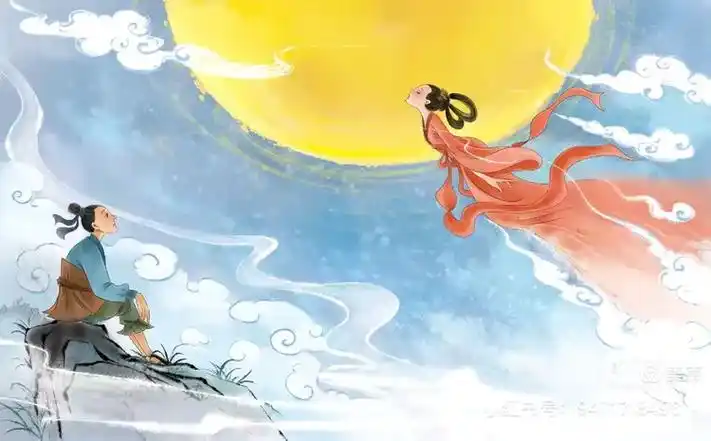
One of the most famous stories associated with the Mid-Autumn Festival is the legend of Chang’e, the Moon Goddess.
According to Chinese mythology, there were once ten suns in the sky, causing great suffering on Earth.
A heroic archer named Hou Yi shot down nine of them and saved humanity. As a reward, he received an elixir of immortality.
However, the story took a tragic turn. To prevent the elixir from falling into the wrong hands, Hou Yi’s wife, Chang’e, drank it herself and floated to the moon, where she has lived ever since.
Today, many Chinese children grow up hearing stories about Chang’e, and her image remains closely linked to the festival.
Why Do Chinese People Eat Mooncakes?
Mooncakes are the most iconic food of the Mid-Autumn Festival.
These round pastries symbolize the full moon and family unity.
Traditional mooncakes are often filled with lotus seed paste, red bean paste, nuts, or salted egg yolks. Modern varieties include chocolate, ice cream, coffee, and many other creative flavors.
Families exchange mooncakes as gifts and share them during festival gatherings.
For many people, eating mooncakes is as essential to the holiday as admiring the moon itself.
A Festival About Family Reunion
More than anything else, the Mid-Autumn Festival is about family.
The Chinese phrase often associated with the holiday is:
“人月两团圆”
“May people and the moon both be reunited.”
Even family members who live far apart try to return home for the occasion.
In modern China, where millions of people work in different cities from their families, the festival serves as an important reminder of family bonds and togetherness.
Ancient Moon Worship Traditions
The Mid-Autumn Festival did not begin with Chang’e.
Long before the legend became popular, ancient Chinese people worshipped the moon as part of agricultural rituals.
Farmers observed the moon’s cycles and associated the autumn full moon with harvest celebrations and thanksgiving.
Over time, these ancient customs merged with folklore, poetry, and mythology to create the festival celebrated today.
The Moon in Chinese Culture
The moon occupies a special place in Chinese literature and art.
For more than a thousand years, poets have written about the moon as a symbol of longing, homesickness, and reunion.
One of China’s most famous poems, written by the Song Dynasty poet Su Shi, reflects on family members separated by distance but united under the same moon.
Because of this cultural tradition, looking at the moon during the festival carries emotional meaning far beyond simple observation.
A Holiday Celebrated Around the World
The Mid-Autumn Festival is not only celebrated in mainland China.
Chinese communities across Singapore, Malaysia, Vietnam, North America, Europe, and Australia also mark the occasion with family gatherings, lantern displays, and mooncake exchanges.
In many cities around the world, public festivals and cultural performances attract both Chinese and non-Chinese participants.
More Than Mooncakes and Moonlight
To outsiders, the Mid-Autumn Festival may appear to be a celebration centered around mooncakes and a beautiful full moon.
But for Chinese people, it represents something deeper.
It is a festival about family, memory, gratitude, and connection.
No matter where people are, they can look up at the same moon and feel connected to loved ones far away.
That simple idea has helped make the Mid-Autumn Festival one of China’s most cherished traditions for centuries.