
Introduction: The Billion-Dollar Battle You Can’t See
Imagine two of the world’s largest banks.
They are not fighting with lawyers.
They are not fighting with money.
They are not fighting with technology.
Instead, they are allegedly fighting with invisible energy.
Welcome to Hong Kong.
In one of the world’s most modern financial centers, many business leaders, property developers, and ordinary residents still pay close attention to an ancient Chinese practice known as Feng Shui.
To outsiders, it can seem mysterious.
To believers, it can influence everything from:
- Business success
- Property values
- Family prosperity
- Building design
And nowhere is Feng Shui more visible than in Hong Kong.
Some locals even claim that the city’s most famous skyscrapers have been engaged in a decades-long “Feng Shui War.”
Whether you believe the stories or not, they have become one of Hong Kong’s most fascinating urban legends.
What Exactly Is Feng Shui?
Before exploring Hong Kong’s skyline, we need to understand the basics.
Feng Shui (风水) literally means:
“Wind and Water.”
It is a traditional Chinese system that seeks harmony between people and their environment.
For centuries, Feng Shui has influenced:
- House construction
- Temple locations
- City planning
- Burial sites
- Interior design
The core idea is simple:
The flow of energy, often called “Qi” (Chi), can affect human well-being.
Good Feng Shui encourages prosperity and harmony.
Bad Feng Shui may bring misfortune.
Why Hong Kong Became a Feng Shui Capital
Many cities in China use Feng Shui principles.
Hong Kong is different.
Why?
Because it combines:
- Traditional Chinese culture
- Enormous wealth
- Intense business competition
- Some of the world’s most expensive real estate
When billions of dollars are involved, many people prefer not to take chances.
As a result, Feng Shui consultants became surprisingly influential.
Major corporations have reportedly spent large sums seeking Feng Shui advice before constructing new buildings.
The Mountain Behind the City
According to traditional Feng Shui principles, mountains are important.
In Hong Kong, one mountain dominates the landscape:
Victoria Peak
Many Feng Shui practitioners believe the mountain acts as a source of powerful energy flowing toward the city and the harbor.
This idea forms the foundation of many local Feng Shui stories.
In traditional thinking, the city’s prosperity depends partly on maintaining harmony with these natural energy flows.
The Building That Started the Feng Shui War
No building is more famous in Hong Kong Feng Shui folklore than:
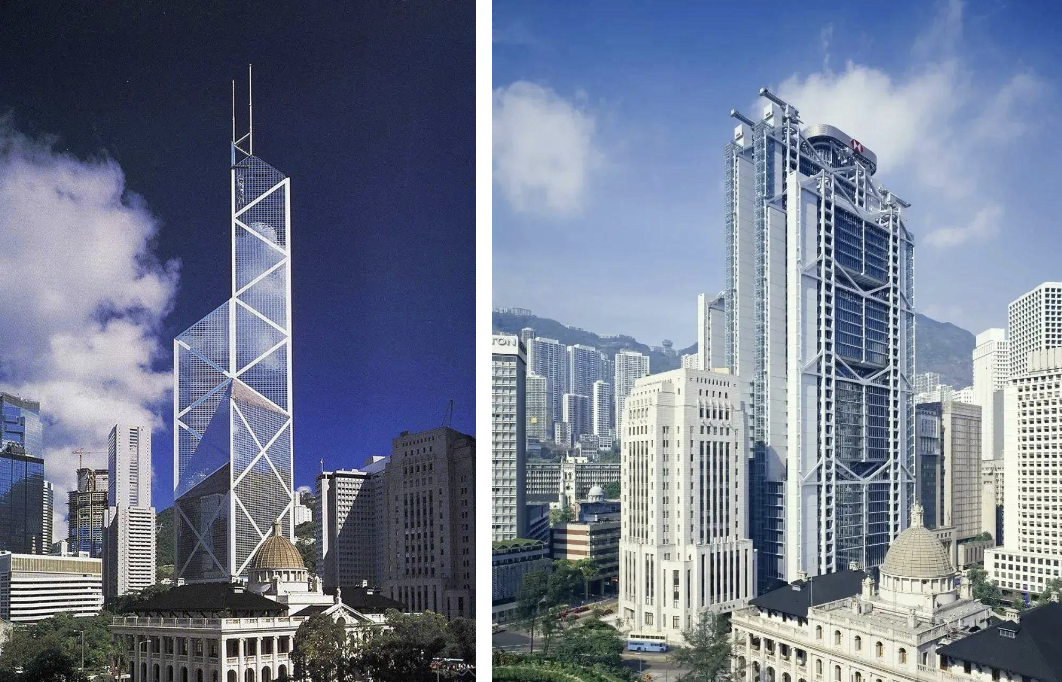
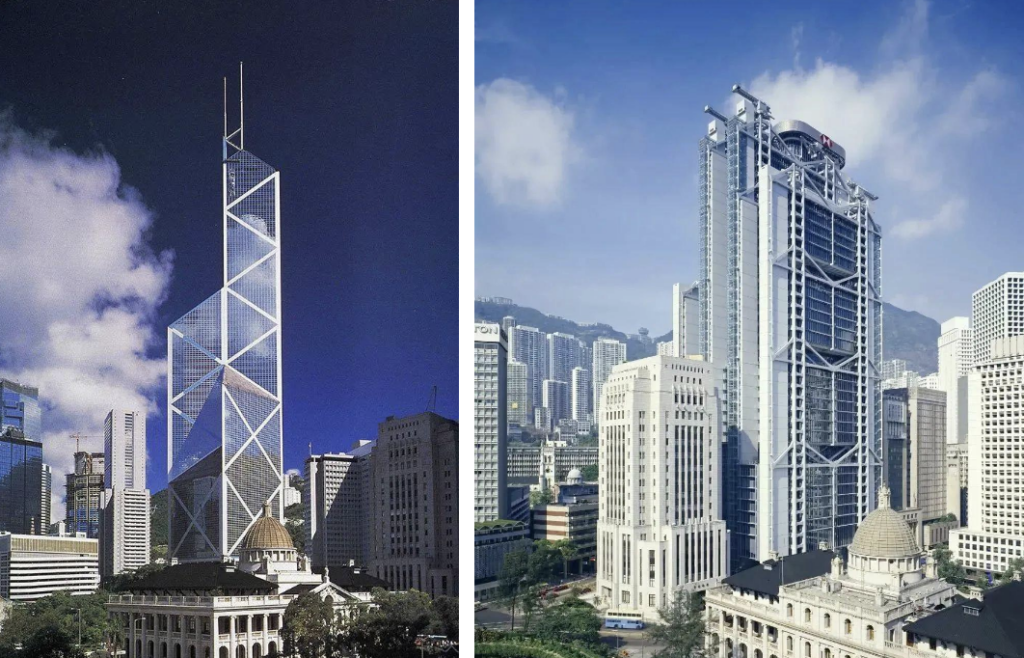
Bank of China Tower
Designed by the legendary architect:
I. M. Pei
the tower became one of Hong Kong’s most recognizable landmarks.
Its sharp triangular design was revolutionary.
Architecturally, it was celebrated.
But according to Feng Shui critics, it created a problem.
Why Some People Thought the Tower Was Dangerous
Traditional Feng Shui often associates sharp angles with negative energy.
The Bank of China Tower features numerous triangular shapes and pointed edges.
Some practitioners argued that these edges resembled knives.
They claimed the building was directing harmful energy toward neighboring structures.
To many Western readers, this sounds like pure superstition.
Yet the story became so widespread that it entered Hong Kong folklore.
The HSBC Counterattack
Directly across the financial district stands another famous building:
HSBC Main Building
The HSBC headquarters is perhaps the most famous Feng Shui building in the city.
Its design reportedly incorporated Feng Shui considerations from the beginning.
According to popular stories, the building includes special design features intended to channel positive energy.
Whether true or not, the belief became part of Hong Kong’s business mythology.
The Legendary Feng Shui Cannons
One of Hong Kong’s most famous urban legends involves two structures on the HSBC building.
Many locals refer to them as:
“Feng Shui Cannons.”
According to the story, these features were positioned to deflect negative energy supposedly coming from the Bank of China Tower.
Did the architects really intend this?
There is debate.
But the story remains one of Hong Kong’s most popular Feng Shui tales.
When Business and Superstition Meet
Foreign visitors are often surprised to learn that some major companies consult Feng Shui masters.
However, from a business perspective, the decision can make sense.
If investors, clients, and employees believe Feng Shui matters, ignoring it may create anxiety.
In this way, Feng Shui can influence real-world decisions regardless of whether its principles can be scientifically verified.
Belief itself becomes economically significant.
The Dragon Lines Beneath Hong Kong
One of the most fascinating Feng Shui concepts involves:
Dragon Lines.
According to traditional beliefs, invisible channels of energy flow through mountains and landscapes.
These routes are sometimes described as pathways used by dragons.
In Feng Shui theory, disrupting these energy flows can bring bad luck.
Protecting them can encourage prosperity.
This belief has influenced numerous architectural decisions throughout Hong Kong.
Why Some Buildings Have Giant Holes in Them
One of the strangest sights in Hong Kong is a skyscraper with a massive hole through its center.
Foreign tourists often assume:
- Structural necessity
- Architectural experimentation
- Design aesthetics
The real explanation is far more interesting.
Many locals believe these openings allow dragons living in the mountains to travel freely to the sea.
Blocking the dragon’s path could disrupt the flow of energy.
Therefore, giant openings are sometimes called:
Dragon Gates.
The Most Famous Dragon Gate
One of the best-known examples can be found near:
Repulse Bay
A large residential complex contains a huge opening through the middle of the structure.
The design has become one of Hong Kong’s most photographed Feng Shui landmarks.
Why Developers Listen
Property development in Hong Kong involves enormous investments.
A single project may cost hundreds of millions—or even billions—of dollars.
Under those circumstances, many developers adopt a simple attitude:
“If Feng Shui might help, why not?”
Even skeptical executives sometimes approve Feng Shui consultations because the perceived risk of ignoring them seems greater than the cost of compliance.
Feng Shui and Property Prices
Some buyers actively seek properties with favorable Feng Shui.
Others avoid buildings rumored to possess bad Feng Shui.
This can affect:
- Demand
- Reputation
- Market value
In a city where real estate prices are among the highest in the world, perception matters.
The Number Game
Feng Shui often overlaps with traditional Chinese numerology.
Certain numbers are considered lucky.
Others are avoided.
For example:
- 8 is often associated with prosperity.
- 4 is often avoided because its pronunciation resembles the word for death in several Chinese languages.
As a result, some buildings skip certain floor numbers entirely.
Visitors may discover elevators missing floors that technically do not exist.
The Influence on Everyday Life
Feng Shui is not limited to skyscrapers.
Many Hong Kong residents consider it when:
- Buying homes
- Opening businesses
- Rearranging furniture
- Choosing wedding dates
Even people who do not fully believe in Feng Shui may follow certain practices out of tradition.
Why Foreigners Find It So Fascinating
For many visitors, Hong Kong represents cutting-edge modernity.
They expect:
- Finance
- Technology
- Global business
What they do not expect is the continued influence of ancient beliefs.
The coexistence of modern skyscrapers and traditional Feng Shui creates a fascinating contrast.
It demonstrates how old traditions can survive in highly modern societies.
Is Feng Shui Real?
Opinions vary.
Some people view Feng Shui as a sophisticated cultural philosophy.
Others regard it as superstition.
Still others see it as a psychological tool that helps people feel more comfortable in their environment.
Regardless of where one stands, its influence on Hong Kong is undeniable.
What the Feng Shui Wars Reveal About Hong Kong
The famous Feng Shui stories are ultimately about more than buildings.
They reveal a city where:
- East meets West
- Tradition meets modernity
- Ancient beliefs coexist with global finance
This unique combination is part of what makes Hong Kong so fascinating.
Conclusion: The Invisible Forces Behind the Skyline
Hong Kong’s skyscrapers are among the most recognizable in the world.
Most visitors admire their height, beauty, and engineering.
But hidden beneath the glass and steel lies another story.
A story of dragons.
Energy flows.
Ancient beliefs.
And perhaps even invisible battles between rival towers.
Whether you believe in Feng Shui or not, it has left a permanent mark on Hong Kong’s skyline.
And the next time you look at the city’s towering buildings, you may notice something many tourists miss:
In Hong Kong, architecture is not only about reaching the sky.
It is also about staying in harmony with the forces beneath it.