

Introduction: The City That Looks Like the Future
Imagine flying into Hong Kong for the first time.
As your plane descends through the clouds, you see something extraordinary.
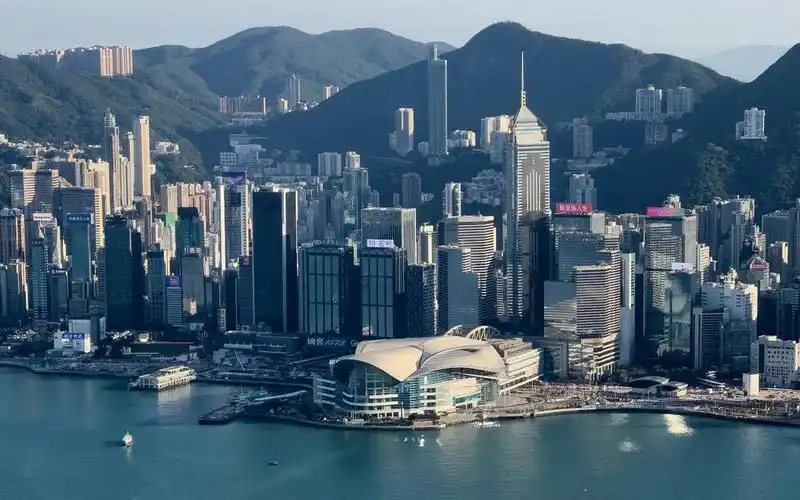
Hundreds of skyscrapers rise from a narrow strip of land between mountains and sea.
Towering residential blocks climb steep hillsides.
Glass office towers reflect the waters of Victoria Harbour.
The skyline seems endless.
Many visitors ask the same question:
“Why does Hong Kong have so many skyscrapers?”
After all, cities such as New York, London, and Paris are famous around the world.
Yet Hong Kong has more skyscrapers than all of them.
In fact, depending on how skyscrapers are counted, Hong Kong consistently ranks among the world’s most vertical cities.
Its skyline is not simply a symbol of wealth.
It is the result of geography, history, economics, culture, and survival.
To understand Hong Kong, you must first understand why it built upward instead of outward.
A Skyline Unlike Anywhere Else
Hong Kong’s skyline is often considered one of the most spectacular urban landscapes on Earth.
The city contains thousands of high-rise buildings.
Many exceed:
- 100 meters (328 feet)
- 150 meters (492 feet)
- 200 meters (656 feet)
Some rank among the tallest structures in Asia.
Unlike many cities where skyscrapers are concentrated in one downtown district, Hong Kong’s towers appear almost everywhere.
Residential neighborhoods, business districts, and even suburban areas are filled with high-rise buildings.
The result is a city that feels three-dimensional.
The First Reason: There Is Almost No Flat Land
The biggest reason for Hong Kong’s skyscrapers is surprisingly simple:
There is very little land available.
When people imagine Hong Kong, they often think of dense urban streets.
What many don’t realize is that most of Hong Kong is actually mountainous.
More than 70% of the territory consists of:
- Mountains
- Hills
- Country parks
- Protected natural areas
This leaves relatively little space for urban development.
Unlike cities that can expand endlessly across flat plains, Hong Kong faces natural limits.
The city had only two choices:
- Build outward into the sea.
- Build upward into the sky.
It did both.
Mountains Shape Everything
Hong Kong’s dramatic landscape is beautiful.
But it creates enormous challenges.
Steep mountains dominate much of the territory.
One of the most famous is:
Victoria Peak
From above, you can clearly see how little flat land exists.
Urban areas are squeezed between:
- Mountain slopes
- Coastlines
- Harbours
Every square meter becomes valuable.
This geographical reality pushed developers toward vertical construction.
The Population Explosion
Land shortages became even more serious after World War II.
Hong Kong’s population grew rapidly.
Millions of people arrived over several decades.
Many came seeking:
- Economic opportunities
- Stability
- Safety
The city suddenly faced a massive housing challenge.
Where would everyone live?
Building horizontally was impossible.
Building upward became the only practical solution.
A Tiny Territory With Millions of People
Today, Hong Kong is home to more than seven million residents.
Yet the territory is much smaller than many major metropolitan areas.
The result is one of the highest population densities in the world.
To accommodate millions of residents, residential towers became essential.
Unlike in many Western cities, high-rise living became normal for ordinary families.
In Hong Kong, skyscrapers are not only for the rich.
They are where much of the population lives.
The Birth of the Vertical Lifestyle
In many countries, living in a skyscraper is considered a luxury.
In Hong Kong, it is simply everyday life.
Children grow up dozens of floors above the ground.
Grandparents take elevators instead of front-yard walks.
Entire communities exist within residential towers.
Some buildings house thousands of people.
This vertical lifestyle has become a defining feature of Hong Kong culture.
The British Influence
Hong Kong’s modern development was also shaped by its colonial history.
Under British administration, urban planners focused on maximizing limited land resources.
The government developed systems for:
- Land leasing
- High-density housing
- Efficient transportation
These policies encouraged vertical growth.
Unlike many cities where height restrictions limited development, Hong Kong generally embraced density.
The skyline became a symbol of modernization.
The World’s Most Expensive Real Estate
Another major reason for Hong Kong’s skyscrapers is property value.
Land in Hong Kong is among the most expensive on Earth.
When land costs millions of dollars per plot, building taller becomes economically attractive.
Developers can:
- Sell more apartments
- Create more office space
- Generate higher returns
This financial reality drives continuous vertical construction.
The higher a building rises, the more valuable its location becomes.
Victoria Harbour: The Billion-Dollar View
At the center of the city lies:
Victoria Harbour
One of the world’s most famous harbours.
Properties overlooking the harbour command extraordinary prices.
Developers compete fiercely for prime locations.
The result is a forest of luxury towers surrounding the waterfront.
These buildings have helped create Hong Kong’s globally recognized skyline.
Why Residential Towers Are So Tall
Foreign visitors often notice something unusual.
In many cities, skyscrapers are primarily office buildings.
In Hong Kong, countless skyscrapers are residential.
The reason is simple:
Housing demand is enormous.
A single residential tower may contain hundreds or even thousands of apartments.
Without these towers, the city could not accommodate its population.
Public Housing in the Sky
One surprising fact is that many Hong Kong residents live in public housing.
The government developed extensive high-rise housing programs to address population growth.
These housing estates often consist of:
- Multiple towers
- Schools
- Shopping centers
- Community facilities
They function like vertical neighborhoods.
For many residents, skyscraper living is not a luxury but a necessity.
Engineering Against Nature
Building tall structures in Hong Kong requires overcoming significant challenges.
The city faces:
- Typhoons
- Heavy rainfall
- Steep terrain
- Humid conditions
Engineers developed innovative solutions to ensure safety.
Modern skyscrapers are designed to withstand powerful storms that regularly affect the region.
This engineering expertise became one of Hong Kong’s strengths.
The Race for Height
As the economy grew, developers competed to build taller and more impressive structures.
Landmark buildings transformed the skyline.
Among the most recognizable are:
- International Commerce Centre
- Two International Finance Centre
- Bank of China Tower
These towers became symbols of Hong Kong’s global status.
The Skyline That Appears in Hollywood Movies
Few city skylines are as instantly recognizable.
Hong Kong has appeared in countless:
- Movies
- Television shows
- Video games
- Travel documentaries
Filmmakers love the dramatic combination of:
- Water
- Mountains
- Neon lights
- Skyscrapers
The city often appears futuristic, even when portraying fictional worlds.
Why Hong Kong Feels Different From New York
People often compare Hong Kong with New York City.
Both are famous for skyscrapers.
Yet they feel very different.
New York’s skyline spreads across relatively flat terrain.
Hong Kong’s towers rise directly from mountains and harbours.
This creates a far more dramatic visual effect.
The landscape itself becomes part of the skyline.
The Hidden Side of Density
The skyscraper boom brought enormous benefits.
It allowed Hong Kong to:
- House millions of people
- Preserve green spaces
- Support economic growth
But density also creates challenges.
Residents face:
- High property prices
- Small living spaces
- Intense competition for housing
The same forces that created the skyline also contribute to some of the city’s biggest social issues.
Why Foreign Visitors Are So Fascinated
For many travelers, Hong Kong feels like a glimpse into the future.
The city demonstrates what happens when:
- Geography limits expansion
- Population continues growing
- Economic activity intensifies
The result is one of the most vertical urban environments ever created.
Few places on Earth look quite like it.
What the Skyline Reveals About Hong Kong
Every skyscraper tells part of the city’s story.
The towers reflect:
- Limited land
- Rapid growth
- Economic ambition
- Engineering innovation
They are not simply buildings.
They are solutions to problems created by geography and history.
Conclusion: A City Forced to Reach for the Sky
Hong Kong did not build skyscrapers because it wanted to impress the world.
It built skyscrapers because it had little choice.
Mountains limited expansion.
Population growth increased pressure.
Land became incredibly valuable.
The only direction left was upward.
The result is one of the most extraordinary skylines ever created.
Today, Hong Kong stands as the ultimate vertical city—a place where millions of people live, work, and dream high above the ground.
And when visitors look up at those endless towers, they are seeing more than architecture.
They are seeing the story of Hong Kong itself.