


I. Introduction
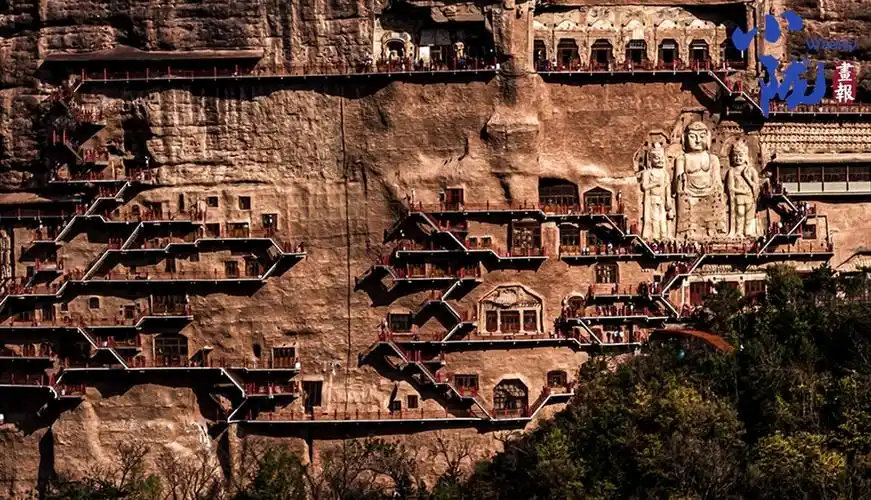
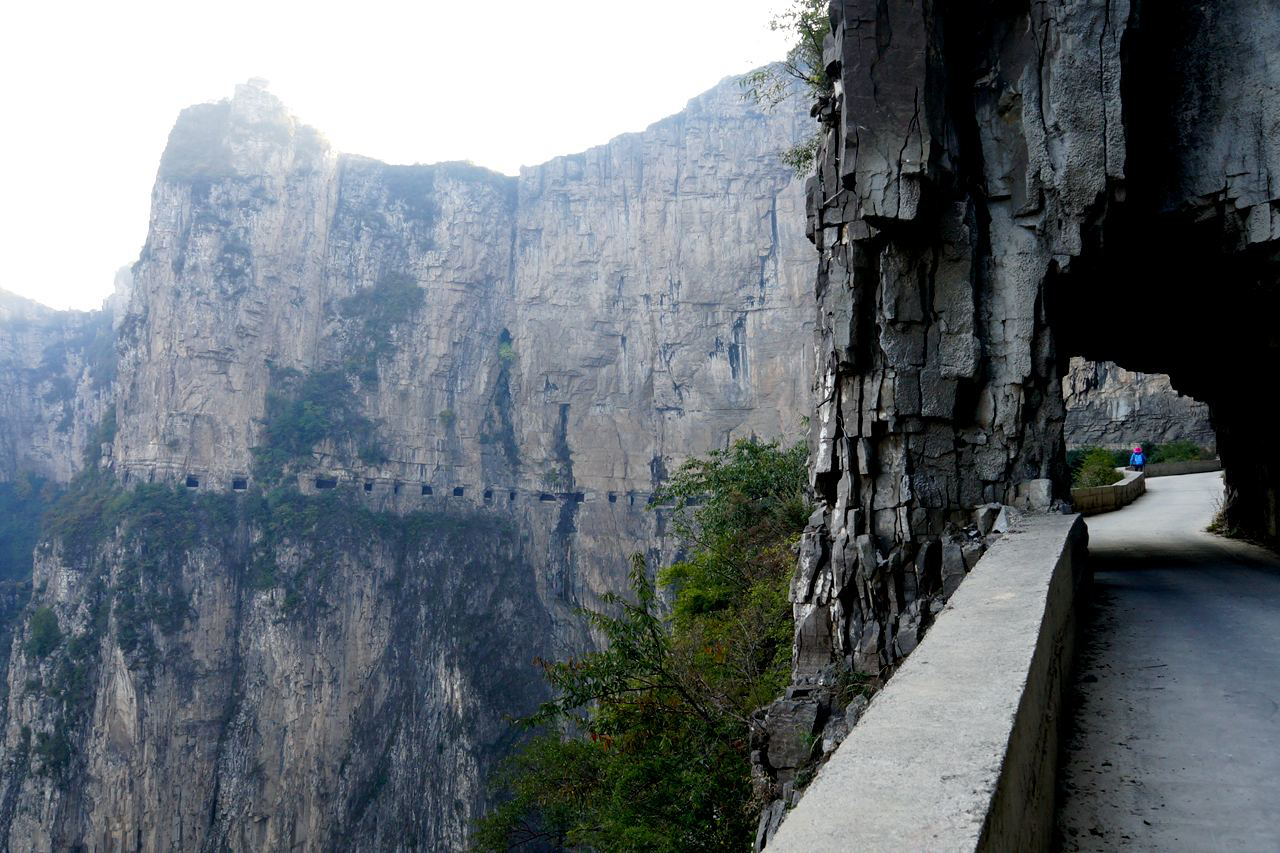
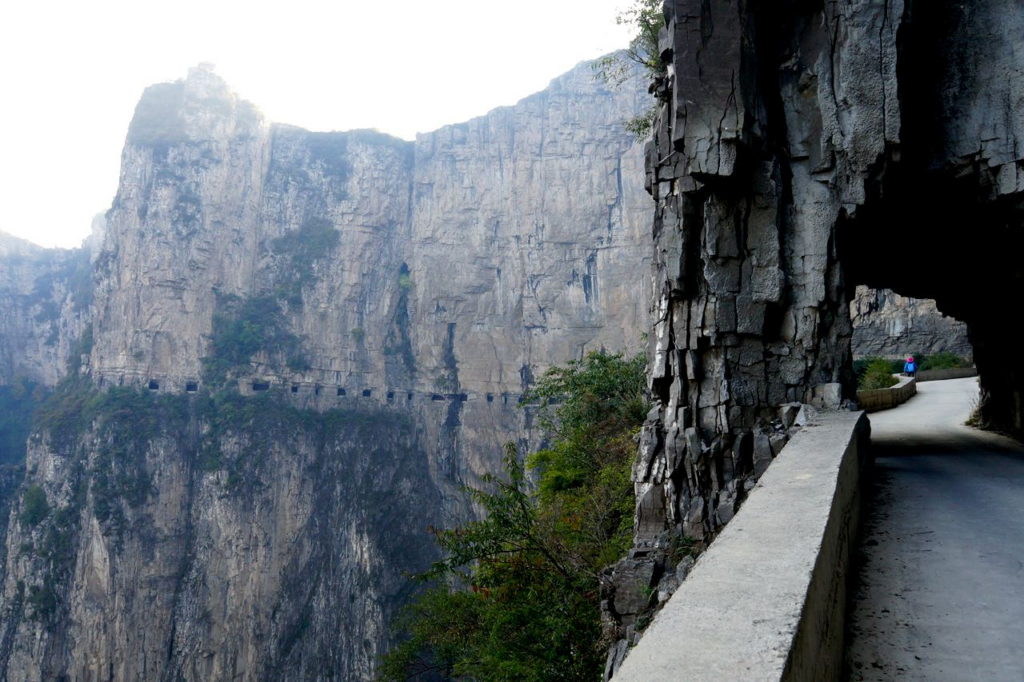
In the vast land of China, there is a road that winds around the cliffs of the Taihang Mountains like a giant dragon. This is the Hanging – Wall Highway in the Taihang Mountains. The birth of this highway is not only a feat in the history of transportation but also a symbol of the indomitable spirit of humanity. It shuttles through the precipitous mountains, connecting the deep mountains with the outside world, and composing a soul – stirring song of struggle among the lofty mountains.
II. Geographical Location and Geological Background
(I) Geographical Coordinates and Regional Scope of the Taihang Mountains
The Taihang Mountains, an important mountain range and geographical boundary in eastern China, start from the Western Hills of Beijing in the north and extend southward to the Wangwu Mountains at the junction of Henan and Shanxi provinces. It runs in a northeast – southwest direction, stretching for more than 400 kilometers. It spans four provinces and municipalities, namely Beijing, Hebei, Shanxi, and Henan, separating the North China Plain from the Shanxi Plateau.
(II) Unique Geological Structure
The geological structure of the Taihang Mountain area is complex and diverse, mainly composed of ancient metamorphic rocks, limestone, and sandstone. During the long geological evolution process, strongly influenced by plate movements, the Taihang Mountains have experienced multiple crustal uplifts and fault activities, forming the current steep terrain and criss – crossed canyons. The mountain rocks are hard and have well – developed joints, which have brought great challenges to the construction of the hanging – wall highways but also provided a certain foundation for the stability of the roads.
III. Historical Evolution of the Hanging – Wall Highways
(I) Background of Construction
In the past, transportation in the Taihang Mountain area was extremely inconvenient. The mountains, like natural barriers, isolated the mountain villages from the outside world. Local residents had great difficulties in traveling, and the transportation of goods was even more arduous, severely restricting economic development and the improvement of living standards. In order to change this situation and lead a better life, local residents came up with the idea of building a road on the cliffs.
(II) Construction Process
- Xiyagou Hanging – Wall Highway: It is the earliest and most time – consuming hanging – wall highway among those in the Taihang Mountains. In 1962, under the leadership of the Party branch, the villagers of Xiyagou Village vowed, “We will fight hard for ten years and spare no effort to build a road leading to the outside world,” and began the arduous road – building journey. Without modern mechanical equipment, they chiseled inch by inch on the cliffs with only hammers, chisels, and their bare hands. After 30 years, they finally completed this 7.5 – kilometer – long hanging – wall highway in 1991.
- Guoliang Hanging – Wall Highway: In 1972, 13 villagers in Guoliang Village, led by Shen Mingxin, sold goats and Chinese yams to raise funds to buy steel hammers and files. Without electricity and machinery, they relied entirely on manual labor. After 5 years, they carved out this 1250 – meter – long highway on the cliffs. During the construction process, the villagers tied ropes around their waists and worked in the air, blasting rows of holes on the cliffs, and then chiseling with steel chisels and hammers. The thrilling degree is unimaginable.
- Hongtiguan Hanging – Wall Highway: It was built in the 1960s. At that time, the people of Hongtiguan Township, Pingshun County, in order to open up a connection with the outside world, built the road with simple tools under extremely difficult conditions. This highway is 10.5 kilometers long, with a narrow road surface and a large slope. The scenery along the way is magnificent, witnessing the spirit of the people’s fearlessness and courage in those days.
- Chenjiayuan Hanging – Wall Highway: Its construction started relatively late, in 1995, and was completed in 3 years. During the construction of this highway, the local terrain and water resources were fully utilized, running along the cliff and accompanied by a reservoir, forming a unique landscape.
IV. Architectural Features of the Hanging – Wall Highways
(I) Unique Excavation Method
The hanging – wall highways are excavated using a combination of the “segmented” and “zig – zag” methods. Due to the steep mountains, it is impossible to excavate a straight road at one time. Therefore, the workers excavated tunnels along the trend of the cliffs in sections and then connected them through zig – zag sections. When excavating the tunnels, holes were first drilled on the cliffs, then explosives were placed for blasting, and finally, tools such as steel chisels and hammers were used to trim the inner walls of the tunnels, gradually widening and deepening them. This excavation method can not only adapt to the complex terrain but also reduce the project volume and construction difficulty.
(II) Unique Lighting Design
To solve the problem of insufficient lighting in the tunnels, the hanging – wall highways adopt a unique side – window design. At regular intervals, a rectangular side – window is excavated on one side of the tunnel. These side – windows not only provide natural light for the tunnels, enabling drivers to see the road conditions clearly during driving, but also become unique landscapes on the highway. Looking from a distance, the side – windows on the hanging – wall highway are like the scales of a giant dragon, shining brightly.
(III) Harmonious Co – existence with Nature
The construction of the hanging – wall highways fully considers the harmonious co – existence with the natural environment. Although the excavation of the highways has changed part of the appearance of the mountains, the workers try their best to minimize the damage to the surrounding ecological environment. A large number of trees and flowers are planted along the highways, which not only beautify the environment but also prevent landslides and soil erosion. In addition, the hanging – wall highways complement the surrounding mountains, canyons, rivers, and other natural landscapes, forming a unique scenic line.
V. Impact of the Hanging – Wall Highways on the Local Area
(I) Economic Development
- Agricultural Development: The opening of the hanging – wall highways has facilitated the transportation of local agricultural products. In the past, due to inconvenient transportation, many agricultural products could not be transported to the market in time, resulting in a large amount of backlogs and waste. Now, fresh fruits, vegetables, and other agricultural products can be quickly transported to surrounding cities, increasing farmers’ income. At the same time, the smooth transportation has also reduced the transportation cost of agricultural production materials, promoting the large – scale and modern development of agriculture.
- Rise of Tourism: The unique architectural style and magnificent natural scenery of the hanging – wall highways have attracted a large number of tourists. The rise of tourism has driven the development of related industries such as catering, accommodation, and shopping. Local residents have opened numerous farmhouse restaurants and homestays, and sold local handicrafts and special agricultural products, significantly improving their living standards.
- Industrial and Commercial Development: The improvement of transportation has made it easier for external enterprises to invest and set up factories in the Taihang Mountain area, promoting the development of local industries. Meanwhile, commercial activities have become more active, with the circulation of various commodities becoming smoother and the market becoming more prosperous.
(II) Cultural Heritage and Exchange
- Cultural Heritage: The construction process of the hanging – wall highways has given birth to a unique “hanging – wall highway culture”, which embodies the local people’s indomitable and collaborative spirit. This culture has been passed down through oral traditions and written records, becoming a precious spiritual wealth of the local area. At the same time, the opening of the highways has enabled better protection and inheritance of local traditional cultures, such as traditional folk arts and folk activities, attracting more attention.
- Cultural Exchange: The influx of a large number of tourists has brought different regional cultures and ideas, promoting cultural exchanges between the local area and the outside world. Through contact with tourists, local residents have broadened their horizons and learned about the outside world. Meanwhile, tourists can deeply experience the local customs and traditions of the Taihang Mountain area, enhancing their understanding and appreciation of Chinese traditional culture.
(III) Social Development
- Improvement of Education and Healthcare: The opening of the highways has made it more convenient for children to go to school, enabling them to access better educational resources. In the past, many children had to give up their studies due to the long distance. Now, the teaching conditions of schools have been improved, and the number of students has increased. At the same time, the medical conditions have also been greatly improved, and villagers can seek medical treatment in a timely manner, ensuring better health.
- Change of Lifestyle: The completion of the hanging – wall highways has changed the lifestyle of local residents. They are no longer confined to the traditional self – sufficient lifestyle but start to communicate and cooperate more with the outside world. Modern lifestyles and technological products have gradually entered their lives, improving their quality of life.
VI. Tourism Value of the Hanging – Wall Highways
(I) Unique Landscapes
- Cliff Scenery: Driving on the hanging – wall highways, on one side is the steep cliff, and on the other side is the deep canyon, as if placed in a magnificent landscape painting. Looking out from the side – windows, the mountains undulate, and the clouds curl around, presenting a breathtaking view. Especially in the early morning and evening, when the sunlight shines on the cliffs, it forms a golden glow, giving a strong visual impact.
- Tunnel Wonders: The interiors of the tunnels of the hanging – wall highways are also unique landscapes. The uneven rock walls record the arduous construction process of that year. The light coming in from the side – windows forms bright light columns in the tunnels, contrasting sharply with the dark interior of the tunnels, creating a mysterious and fantastic atmosphere.
- Scenery Along the Way: There are many natural and cultural attractions along the highways, such as clear rivers, ancient villages, and old temples. Tourists can enjoy the rich natural and cultural landscapes of the Taihang Mountain area while admiring the hanging – wall highways.
(II) Tourism Experiences
- Self – driving Experience: Driving on the hanging – wall highways is a unique and exciting experience. Drivers need to carefully control the steering wheel while enjoying the beautiful scenery outside the window, feeling the collision of speed and passion. When passing through the tunnels, the roar of the vehicle and the wind can be heard in the ears, as if traveling back in time to the construction site of that year.
- Hiking Experience: For tourists who like hiking, walking along the hanging – wall highways is also a good choice. During the hike, they can more carefully appreciate the architectural features of the highways and the surrounding natural scenery. At the same time, they can communicate with local residents to learn about the history and culture of the hanging – wall highways.
VII. Challenges and Protection Measures
(I) Challenges
- Natural Factors: The climate in the Taihang Mountain area is changeable. Frequent heavy rains in summer can easily trigger geological disasters such as landslides and mudslides, threatening the safety of the hanging – wall highways. In addition, the severe cold in winter can cause the road surface to freeze, affecting driving safety.
- Traffic Pressure: With the development of tourism, the number of tourists going to the hanging – wall highways is increasing, and the traffic pressure is becoming greater and greater. Especially during holidays and peak tourist seasons, traffic congestion often occurs on the highways, affecting the tourist experience.
- Maintenance Costs: The maintenance costs of the hanging – wall highways are relatively high. Due to their special geographical location and architectural structure, maintenance work is difficult. Regular inspections and reinforcements of the tunnel inner walls are required, and the road surface needs to be repaired and maintained to ensure the safe passage of the highways.
(II) Protection Measures
- Strengthen Monitoring and Early Warning: Establish a geological disaster monitoring system to monitor the changes of the mountains in real – time and issue early warning information in a timely manner. Set up protective facilities, such as retaining walls and slope protection, in areas prone to geological disasters to reduce the damage of disasters to the highways.
- Optimize Traffic Management: Develop reasonable traffic management systems and strengthen the traffic guidance of the hanging – wall highways. Implement traffic – limiting measures during peak tourist seasons to control the number of tourists. At the same time, strengthen traffic coordination with surrounding areas and optimize traffic routes to relieve traffic pressure.
- Increase Maintenance Investment: The government should increase the capital investment in the maintenance of the hanging – wall highways, and equip professional maintenance personnel and equipment. Regularly conduct comprehensive inspections and maintenance of the highways, and promptly repair damaged road surfaces and facilities to ensure the safety performance of the highways.
VIII. Conclusion
The Hanging – Wall Highways in the Taihang Mountains are the crystallization of human wisdom and courage. They are not only a transportation artery connecting the deep mountains with the outside world but also an immortal spiritual monument. They witness the arduous efforts of the people in the Taihang Mountains to change their fate and leave behind a precious historical and cultural heritage for future generations. In future development, while protecting this human wonder, we should give full play to its economic, cultural, and tourism value, allowing more people to understand and feel its charm. At the same time, the spirit of perseverance, unity, and hard – work contained in the hanging – wall highways will inspire generations of people to move forward bravely and create a better future.