



1. Introduction
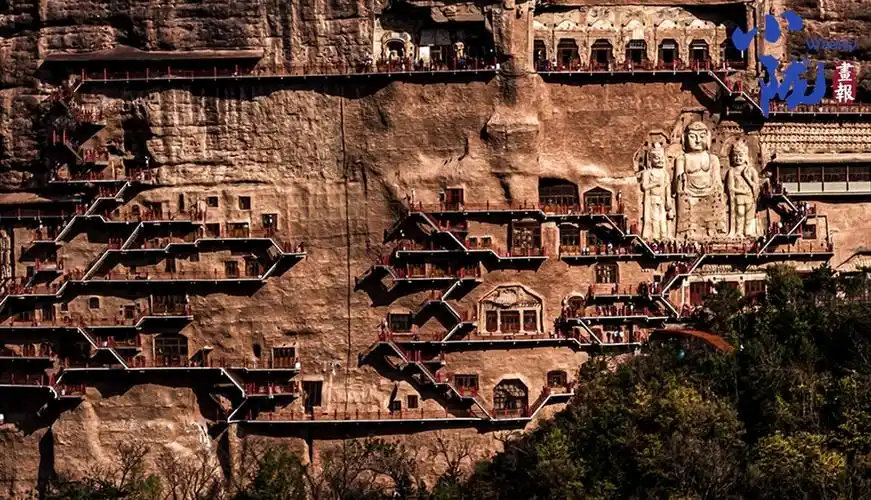
In the heart of China’s Gansu Province, the Maiji Mountain Grottoes emerge as a captivating enigma, a testament to the harmonious blend of human creativity and religious devotion. Resembling a colossal wheat stack, Maiji Mountain pierces the sky, its precipitous cliffs adorned with a labyrinth of grottoes that have withstood the ravages of time for over a millennium. These grottoes, a UNESCO World Heritage Site, are not just architectural marvels but a vibrant tapestry of Buddhist art, offering a profound glimpse into China’s rich cultural and religious heritage.
2. Geographical Location and Natural Setting
2.1 Geographical Location
The Maiji Mountain Grottoes are located about 45 kilometers southeast of Tianshui City in Gansu Province. Tianshui, a city with a history dating back thousands of years, was a vital hub on the ancient Silk Road. This strategic location placed the Maiji Mountain Grottoes at the crossroads of diverse cultures, facilitating the exchange of artistic ideas, religious beliefs, and technological know – how between the East and the West.
2.2 Natural Setting
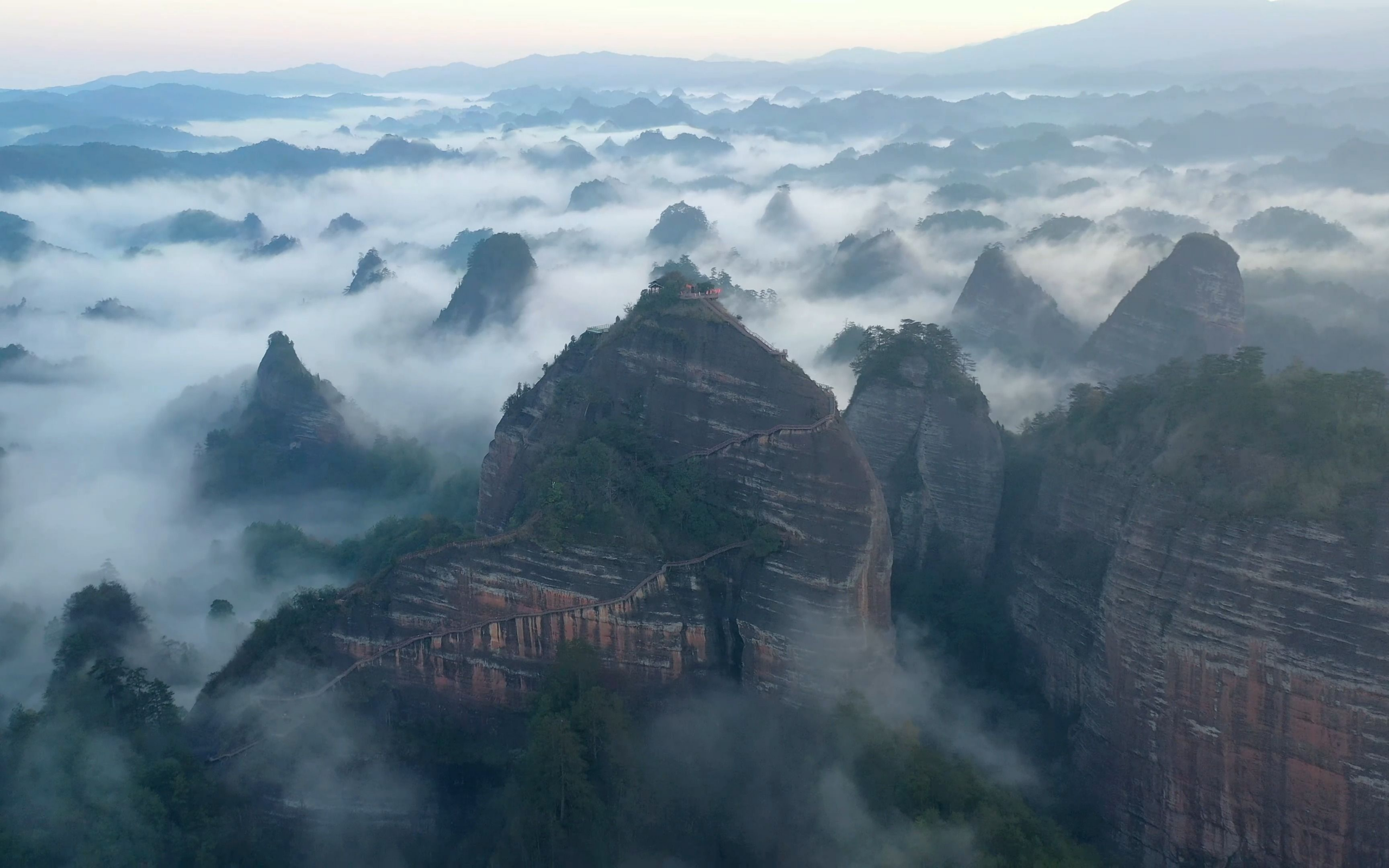
Surrounded by rolling mountains and lush greenery, Maiji Mountain stands out as a geological oddity. The mountain is composed of sandstone, a sedimentary rock that, while relatively soft and porous, has provided the canvas upon which generations of artisans have created their masterpieces. The natural beauty of the surroundings, with its clear streams, ancient trees, and ever – changing cloud formations, adds a spiritual dimension to the site, making it an ideal place for Buddhist meditation and worship.
3. Historical Evolution
3.1 Origins in the Later Qin Dynasty (384 – 417 AD)
The story of the Maiji Mountain Grottoes begins in the Later Qin Dynasty, a time when Buddhism was rapidly spreading across China. Attracted by the mountain’s natural beauty and isolation, Buddhist monks and artisans began to carve small grottoes into the cliffs. These early grottoes were simple in design, with basic sculptures of Buddha and his disciples. The influence of Indian and Central Asian Buddhist art is evident in the high – noses, deep – set eyes, and thin, flowing robes of the early statues, reflecting the initial stages of Buddhism’s journey into China.
3.2 Flourishing in the Northern Wei Dynasty (386 – 534 AD)
The Northern Wei Dynasty witnessed a significant expansion of the Maiji Mountain Grottoes. As Buddhism gained imperial patronage, large – scale construction projects were initiated. The grottoes became more elaborate, with complex layouts and a greater variety of sculptures. The style of the sculptures began to evolve, incorporating elements of Chinese aesthetics. The figures became more rounded and plump, and the clothing styles shifted towards the traditional Chinese “pao” and “belt” fashion, demonstrating the Sinicization of Buddhist art.
3.3 Continued Development in the Western Wei (535 – 556 AD) and Northern Zhou (557 – 581 AD) Dynasties
During the Western Wei and Northern Zhou dynasties, the Maiji Mountain Grottoes reached new heights of artistic excellence. The focus shifted from mere religious representation to a more profound exploration of human emotions and expressions. Sculptures of Bodhisattvas, in particular, exuded a sense of grace, compassion, and inner tranquility. Murals also became more prominent, with vivid colors and detailed depictions of Buddhist stories, adding a rich narrative dimension to the grottoes.
3.4 Decline and Preservation in the Sui, Tang, and Subsequent Dynasties
With the decline of the Northern Zhou Dynasty and the rise of the Sui and Tang dynasties, the center of Buddhist art and construction shifted to other regions. However, the Maiji Mountain Grottoes continued to be maintained and renovated. In later dynasties, including the Song, Yuan, Ming, and Qing, although large – scale construction ceased, local monks and believers ensured the preservation of the existing grottoes, making minor repairs and additions over time.
4. Artistic Features
4.1 Sculpture Art
4.1.1 Richness of Themes
The sculptures in the Maiji Mountain Grottoes cover a wide range of Buddhist themes. Central to many grottoes are the figures of Buddha, representing enlightenment and the path to salvation. Bodhisattvas, with their compassionate demeanor, are often depicted in various poses, symbolizing their vow to help all sentient beings. Disciples, such as Ananda and Kasyapa, stand by Buddha, representing the 传承 of his teachings. Additionally, there are sculptures of Heavenly Kings and Vajras, fierce guardians of the Buddhist faith, adding a sense of power and protection to the grottoes.
4.1.2 Unique Styles
The sculptures at Maiji Mountain showcase a remarkable evolution of styles. Early on, influenced by foreign Buddhist art, the sculptures had a more angular and abstract form. As time passed, Chinese artistic sensibilities took over, resulting in a more naturalistic and human – like portrayal. The “Maiji style” is characterized by its delicate facial expressions, flowing lines of the clothing, and a sense of movement in the statues. For example, the bodhisattva sculptures seem to float gracefully, their robes billowing as if caught in a gentle breeze.
4.1.3 Exquisite Craftsmanship
The craftsmanship of the sculptures is nothing short of extraordinary. Despite the relatively soft sandstone, the artisans were able to carve intricate details, from the folds of the robes to the expressions in the eyes. The use of color was also an important aspect of the sculptures. Originally, many sculptures were painted with bright, vivid colors, which, although faded in some cases, still give an idea of the once – vibrant appearance. The combination of carving and painting techniques created a three – dimensional and lifelike effect, making the sculptures truly come alive.
4.2 Mural Art
4.2.1 Diverse Themes
The murals in the Maiji Mountain Grottoes are a visual encyclopedia of Buddhist teachings. They include scenes from the life of Buddha, such as his birth, enlightenment, and parinirvana. Jataka tales, which recount the previous lives of Buddha, are also depicted in great detail. In addition, there are murals showing the idealized Western Pure Land, a place of peace and enlightenment, as well as scenes of celestial beings, musicians, and dancers. Donor portraits, representing the people who funded the construction of the grottoes, provide a glimpse into the social and economic life of the time.
4.2.2 Artistic Styles
The mural styles at Maiji Mountain reflect the changing artistic trends over the centuries. Early murals, influenced by the Western Regions, have a more bold and simplistic style, with strong colors and geometric patterns. As Chinese art forms became more dominant, the murals became more refined, with a greater emphasis on the use of line to create a sense of movement and depth. The color palette also evolved, with a wider range of colors being used to create a more harmonious and realistic visual experience.
4.2.3 Painting Techniques
The artisans employed a variety of painting techniques to create the murals. They used mineral – based pigments, which were highly durable, ensuring the survival of the murals for centuries. The techniques included outlining, filling in colors, and using shading to create a three – dimensional effect. In some cases, they also used a technique called “dotted – line drawing” to create a sense of texture and movement. The murals were painted on a layer of plaster applied to the rough sandstone surface, and the artisans had to work quickly and precisely to achieve the desired effect.
5. Architectural Features
5.1 Grotto Layout
The grottoes at Maiji Mountain are arranged in a unique and systematic manner. They are divided into different levels, with some grottoes accessible by climbing steep stairways and others connected by narrow passageways. The layout of the grottoes often follows a specific religious and symbolic pattern. For example, larger grottoes, which usually contain the main Buddha statues, are often placed at more prominent positions, while smaller grottoes, dedicated to secondary deities or for meditation, are located in more secluded areas.
5.2 Structural Design
The structural design of the grottoes is a marvel of engineering. The grottoes were carved into the sandstone cliff face, and in some cases, wooden beams and brackets were used to support the roofs and entrances. The entrances to the grottoes are often decorated with elaborate carvings of Buddhist symbols, such as lotus flowers, auspicious clouds, and guardian lions. Inside the grottoes, the ceilings are sometimes vaulted or domed, creating a sense of space and grandeur.
5.3 Plank – Road System
One of the most distinctive features of the Maiji Mountain Grottoes is the extensive plank – road system. These plank – roads, built along the cliff face, connect different grottoes and provide access for visitors and artisans. The plank – roads are made of wooden planks supported by wooden beams inserted into holes drilled in the cliff. They wind their way around the mountain, creating a dizzying and awe – inspiring sight. The plank – road system not only serves a practical purpose but also adds to the overall aesthetic and spiritual experience of the site.
6. Cultural Significance
6.1 Religious Significance
The Maiji Mountain Grottoes are a sacred site for Buddhists. They represent the long – standing tradition of Buddhist worship and meditation in China. The sculptures and murals in the grottoes are not just works of art but also objects of religious veneration, inspiring believers to follow the path of Buddha. The continuous presence of the grottoes over the centuries has also contributed to the preservation and dissemination of Buddhist teachings in the region.
6.2 Historical Significance
As a historical record, the Maiji Mountain Grottoes offer invaluable insights into the political, economic, and social history of ancient China. The donor portraits, inscriptions, and the evolution of the art and architecture reflect the changing times, from the imperial patronage of Buddhism in the early dynasties to the local efforts of preservation in later periods. The grottoes also serve as a reminder of the importance of the Silk Road in facilitating cultural exchange, as they showcase the influence of foreign cultures on Chinese art and vice versa.
6.3 Artistic Significance
Artistically, the Maiji Mountain Grottoes are a treasure trove. They represent a unique chapter in the history of Chinese art, demonstrating the evolution of Buddhist art from its foreign origins to its integration with Chinese aesthetics. The sculptures and murals have had a profound influence on subsequent generations of artists, both in China and abroad. Their unique style, characterized by a blend of realism and spiritualism, continues to inspire contemporary artists in their pursuit of beauty and meaning.
7. Conservation and Challenges
7.1 Conservation Efforts
Over the years, significant efforts have been made to conserve the Maiji Mountain Grottoes. Modern conservation techniques, such as rock reinforcement, mural restoration, and environmental monitoring, have been employed. Archaeologists and conservators work together to study the grottoes, understand their deterioration mechanisms, and develop appropriate conservation strategies. The local government has also established strict regulations to protect the site, and educational programs have been launched to raise public awareness about the importance of conservation.
7.2 Challenges
Despite these efforts, the Maiji Mountain Grottoes face several challenges. The soft sandstone is vulnerable to weathering, erosion, and water seepage, which can cause the sculptures and murals to deteriorate. The increasing number of tourists visiting the site also poses a threat, as the influx of people can change the micro – climate inside the grottoes and cause physical damage. Additionally, the long – term effects of climate change, such as rising temperatures and changing precipitation patterns, are a concern for the future of the grottoes.
8. Conclusion
The Maiji Mountain Grottoes, with their millennial – old history, stunning art, and profound cultural significance, stand as a timeless wonder. They are a living museum, a place where the past and the present converge. As we strive to preserve this precious cultural heritage, it is essential to balance conservation with the need to share its beauty and significance with the world. The Maiji Mountain Grottoes will continue to shine as a beacon of human creativity and spiritual enlightenment for generations to come.