


Few foods in China create stronger reactions than Luosifen (螺蛳粉).
Some people fall in love with it after the first bite. Others cannot get past its powerful smell.
Known in English as River Snail Rice Noodles, Luosifen has become one of China’s most famous and controversial dishes. Over the past decade, it has evolved from a regional specialty into a nationwide food phenomenon, attracting both devoted fans and curious first-time visitors.
So what exactly is Luosifen, and why do people either love it or hate it?
What Is Luosifen?
Luosifen is a rice noodle dish that originated in the city of Liuzhou in Guangxi Zhuang Autonomous Region in southern China.
Despite its English name, the dish does not usually contain visible snail meat.
Instead, river snails are used to create a rich broth that serves as the foundation of its distinctive flavor.
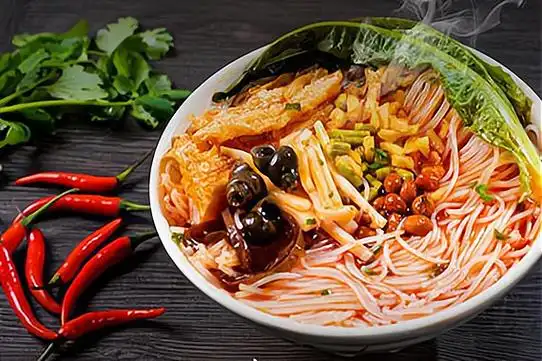
The dish combines rice noodles with a variety of toppings and seasonings that create a complex balance of sour, spicy, savory, and umami flavors.
Why Is Luosifen Famous?
Luosifen became famous largely because of its smell.
Many first-time visitors notice a strong odor before they even see the bowl.
The smell mainly comes from fermented bamboo shoots, one of the dish’s most important ingredients.
To people unfamiliar with fermented foods, the aroma can seem overwhelming.
However, fans argue that the smell is much stronger than the taste and that the flavor itself is surprisingly delicious.
This contrast has helped Luosifen gain a reputation as one of China’s most misunderstood foods.
What Ingredients Are Used?
A traditional bowl of Luosifen often contains:
- Rice noodles
- Snail broth
- Fermented bamboo shoots
- Pickled vegetables
- Roasted peanuts
- Fried tofu skin
- Green vegetables
- Chili oil
Many shops also offer additional toppings such as:
- Braised eggs
- Sausages
- Duck feet
- Beef
- Pork
- Bean curd products
The combination of textures is one reason why the dish is so popular.
Each bite may be crunchy, chewy, soft, spicy, and sour at the same time.
What Does Luosifen Taste Like?
Describing Luosifen can be difficult because it combines several powerful flavors.
Most people notice:
Spiciness
Many versions contain generous amounts of chili oil.
Sourness
Pickled ingredients contribute a refreshing tang.
Umami
The snail-based broth provides depth and richness.
Fermented Flavor
The bamboo shoots add a distinctive taste that is difficult to compare with Western foods.
The result is a bowl of noodles unlike almost anything else.
The Story Behind Luosifen
Luosifen originated in Liuzhou, an industrial city in Guangxi.
Local stories suggest that the dish emerged from street-food culture during the late twentieth century.
Vendors combined rice noodles with snail soup and local pickled ingredients to create an inexpensive yet flavorful meal.
Over time, the recipe evolved and became one of the city’s signature dishes.
Today, Liuzhou is considered the undisputed home of authentic Luosifen.
The Instant Noodle Boom
One of the biggest reasons for Luosifen’s national success was the rise of packaged versions.
Around the late 2010s, ready-to-cook Luosifen became a massive hit across China.
Consumers could now enjoy restaurant-style Luosifen at home.
The convenience helped transform a regional specialty into a nationwide trend.
Millions of packages are sold every year, and the industry has become a major economic success story for Liuzhou.
Why Do Some People Hate It?
The answer is simple: the smell.
Fermented bamboo shoots create an aroma that some people find unpleasant.
The scent is so strong that:
- Some offices prohibit employees from eating it indoors.
- Some university dormitories discourage it.
- Family members often disagree about whether it should be cooked at home.
Even many fans admit that Luosifen is not the most socially acceptable meal.
Why Do Fans Love It?
For enthusiasts, the smell is part of the experience.
Fans often praise:
- The rich broth
- The chewy rice noodles
- The spicy kick
- The variety of textures
- The addictive flavor combination
Many compare it to other famous foods with strong aromas, such as blue cheese or durian.
The stronger the smell, the more authentic some fans believe it to be.
Is Luosifen Healthy?
A typical bowl contains:
- Rice-based carbohydrates
- Vegetables
- Protein from broth and toppings
However, packaged versions can also contain:
- High sodium levels
- Significant amounts of chili oil
Like many noodle dishes, moderation is recommended.
Should Tourists Try Luosifen?
Absolutely.
Even if you end up disliking it, Luosifen offers a fascinating glimpse into China’s regional food culture.
It is one of those dishes that tells a story about local ingredients, culinary traditions, and changing consumer tastes.
For adventurous eaters, trying Luosifen is almost a rite of passage.
Final Thoughts
Luosifen is far more than a bowl of noodles.
It is a cultural phenomenon that transformed from a local specialty in Liuzhou into one of China’s most recognizable foods.
Its powerful smell may divide opinions, but its popularity proves that great food does not always need universal approval.
Whether you become a lifelong fan or simply enjoy the experience once, Luosifen is one of the most unforgettable dishes China has to offer.