


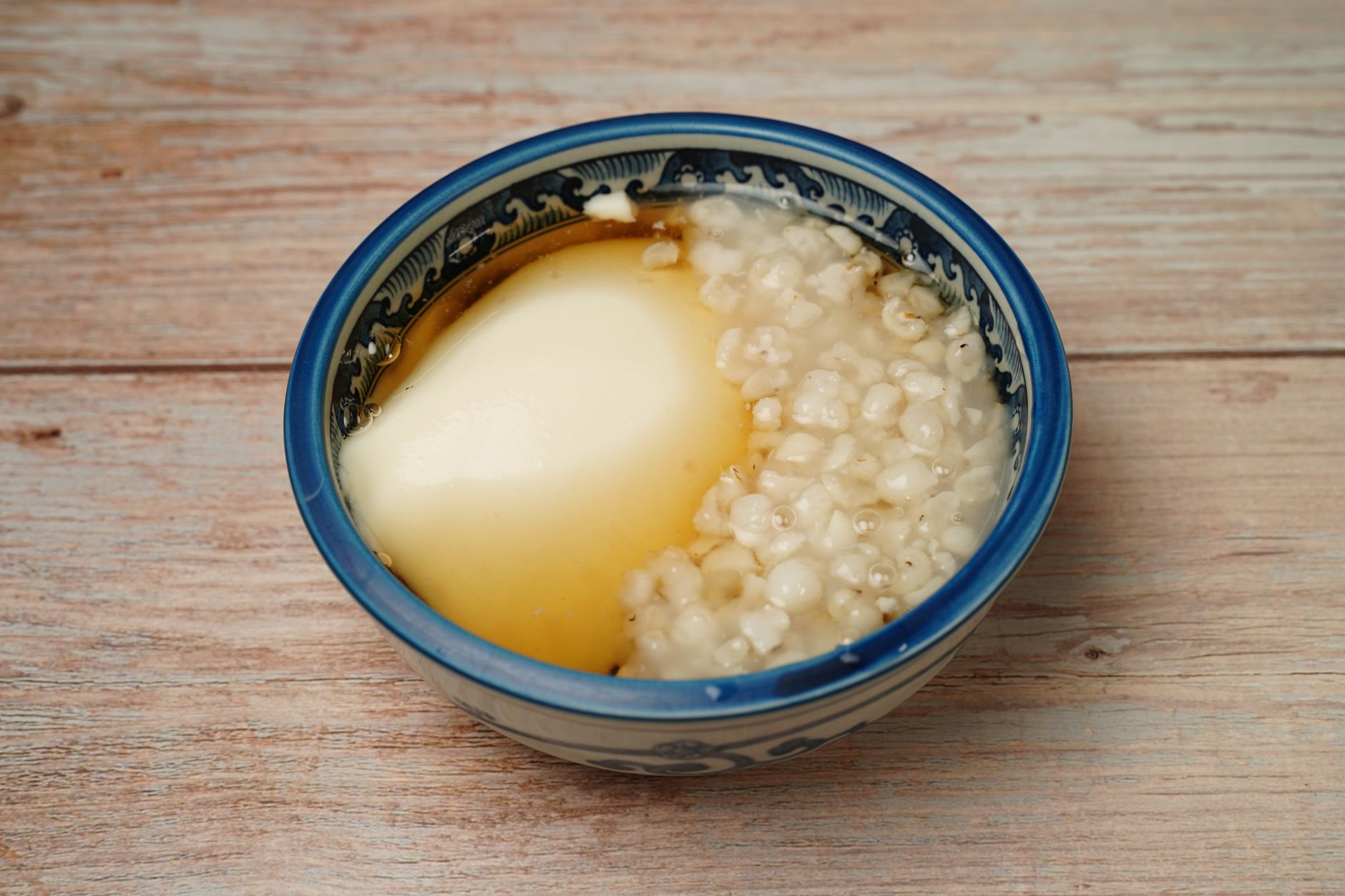

If you travel across China, you may come across a bowl of soft, silky, almost pudding-like food made from tofu.
This dish is called Douhua (豆花), and it is one of the most delicate and surprising foods in Chinese cuisine.
Depending on where you are in China, Douhua can be eaten either as a sweet dessert or a savory snack. This makes it one of the most flexible traditional foods in the country.
But what exactly is Douhua, and why do people love it?
What Is Douhua?
Douhua is a soft tofu dish made from freshly coagulated soy milk.
It is softer than regular tofu and has a texture similar to:
- Pudding
- Custard
- Silky yogurt
It is usually served warm and eaten with a spoon.
Because of its smooth texture, many foreigners are surprised the first time they try it.
Sweet or Savory? Two Different Styles
One of the most interesting things about Douhua is that it is not a fixed flavor dish.
Sweet Douhua (Common in Southern China)
Sweet versions are served with:
- Syrup
- Brown sugar
- Ginger syrup
- Red beans
- Peanuts
This version is often eaten as a dessert or snack.
Savory Douhua (Common in Northern China)
Savory versions are served with:
- Soy sauce
- Chili oil
- Pickled vegetables
- Scallions
- Minced meat
This version is sometimes eaten as breakfast.
The difference between regions often surprises visitors.
How Is Douhua Made?
Douhua starts with soy milk.
The process involves:
- Heating fresh soy milk
- Adding a coagulant (such as gypsum or natural salts)
- Allowing it to set into a soft curd
- Scooping it gently into a bowl
The result is extremely soft tofu that almost falls apart when touched.
Because of its delicate texture, Douhua must be handled carefully during preparation.
Why Douhua Is So Popular in China
Douhua has been enjoyed in China for hundreds of years.
Its popularity comes from several factors:
1. Simple ingredients
It is made from soybeans, one of China’s oldest food staples.
2. Light and healthy
It is low in fat and easy to digest.
3. Affordable street food
Douhua is commonly sold at street stalls and markets.
4. Flexible taste
It can be sweet or savory depending on region.
Douhua vs Tofu Pudding
Many foreigners compare Douhua to tofu pudding or panna cotta.
However, there are key differences:
- Douhua is softer than Western tofu
- It is usually freshly made daily
- It is often served warm, not cold
- It has both sweet and savory versions
This makes it quite unique in global cuisine.
Regional Differences in China
Different regions have different styles of Douhua.
Sichuan Style
Often spicy and savory with chili oil.
Guangdong Style
Usually sweet and light.
Northern China Style
More likely to be eaten as breakfast with savory toppings.
Taiwan Style
Often served with syrup and toppings like taro or beans.
When Do People Eat Douhua?
Douhua can be eaten at different times of day:
- Breakfast (savory version)
- Dessert after meals
- Afternoon snack
- Night street food
It is especially common in traditional morning markets.
What Does Douhua Taste Like?
The taste depends on the version:
Sweet Douhua
- Light
- Mildly sweet
- Smooth and refreshing
Savory Douhua
- Umami-rich
- Slightly salty
- Often spicy
The texture is always soft and silky.
Why Foreigners Are Often Surprised
Many first-time visitors expect tofu to be firm and savory.
Douhua challenges that expectation because:
- It looks like dessert
- It feels like pudding
- It can be sweet or spicy
This contrast often makes it memorable for travelers.
Is Douhua Healthy?
Douhua is generally considered healthy because:
- It is plant-based
- Low in fat
- High in protein (soy-based)
- Light on digestion
However, sweet versions may contain added sugar.
Final Thoughts
Douhua is one of the most traditional yet underrated foods in China.
Its silky texture, simple ingredients, and flexible flavors make it a unique part of Chinese food culture.
Whether you try it sweet or savory, Douhua offers a gentle introduction to the diversity of Chinese cuisine.
For many travelers, it becomes a surprising favorite despite its simplicity.