



In the rugged mountains of western Hunan (Xiangxi), China, lies one of the country’s most mysterious folk customs—Corpse-Driving (Ganshi). Together with Gu poison and “Falling Cave Women”, it is known as the “Three Evils of Xiangxi”, a blend of ancient Chu witchcraft and Miao ethnic sorcery. Legend has it that corpse-driving masters could use secret spells to make corpses jump in lines, traversing treacherous mountain roads to “walk” thousands of miles back to their hometowns for burial. Far from fiction in fantasy films, this was a real special funeral custom in Xiangxi’s mountainous areas from the late Qing Dynasty to the Republic of China era.

1. Origins: The Chinese Obsession with “Roots”
Corpse-driving emerged from Xiangxi’s unique geography, economy, and culture:
- Isolated Terrain: The Yuanjiang River basin in Xiangxi is surrounded by steep mountains with narrow paths, making it impossible to transport coffins of people who died far from home by horse or carriage.
- Cultural Belief: The age-old Chinese tradition of “returning to one’s roots and being buried in hometown soil” was sacred—families would spare no effort to bring their loved ones home.
- A Unique Profession: Thus, the “corpse-driving master” emerged, offering a low-cost alternative to expensive coffin transport, acting as the mountain’s unique “funeral logistics”.
Ancient Legend
It is said that in ancient times, the tribal leader Chiyou fought a brutal battle, leaving countless dead soldiers. After the war, Chiyou ordered his military advisor to cast a spell. With incantations, the corpses stood up, lined up, and followed the army back to their homeland—the earliest origin of corpse-driving.
2. Corpse-Driving Masters: Strict Apprenticeship Rules
Corpse-driving masters were not ordinary sorcerers but skilled professionals requiring innate talent and rigorous training, with extremely strict criteria for accepting apprentices:
- Fearlessness: Apprentices had to venture alone to a graveyard at midnight to retrieve an item hidden by the master, overcoming fear of darkness and corpses.
- Great Strength: They needed to carry heavy loads and navigate mountain paths with exceptional physical stamina.
- Ordinary Appearance: They had to look unremarkable to avoid attracting attention while traveling, keeping their actions secret.
The Iron Rule: “Three Types to Drive, Three to Refuse”
Masters followed strict taboos, only accepting deceased who could be “guided and controlled”:
- Three Acceptable Cases:
- Executed by imperial order or hanging;
- Killed in battle or accidental death in the mountains;
- Died of illness far from home with an intact body and no infectious diseases.
- Three Refusal Cases:
- Died of severe infectious diseases (risk of spreading illness);
- Suicide (strong resentment, hard to control);
- Disfigured by lightning or fire (incomplete soul, impossible to guide).
3. The Process: Mysterious Rituals and the “Walking” Secret
1. Preparation: Preservation and Spells
Xiangxi’s humid climate caused rapid decomposition, so corpses underwent special preservation before departure:
- Soaked in a mixture of Miao herbal medicine, cinnabar, and lime, with seven orifices plugged; sometimes internal organs were removed and replaced with herbs to reduce weight and prevent decay.
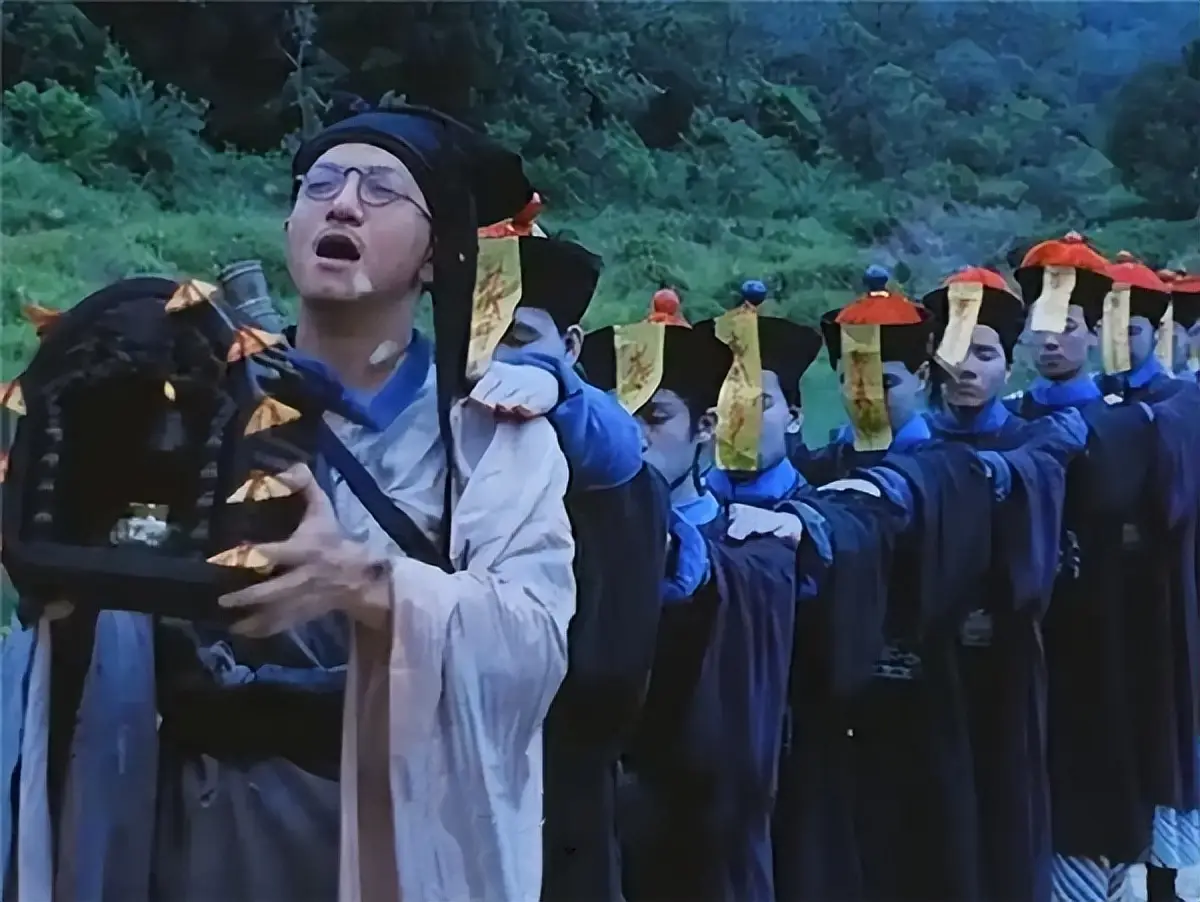
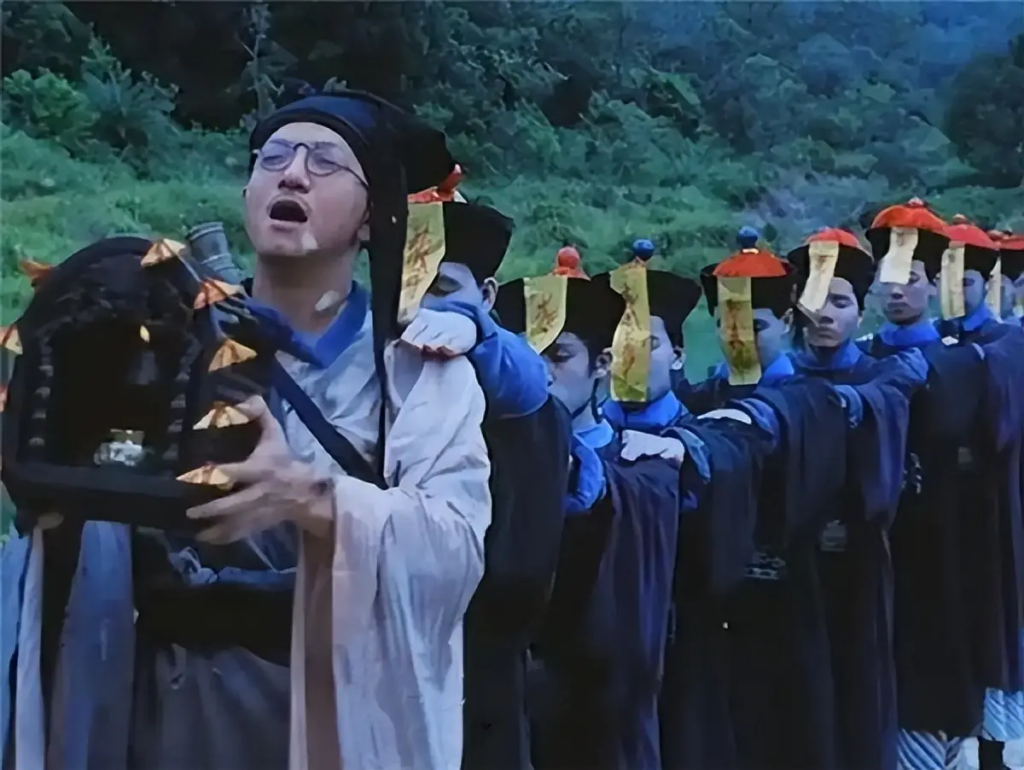
- Corpses were dressed in large black robes, tall bamboo hats, and had cinnabar yellow talismans (Chenzhou talismans) pasted on their foreheads—cinnabar from Chenzhou was considered sacred for exorcism and preservation.
2. The Journey: Night Travel, Bell Guidance
Corpse-driving only took place at night, departing at dusk and arriving before dawn to avoid living people:
- The master led the way, holding a soul-calling bell and striking a small brass gong— the sound warned pedestrians to keep away and scared off wild dogs.
- Corpses lined up, tied together with straw ropes seven feet apart, jumping in unison with the master’s steps. In the dim night, their black robes and synchronized movements made them look like they were walking on their own.
3. Overnight: “Corpse Inns”
Along the way, they stayed at special corpse inns, which refused living guests and only accommodated masters and corpses. Corpses stood leaning against the wall while the master guarded them, continuing the journey before the rooster’s crow the next day.
4. The Truth: Witchcraft Legend or Survival Wisdom?
Modern research confirms that corpses cannot walk on their own. The “mystery” of corpse-driving was actually clever disguise + human porters, a product of survival wisdom:
- Core Mechanism: Two flexible black-painted bamboo poles were passed under the corpse’s armpits and tied tightly, with legs bound to the poles. Two porters carried the poles front and back; the poles bounced with their steps, making the corpses appear to jump from a distance.
- Secret to Deception: Large black robes covered the poles and porters, while bamboo hats hid faces and talismans covered eyes—perfectly concealing the human labor behind it.While the “witchcraft” of corpse-driving is a legend, its core cultural meaning—respect for the deceased and deep love for one’s homeland—remains one of Xiangxi’s most touching cultural legacies. Today, corpse-driving has almost disappeared, only revived in folk performances and films, serving as a key symbol for exploring Xiangxi’s mysterious culture.