


The Dragon Boat Festival, alongside the Spring Festival, Qingming Festival and Mid-Autumn Festival, is known as one of China’s Four Great Traditional Festivals. Also named Duanyang Festival, Dragon Boat Festival, Chongwu Festival and Tianzhong Festival, it is a traditional festival of the Han people. Observed on the fifth day of the fifth lunar month each year, this grand folk festival features rituals for worshipping gods and ancestors, praying for blessings and dispelling evil, as well as celebrations, entertainment and distinctive festival foods.
Why Do We Eat Zongzi?
Reason 1: In Memory of Qu Yuan
According to Biography of Qu Yuan and Jia Yi from Records of the Grand Historian, Qu Yuan served as a minister under King Huai of Chu during the Warring States Period. He advocated appointing talented people, enriching the state and strengthening the army, and allying with the State of Qi to resist the State of Qin. These proposals faced fierce opposition from nobles led by Zilan. Framed by slander, Qu Yuan was dismissed from office, expelled from the capital and exiled to the Yuan and Xiang River valleys.
During his exile, he created timeless masterpieces such as Li Sao, Tian Wen and Nine Songs, which expressed his deep concern for his country and people. In 278 BC, the Qin army captured the capital of Chu. Unable to bear the fall of his homeland, Qu Yuan finished his final work Huai Sha and then drowned himself in the Miluo River on the fifth day of the fifth lunar month, with stones in his arms.
Legend has it that locals in Chu were overwhelmed with grief. They flocked to the Miluo River to pay tribute to him. To stop fish and shrimp from eating his body, people threw glutinous rice, salted eggs, meat and other foods into the river. Over time, these ingredients were wrapped into zongzi. To this day, people eat zongzi on the Dragon Boat Festival to commemorate Qu Yuan’s loyalty and patriotism.
Reason 2: Bringing Glory to the Family
In ancient times, bringing glory to one’s ancestors and family stood for a prominent clan and remarkable achievements. The Chinese character for “zongzi” sounds similar to the one for “ancestors”. Hence, eating zongzi is regarded as a wish to bring honor to the whole family. On the Dragon Boat Festival, people enjoy zongzi not only for its great taste, but also for good fortune, personal success and lasting prestige for the family.
Reason 3: Wishes for Academic Success
Eating zongzi is closely associated with passing official examinations. Since the pronunciation of “zong” in zongzi resembles the word for “pass”, the treat carries the auspicious implication of succeeding in exams. In ancient China, imperial examinations were usually held in autumn, right after the Dragon Boat Festival. For exam candidates, eating zongzi was both a tribute to Qu Yuan and a blessing for getting excellent results and securing official positions.
Reason 4: Praying for Children
People used to give out nine-kid zongzi on the festival as a blessing for a new baby. It is a string of nine zongzi in different sizes and shapes, tied with colourful silk threads. It was commonly presented as a gift from mothers to married daughters, or from mothers-in-law to newlyweds.
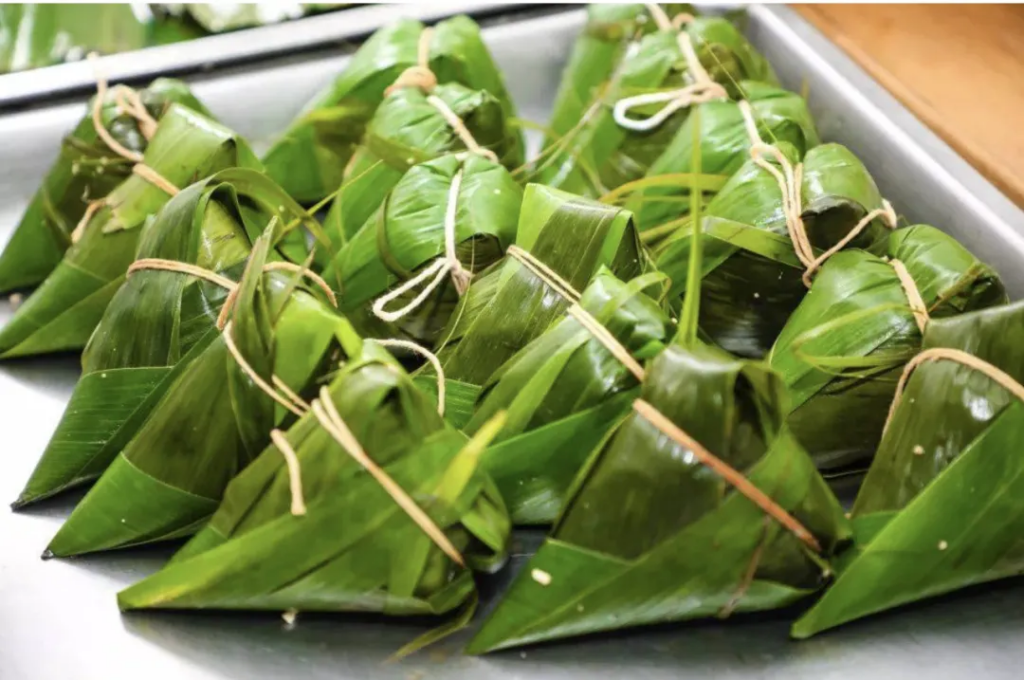
In folk culture, “zongzi” sounds like “having a son”. People believed eating it would bless couples with children. It also shares a similar pronunciation with “many children”, symbolizing a big and thriving family.
02 Differences Between Southern and Northern Zongzi
Southern China
People in the south prefer savoury zongzi. Fillings include cured meat, sausages, pork belly, salted egg yolks and dried shrimp. After boiling, the dumplings are rich, savoury and slightly spicy, an indispensable festival delicacy.
Southern zongzi come in various sizes, from small and delicate ones to larger versions. They are made into diverse shapes such as pyramid, triangular cone, pagoda and cylinder.
Northern China
Sweet zongzi are popular across northern regions. They are mainly made of glutinous rice stuffed with jujubes, candied dates, red bean paste or preserved fruits. People often add extra sugar for a sweeter flavour. Soft, sticky and sweet, they are deeply loved by northern locals.
Northern zongzi are generally larger, mostly square or triangular in shape, usually no smaller than a young girl’s fist.
03 How to Make Zongzi
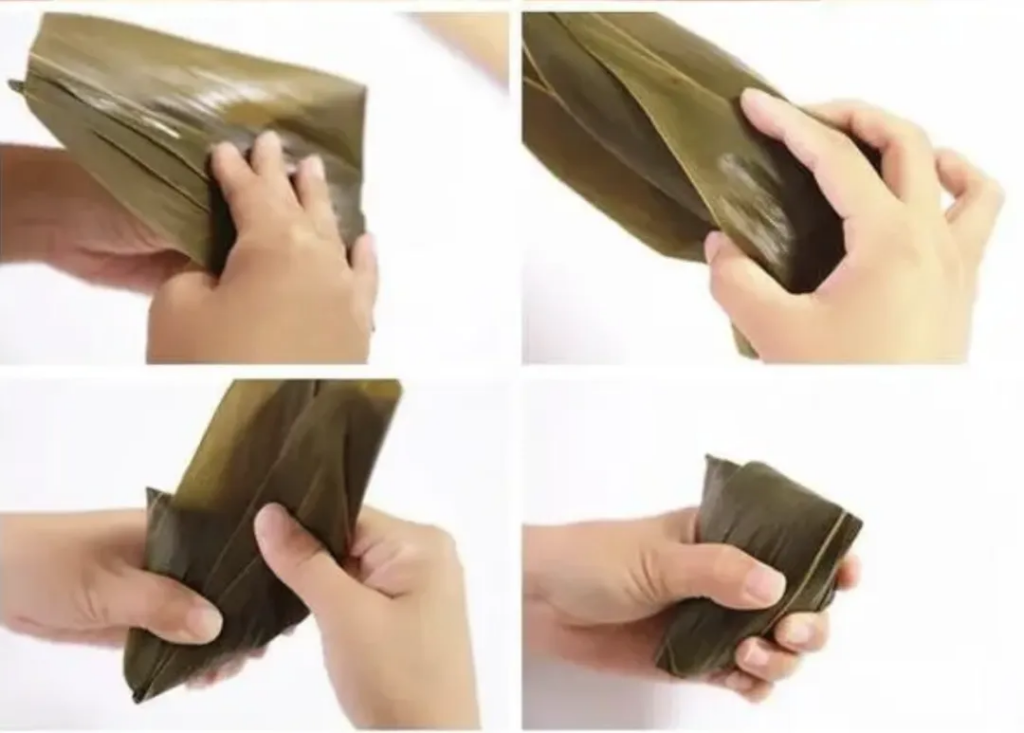
- Take two bamboo leaves and cut off their tough tips. Roll the leaves into a cone shape and fill it with glutinous rice.
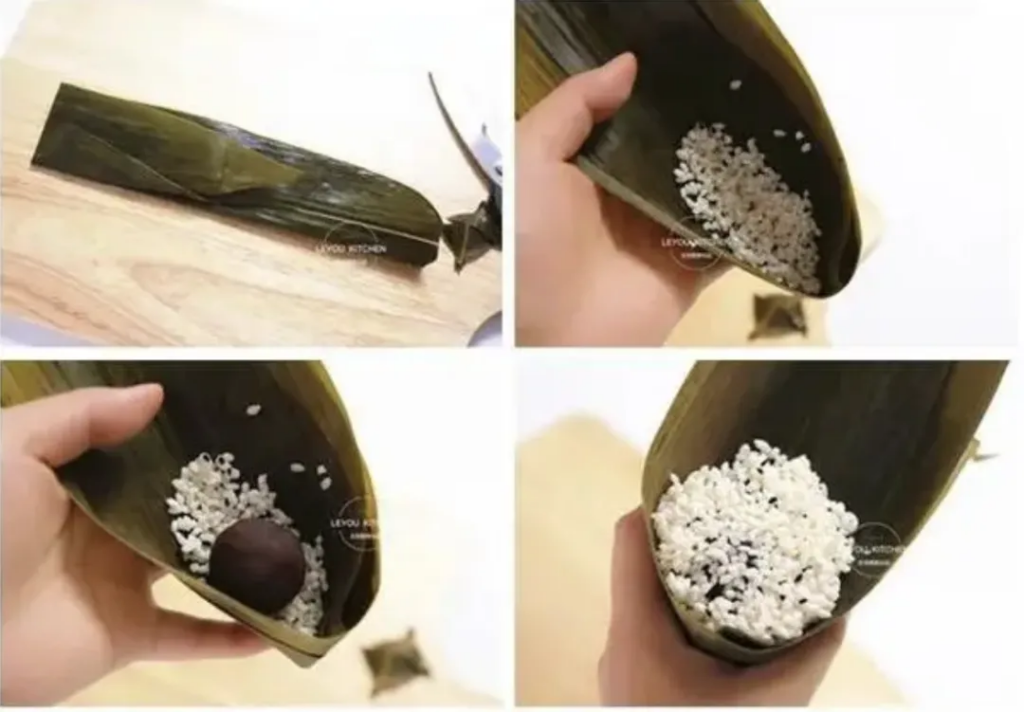
2.Press the rice firmly with a spoon. Do not overfill the cone. Fold down the top leaves to cover the rice completely. Then fold in the leaves on both sides to form a neat triangle, and tie it tightly with string.
Zongzi is far more than just food.
It is a symbol of traditional Chinese culture and a carrier of people’s emotions.
Exchanging zongzi helps strengthen bonds between people.
Its fragrant, sticky and sweet flavour pleases the palate and warms the heart.
It acts as a bridge linking the past with the present, and tradition with modern life.