



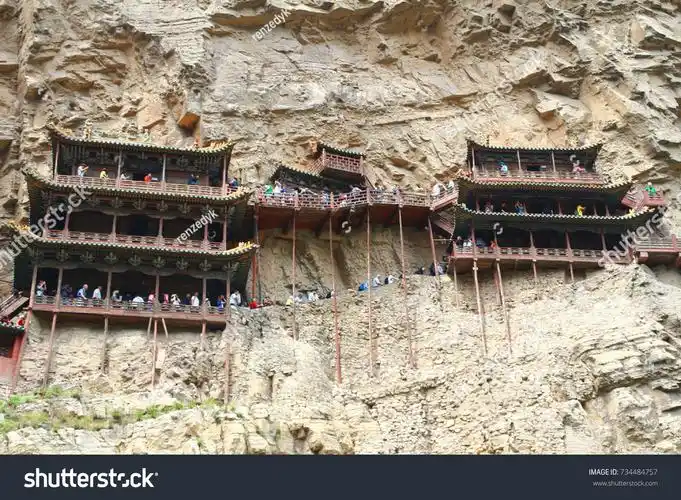
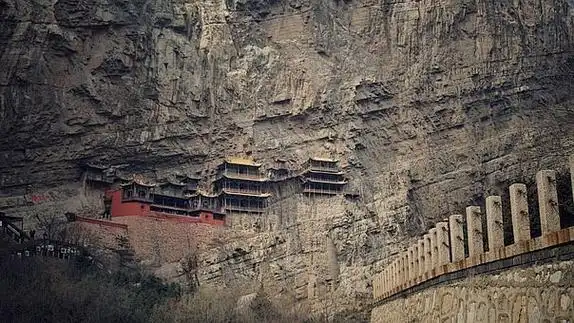
Nestled on the sheer emerald cliff of Cuiping Peak in Hengshan Mountain, Shanxi Province, the Xuankong Temple (Hanging Temple) defies all common sense. Perched hundreds of meters above a deep valley, this ancient wooden structure looks like it is dangling in mid-air, held up by only a few slender wooden pillars. For more than 1,400 years, it has weathered violent earthquakes, fierce wars, torrential rains, and harsh winds, standing firmly on the precipice without ever collapsing. It is not merely a tourist attraction in China — it is a timeless masterpiece of ancient Chinese engineering and a living carrier of traditional Chinese inclusive culture.
A Temple Born From Ancient Faith and Kindness: The Origin Story
The history of the Hanging Temple dates back to the late Northern Wei Dynasty (around 491 AD), a turbulent but culturally inclusive era in ancient China. The temple was initiated and built by a devout Buddhist monk named Liao Ran. Unlike ordinary temples built on flat and blessed land, Liao Ran chose this dangerous cliffside for a profound humanitarian and religious purpose.
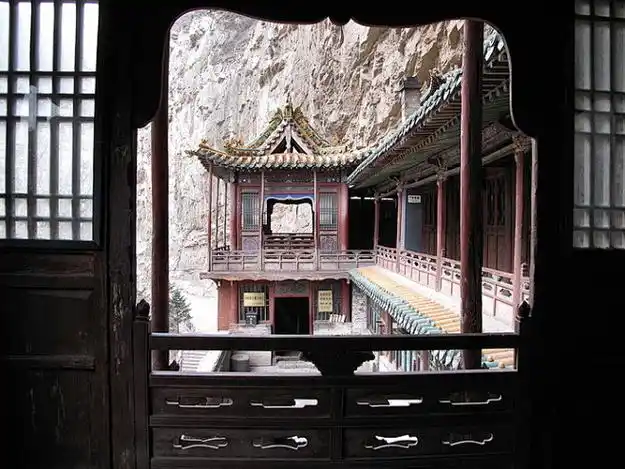
At that time, Hengshan Mountain area was plagued by frequent mountain floods and wild beast attacks, which constantly threatened the lives of local villagers. Deeply sympathetic to the suffering of ordinary people, Liao Ran hoped to build a temple on the cliff to pray for local peace and ward off disasters. He believed that building a temple high above the valley could suppress the mountain floods and calm the restless natural forces, bringing stability and blessings to the surrounding villages.
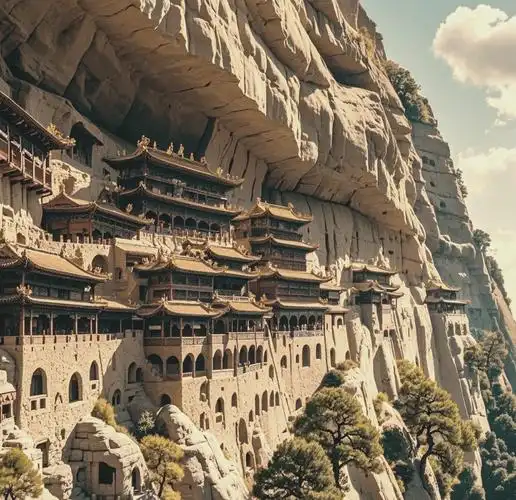
What makes Liao Ran’s vision extraordinary is his open-minded religious philosophy. In an age when different sects often stood opposed to each other, he broke religious barriers and designed the temple as a three-in-one shrine integrating Buddhism, Taoism, and Confucianism. This makes the Hanging Temple the only surviving cliff temple in China that combines the three major traditional Chinese ideologies and religions.
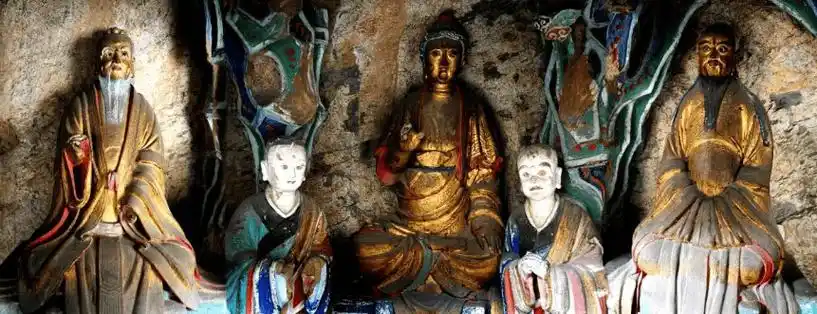
Inside the compact ancient halls, statues of Sakyamuni Buddha (Buddhism), Laozi (founder of Taoism), and Confucius (founder of Confucianism) are enshrined side by side. Under one cliff and one roof, compassion, inaction, and benevolence coexist harmoniously. This unique layout perfectly reflects the inclusive, tolerant and integrated cultural spirit of ancient China — a rare cultural miracle in the history of global religious architecture.
Engineering Miracle: Why It Never Falls in 1,400 Years
To foreign visitors, the most shocking part of the Hanging Temple is its “dangerous” appearance. Local Chinese folk has a vivid saying: “The Hanging Temple hangs halfway up the sky, held by three horsetail-thin pillars”. The slender wooden pillars exposed outside look too weak to bear the weight of the entire temple, making people hold their breath when standing on the corridor. However, this is exactly the greatest wisdom of ancient Chinese architects — the most dangerous sight hides the most solid engineering logic.
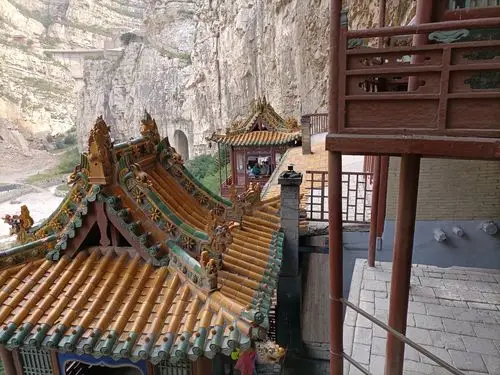
The seemingly fragile outer pillars are not the main force-bearing structure. The real secret of the temple’s immortality lies in the hidden part buried deep in the cliff. Ancient craftsmen chiseled neat square holes deep into the solid rock wall, then inserted dozens of thick iron fir wooden beams into the holes, fixing them tightly with wooden wedges. The more pressure the beams bear, the tighter the wedges lock, forming a stable cantilever stress structure.
In addition, the craftsmen adopted super sophisticated anti-corrosion and anti-insect measures: all wooden beams were soaked in pure tung oil for a long time before installation, which effectively resists moisture, rot and insect erosion. The entire temple adopts an integrated wooden tenon-and-mortise structure, with upper and lower beams embedded and left and right railings connected closely. The whole building has no a single iron nail, yet every part is closely linked and mutually stressed, forming an overall stable force system.
Moreover, the temple’s location is perfectly chosen by ancient architects. The concave cliff shields the temple from direct rain erosion and strong wind impact, while the mountain terrain buffers earthquake damage. It is the perfect combination of human craftsmanship and natural geography, interpreting the Chinese traditional philosophy of “harmony between man and nature”.
Cultural Legacy: Praised by Literati Through Dynasties
For over a millennium, the stunning cliff temple has attracted countless literati, poets and pilgrims. The famous Tang Dynasty poet Li Bai was deeply shocked by its grandeur and perilousness when he visited, and inscribed the four powerful Chinese characters“Tian Xia Guan” (The Grandest View Under Heaven) on the cliff, leaving a precious cultural mark for the ancient temple.
Through wars, regime changes and natural disasters, the Hanging Temple has been repaired and preserved by generations of people. It is no longer just an architectural building, but a living cultural relic. It witnesses the integration of Chinese religions and philosophies, records the superb craftsmanship of ancient Chinese artisans, and carries the simple blessings of ancient people for peace and good fortune.
Final Thought
Standing on the suspended wooden corridor of the Hanging Temple, with steep cliffs above and deep valleys below, people can truly feel the power of time and wisdom. 1,400 years of wind and rain cannot overthrow this cliff miracle. It tells the world that the charm of Chinese ancient architecture lies not only in exquisite carving and unique shape, but also in profound cultural connotation, awe for nature, and inclusive humanistic feelings.