


Introduction: The Month When the Dead Return
Imagine living in a society where millions of people believe that for one month every year, the boundary between the living and the dead becomes thinner.
A month when spirits wander the streets.
A month when families prepare offerings for ancestors.
A month when people avoid swimming at night, moving into new homes, or even whistling after dark.
To many Western readers, this may sound like the plot of a horror movie.
In China and many other Chinese communities around the world, however, it is a traditional cultural belief that has existed for centuries.
This period is known as Ghost Month.
For some, it is a time of respect.
For others, it is a time of caution.
For many families, it is a time to remember ancestors and strengthen connections between generations.
Ghost Month combines religion, folklore, history, superstition, and family values into one of the most fascinating traditions in Chinese culture.
And if you truly want to understand China beyond its famous landmarks and cuisine, few subjects reveal more about the Chinese worldview than Ghost Month.
What Is Ghost Month?
Ghost Month occurs during the seventh month of the traditional Chinese lunar calendar.
According to traditional beliefs, the gates of the underworld open during this period.
Spirits are allowed to return temporarily to the world of the living.
Some of these spirits are believed to be ancestors visiting their descendants.
Others are thought to be wandering souls with no family members left to care for them.
These wandering spirits are often called “hungry ghosts.”
They are believed to roam the earth seeking food, comfort, and recognition.
As a result, people make offerings to both ancestors and unknown spirits.
The goal is simple:
Show respect.
Avoid offending the dead.
Maintain harmony between the human and spiritual worlds.
The Ancient Origins of Ghost Month
The origins of Ghost Month stretch back more than two thousand years.
The tradition developed through a combination of:
- Ancestor worship
- Folk religion
- Taoist beliefs
- Buddhist influences
Ancient Chinese society placed enormous importance on family lineage.
Death was not viewed as a complete separation from the family.
Instead, ancestors continued to play an important role in the lives of their descendants.
People believed that honoring deceased relatives brought blessings.
Neglecting them could invite misfortune.
Over time, these ideas merged with religious teachings concerning spirits and the afterlife.
The result became the Ghost Month tradition we know today.
The Story of the Hungry Ghosts
One of the most influential stories comes from Buddhist tradition.
According to legend, a disciple of the Buddha named Maudgalyayana discovered that his deceased mother had been reborn as a hungry ghost.
These ghosts suffered constant hunger and thirst.
Whenever they tried to eat, food would transform into fire.
Unable to help her himself, he sought guidance from the Buddha.
The Buddha instructed him to make offerings to monks and dedicate the merit to his mother.
Through these acts of generosity, her suffering was relieved.
This story helped establish the tradition of making offerings during Ghost Month.
Even today, many customs are rooted in the desire to care for forgotten or suffering spirits.
The Hungry Ghost Festival
The most important day of Ghost Month is the fifteenth day of the lunar month.
This is often called the Hungry Ghost Festival.
On this day, families prepare offerings that may include:
- Fruits
- Rice
- Tea
- Meat dishes
- Cakes
- Incense
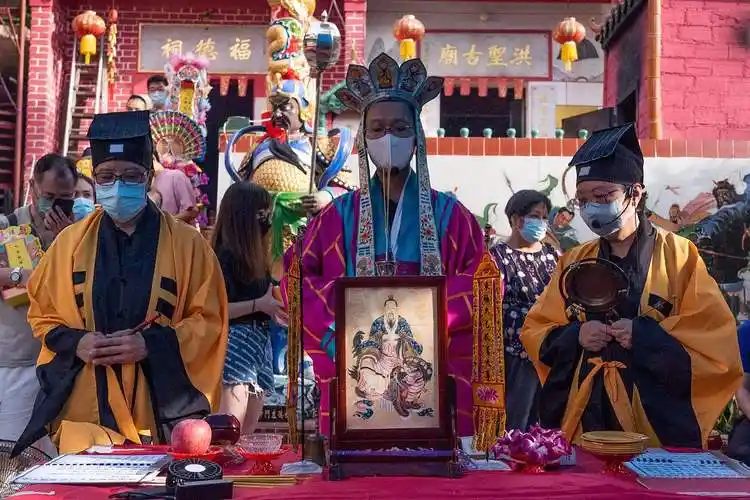
Some families visit temples.
Others hold ceremonies at home.
The atmosphere is not necessarily frightening.
In many ways, it resembles a family reunion involving both the living and the dead.
The festival reflects the Chinese belief that remembering ancestors is both a responsibility and an act of love.
Why People Burn Paper Offerings
One of the most fascinating Ghost Month customs involves burning paper items.
Foreign visitors are often surprised to see paper versions of:
- Money
- Houses
- Cars
- Clothing
- Smartphones
- Luxury handbags
These objects are burned as symbolic gifts for the dead.
The belief is that they will receive these items in the afterlife.
Historically, people burned paper money.
Modern versions have expanded dramatically.
Today, entire paper mansions and luxury vehicles can be purchased for ceremonial burning.
To outsiders, the practice may appear unusual.
To participants, it represents care and generosity toward deceased relatives.
Why Streets Fill With Offerings
During Ghost Month, it is common to see temporary altars along roadsides.
Tables may be covered with food, incense, candles, and paper offerings.
These are often intended for wandering spirits.
Unlike ancestors, these spirits have no descendants to care for them.
People make offerings to prevent them from becoming lonely, angry, or troublesome.
The practice reflects an important aspect of Chinese culture:
Compassion extends beyond one’s immediate family.
Even forgotten souls deserve respect.
The Famous Ghost Month Taboos
Ghost Month is perhaps best known for its many taboos.
While younger generations may not always take them seriously, they remain widely recognized.
Don’t Swim at Night
One popular belief warns against swimming during Ghost Month.
Some people believe water spirits may pull swimmers underwater.
As a result, lakes, rivers, and beaches are sometimes viewed with extra caution.
Don’t Whistle After Dark
Whistling at night is thought to attract unwanted spiritual attention.
Many children grow up hearing warnings about this behavior.
Don’t Move Into a New House
Ghost Month is generally considered an unlucky time for major life events.
Moving into a new home may be postponed until after the month ends.
Don’t Start a Business
Some people avoid launching businesses or signing important contracts during this period.
Avoid Staying Out Too Late
Many traditional beliefs encourage people to return home earlier during Ghost Month.
Why Empty Seats Matter
In some communities, public performances are organized for both living audiences and spirits.
Temporary stages host:
- Opera performances
- Traditional music
- Cultural shows
A fascinating detail often surprises foreigners.
The front rows are intentionally left empty.
These seats are believed to be reserved for visiting spirits.
No one should sit there.
The practice symbolizes respect for unseen guests.
Ghost Month Across Asia
Although strongly associated with Chinese culture, Ghost Month traditions appear throughout Asia.
Large celebrations occur in:
- Singapore
- Malaysia
- Taiwan
- Hong Kong
Each region has developed unique customs.
Yet the central themes remain remarkably consistent:
Respect for ancestors.
Care for forgotten spirits.
Recognition of the connection between past and present generations.
Is Ghost Month a Religious Festival?
The answer is complicated.
Ghost Month is influenced by multiple traditions.
It contains elements of:
- Buddhism
- Taoism
- Folk religion
- Ancestor worship
Many participants do not view it as belonging exclusively to one religion.
Instead, it functions as a cultural tradition shared across communities.
This flexibility helps explain its enduring popularity.
Why Modern Chinese People Still Observe It
China today is one of the world’s most modern societies.
Skyscrapers dominate city skylines.
Artificial intelligence shapes industries.
High-speed rail networks connect the country.
Yet Ghost Month traditions remain visible.
Why?
Because the festival is not merely about ghosts.
At its core, it concerns memory.
It reminds people to honor family history.
It reinforces cultural identity.
It provides a connection between generations.
Even individuals who do not literally believe in ghosts often continue participating in certain customs.
The traditions carry emotional meaning beyond their supernatural origins.
What Foreign Visitors Often Misunderstand
Many outsiders assume Ghost Month is China’s version of Halloween.
This comparison is understandable but inaccurate.
Halloween focuses largely on costumes, entertainment, and playful scares.
Ghost Month is more serious.
It emphasizes:
- Respect
- Remembrance
- Family
- Spiritual responsibility
The goal is not to celebrate fear.
The goal is to maintain harmony between the living and the dead.
Understanding this distinction is essential.
The Deeper Meaning Behind Ghost Month
At first glance, Ghost Month appears to be about spirits.
In reality, it is about relationships.
Relationships between:
- Parents and children
- Ancestors and descendants
- Past and present
- Memory and identity
The festival reminds people that no one exists in isolation.
Every family is connected to previous generations.
Every community is shaped by those who came before.
This idea lies at the heart of Chinese culture.
Why Ghost Month Continues to Fascinate the World
For international audiences, Ghost Month offers something rare.
It reveals how ancient beliefs continue to influence modern life.
It combines mystery with meaning.
Superstition with family values.
Folklore with history.
Whether viewed through a religious, cultural, or anthropological lens, the tradition provides a fascinating glimpse into the Chinese understanding of life and death.
Conclusion: More Than a Ghost Story
Ghost Month is often described as China’s spookiest tradition.
Yet reducing it to a ghost story misses its true significance.
Beneath the tales of wandering spirits and supernatural taboos lies a deeper message.
Remember those who came before you.
Show gratitude.
Maintain family bonds.
Treat both the living and the dead with respect.
These values have shaped Chinese society for centuries.
And that is why Ghost Month continues to endure.
Not because people fear ghosts.
But because they refuse to forget their ancestors.
In a rapidly changing world, that connection to the past may be the most powerful tradition of all.