
Introduction: The Chinese City That Doesn’t Feel Entirely Chinese
Imagine arriving in a Chinese city for the first time.
You expect to see:
- Traditional Chinese temples
- Pagodas
- Classical Chinese architecture
Instead, you encounter:
- Russian-style churches
- European boulevards
- Onion-domed cathedrals
- Bakeries selling Russian bread
- Streets that look more like Eastern Europe than East Asia
For many first-time visitors, Harbin is one of China’s biggest surprises.
Located in the far northeast near Russia, Harbin possesses a cultural atmosphere unlike anywhere else in the country.
Visitors often ask:
“Why does this Chinese city feel so Russian?”
The answer lies in a remarkable story involving railways, empires, migration, war, and cultural exchange.
To understand Harbin, we must travel back more than a century.
Where Is Harbin?
Harbin is the capital of Heilongjiang Province in northeastern China.
It lies relatively close to the Russian border.
Its geographic location has shaped its identity for generations.
Harbin experiences:
- Long winters
- Heavy snowfall
- Extremely cold temperatures
January temperatures frequently fall below -20°C (-4°F).
These harsh winters have played an important role in the city’s development and character.
But climate alone does not explain why Harbin feels different.
History does.
A City That Barely Existed
One surprising fact is that Harbin is relatively young by Chinese standards.
Many Chinese cities trace their origins back thousands of years.
Harbin does not.
Before the late nineteenth century, it was a small settlement with limited importance.
Everything changed because of a railway.
The Russian Railway Project
In the late nineteenth century, the Chinese Eastern Railway Project transformed the region.
The railway connected parts of the Russian Empire with East Asia.
Harbin became a crucial transportation hub.
Suddenly the small settlement attracted:
- Engineers
- Workers
- Merchants
- Administrators
- Investors
Many of them came from Russia.
Within a remarkably short period, Harbin grew into a major city.
The Birth of a Multicultural City
Unlike many cities that develop gradually over centuries, Harbin expanded rapidly.
People arrived from numerous backgrounds:
- Russians
- Chinese
- Jews
- Poles
- Ukrainians
- Armenians
- Germans
The result was one of Asia’s most cosmopolitan cities.
At the beginning of the twentieth century, dozens of languages could be heard in Harbin’s streets.
It became a place where Europe and Asia met.
The Russian Influence Arrives
Russian settlers brought more than labor and investment.
They brought culture.
They introduced:
- Architecture
- Cuisine
- Religion
- Music
- Literature
These influences shaped the city in visible ways.
Even today, visitors notice them immediately.
Unlike many Chinese cities, Harbin’s historic center contains buildings that would not seem out of place in Moscow or Saint Petersburg.
Saint Sophia Cathedral: Harbin’s Most Famous Landmark
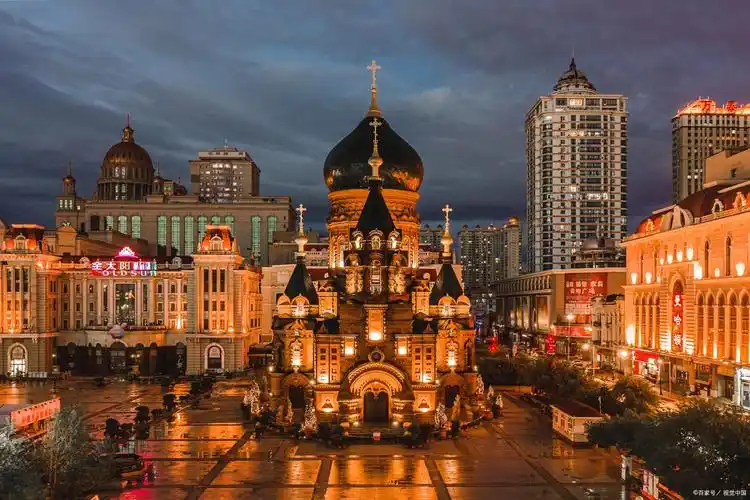
Nothing symbolizes Harbin’s Russian heritage more clearly than Saint Sophia Cathedral.
With its enormous green dome and Byzantine-inspired architecture, the cathedral looks dramatically different from traditional Chinese religious structures.
Originally built by Russian communities in the early twentieth century, it became one of Harbin’s defining landmarks.
Today it serves as a museum rather than an active church.
Yet it remains one of the most photographed buildings in China.
Many visitors are shocked to learn they are still within Chinese territory.
Walking Down Central Street
One of Harbin’s most famous attractions is Zhongyang Street.
Also known as Central Street, it stretches for more than a kilometer through the city’s historic district.
Walking there feels surprisingly European.
Visitors encounter:
- Baroque architecture
- Art Nouveau buildings
- Eclectic European styles
The street preserves a unique architectural heritage rarely seen elsewhere in China.
It serves as a living reminder of Harbin’s international past.
The Russian Bread Tradition
Food offers another clue to Harbin’s identity.
Many Chinese cities are known for:
- Rice dishes
- Noodles
- Dumplings
Harbin has those too.
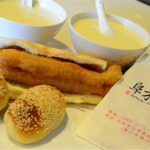
But it also possesses a strong bread culture.
Russian-style bakeries became an important part of city life.
One famous example is the large, dense bread known locally as “lieba.”
Derived from the Russian word for bread, it remains popular today.
The city’s culinary traditions reflect generations of cultural exchange.
Why Harbin Loves Sausages
Another culinary legacy is sausage.
Harbin-style red sausage became one of the city’s most iconic foods.
Its origins trace directly to European and Russian traditions.
Today it is enjoyed throughout China.
Yet many people do not realize its roots lie in Harbin’s unique history.
The Jewish Community of Harbin
One of the most fascinating chapters of Harbin’s history involves its Jewish population.
In the early twentieth century, thousands of Jewish families settled in the city.
Many were escaping persecution elsewhere.
Harbin became one of the most important Jewish communities in East Asia.
The city contained:
- Synagogues
- Schools
- Businesses
- Cultural institutions
Although most eventually left, their legacy remains an important part of Harbin’s story.
The Russian Revolution Changes Everything
The early twentieth century brought dramatic upheaval.
The Russian Revolution transformed the political landscape.
Large numbers of Russian refugees fled across borders.
Many arrived in Harbin.
The city’s Russian population expanded significantly.
For a time, Harbin became one of the largest Russian communities outside Russia itself.
This further strengthened the city’s distinctive character.
Harbin and the Coldest Winters in China
If Harbin’s history explains its architecture, its climate explains another famous attraction.
Winter.
Lots of winter.
The city experiences some of China’s coldest temperatures.
Instead of fighting the cold, Harbin embraced it.
The result became world famous.
The Harbin Ice and Snow Festival
Every year, Harbin hosts one of the planet’s most spectacular winter events:
Harbin International Ice and Snow Festival
Artists create:
- Massive ice castles
- Giant sculptures
- Illuminated frozen buildings
- Snow monuments
Some structures reach astonishing sizes.
At night, colorful lighting transforms the frozen city into something resembling a fantasy kingdom.
The festival attracts millions of visitors from around the world.
Why Harbin Looks Different From Other Chinese Cities
The answer lies in timing.
Many Chinese cities evolved over thousands of years under primarily Chinese cultural influences.
Harbin experienced rapid development during a period of intense international interaction.
As a result, its urban landscape reflects:
- Chinese traditions
- Russian influences
- European architecture
- International migration
This combination created something unique.
Not Russian.
Not European.
Not entirely Chinese.
But unmistakably Harbin.
What Foreign Visitors Often Misunderstand
Some tourists assume Harbin was once part of Russia.
It was not.
The city remained within Chinese territory.
However, foreign influence was exceptionally strong due to railway construction, migration, and international commerce.
Understanding this distinction helps explain Harbin’s unusual identity.
It is a Chinese city shaped by global history.
Why Chinese Tourists Love Harbin
For many Chinese travelers, Harbin offers experiences unavailable elsewhere in the country.
Visitors come for:
- Snow and ice
- European architecture
- Russian-inspired food
- Winter scenery
- Historical atmosphere
The city feels exotic even to domestic tourists.
That uniqueness drives its popularity.
Harbin Today
Modern Harbin is a thriving Chinese metropolis.
Its economy, culture, and population are overwhelmingly Chinese.
Yet traces of its international past remain visible everywhere.
The city successfully preserves elements of its historical heritage while continuing to modernize.
This balance contributes to its appeal.
Why Harbin Matters
Harbin tells an important story about globalization before globalization.
Long before the internet and international air travel, people, ideas, and cultures moved across continents.
The city became a crossroads.
A place where:
- Russians met Chinese
- Europeans met Asians
- Traditions mixed
- New identities emerged
Its history demonstrates how cultural exchange can shape entire cities.
Conclusion: China’s Most Unexpected City
When most people imagine China, Harbin is not what they expect.
They do not expect onion domes.
They do not expect Russian bread.
They do not expect European boulevards.
Yet that is exactly what makes Harbin fascinating.
It challenges stereotypes.
It reveals a different side of Chinese history.
And it reminds us that cultures are rarely isolated.
For more than a century, Harbin has stood at the intersection of civilizations.
Part Chinese.
Part Russian.
Part something entirely its own.
And that unique identity continues to make it one of the most intriguing cities in Asia.