
Introduction: A Border That Could Not Divide a People
Look at a modern map.
China and Vietnam appear to be two separate countries.
Different governments.
Different languages.
Different histories.
But if you travel to the borderlands between the two nations, you quickly discover something surprising:
Some of the people living there belong to the same ethnic communities.
In fact, long before the modern borders of China and Vietnam existed, people were already living, trading, farming, marrying, and moving throughout the region.
Today, several ethnic groups can be found on both sides of the frontier.
Some speak closely related languages.
Some share common ancestors.
Some celebrate similar festivals.
And one group is particularly surprising:
China even has its own community belonging to Vietnam’s majority ethnic group.
For many foreign readers, this raises an unexpected question:
How can people be ethnically Vietnamese and Chinese at the same time?
The answer lies in one of Asia’s oldest borderlands.
Modern Borders Are New. People Are Old.
One of the biggest mistakes people make when studying ethnicity is assuming that modern national borders created ethnic groups.
Usually, the opposite happened.
Ethnic communities existed long before national borders.
For centuries, southern China and northern Vietnam formed part of a cultural crossroads.
Merchants traveled freely.
Families moved across regions.
Kingdoms rose and fell.
Borders shifted repeatedly.
The people often stayed where they were.
As a result, many ethnic communities found themselves divided by international boundaries when modern states eventually emerged.
Meet the Jing People: China’s Ethnic Vietnamese
Perhaps the most fascinating example is the Jing people.
The Jing People are one of China’s officially recognized ethnic groups.
What makes them remarkable is that they are closely related to Vietnam’s majority ethnic group, known as the Kinh.
In fact, “Jing” is essentially the Chinese designation for a branch of the same ethnic community.
This means that China officially recognizes a group that shares ancestry with Vietnam’s dominant population.
For many foreigners, this is completely unexpected.
Where Do the Jing People Live?
Most Jing people live in southern Guangxi near the Gulf of Tonkin.
Particularly around the area of:
Dongxing
This region sits directly on the border with Vietnam.
The location explains much of their history.
For centuries, maritime trade connected communities throughout the area.
Fishing, commerce, and cultural exchange helped shape local identity.
Today, the Jing remain one of China’s smallest ethnic groups.
Yet their historical importance far exceeds their population size.
A Chinese Minority With Vietnamese Roots
The Jing people are Chinese citizens.
They participate fully in Chinese society.
However, they have preserved distinctive cultural traditions that connect them to their Vietnamese heritage.
Examples include:
- Traditional music
- Folk customs
- Culinary traditions
- Religious practices
This combination creates a unique cultural identity.
They are not Vietnamese nationals living in China.
They are Chinese citizens whose ethnic roots connect them to a larger cross-border community.
The Three Jing Islands
Historically, many Jing communities were concentrated on three islands near the border.
These islands became important centers of:
- Fishing
- Trade
- Maritime culture
The sea played a central role in shaping local life.
Unlike many inland ethnic groups in China, the Jing developed a culture closely tied to coastal living.
This maritime heritage remains visible today.
The Famous Bamboo Instrument
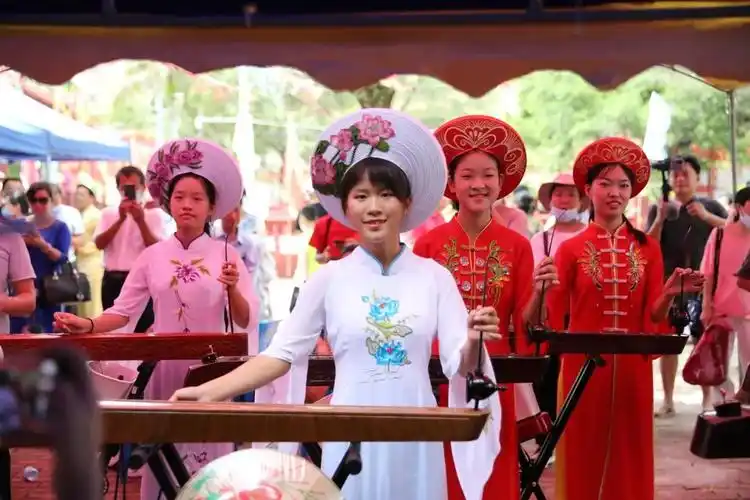
One of the most distinctive elements of Jing culture is a traditional musical instrument made from bamboo.
Known for its delicate sound, it remains an important symbol of ethnic identity.
Music has long served as a way to preserve traditions across generations.
For many visitors, these performances provide a fascinating glimpse into a lesser-known corner of Chinese culture.
The Zhuang: China’s Largest Minority
The story becomes even more interesting when we move beyond the Jing.
Meet the Zhuang.
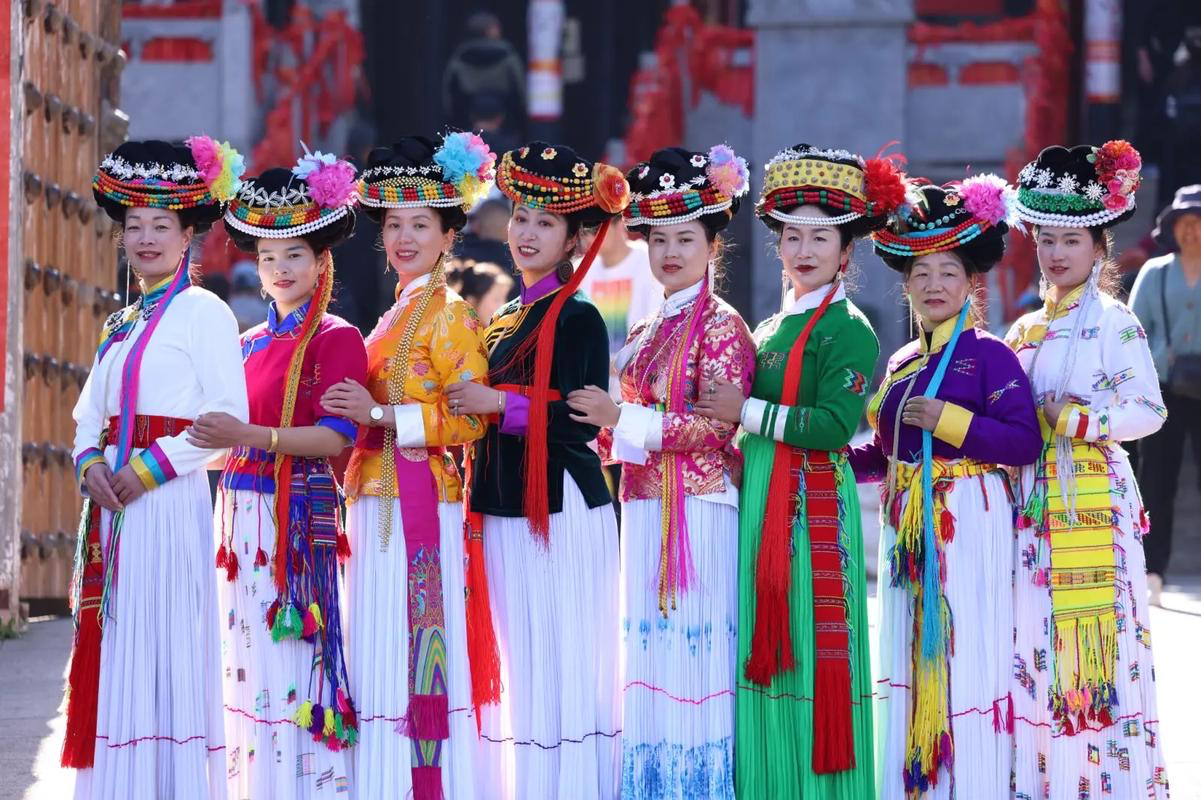
The Zhuang People are China’s largest ethnic minority group, numbering more than 18 million people.
Most live in Guangxi.
What many foreigners do not realize is that the Zhuang share deep historical connections with several ethnic communities in northern Vietnam.
One Family, Different Names
Across the China-Vietnam border, related groups are known by different names.
In Vietnam, closely related communities include:
- Tày
- Nùng
Linguists generally place these groups within the broader Tai language family.
The same language family also includes:
- Zhuang
- Dai
- Thai
- Lao
This means the cultural connections extend far beyond China and Vietnam.
They stretch across much of Southeast Asia.
Why Borders Didn’t Matter Much
Historically, mountain communities along the border often interacted more with nearby villages than with distant capitals.
Travel to Beijing or Hanoi was difficult.
Travel to the neighboring valley was easier.
As a result, cultural exchange continued regardless of political boundaries.
People traded:
- Rice
- Livestock
- Textiles
- Salt
Families sometimes had relatives on both sides of the frontier.
This pattern persisted for centuries.
Shared Food Traditions
One of the easiest ways to observe cultural connections is through food.
Across the China-Vietnam border, many dishes share common characteristics:
- Rice-based cuisine
- Fresh herbs
- Fermented foods
- Fish sauces
- Tropical ingredients
While each region developed unique variations, the similarities remain striking.
Visitors often notice familiar flavors appearing on both sides of the border.
Similar Festivals
Many cross-border communities celebrate festivals linked to:
- Agriculture
- Ancestor worship
- Seasonal cycles
Although names and details differ, the underlying themes often resemble one another.
These similarities reflect centuries of shared cultural development.
Languages That Cross Borders
Language offers another fascinating example.
Many ethnic communities in southern China speak languages that are more closely related to languages in Southeast Asia than to Mandarin Chinese.
This surprises many foreigners.
Yet it makes perfect sense historically.
The region has long served as a bridge between East Asia and Southeast Asia.
The Dai Connection: China’s Link to Thailand
The story does not stop with Vietnam.
Another Chinese ethnic group, the Dai, shares deep connections with peoples in:
- Thailand
- Laos
- Myanmar
Like the Zhuang and Tày, they belong to the broader Tai language family.
This means southern China is connected to a vast cultural network stretching across Southeast Asia.
Many scholars describe this as one of Asia’s most fascinating cultural continuums.
Why Foreigners Often Misunderstand Ethnicity
Many people assume:
One country = One people.
History is far more complicated.
Ethnic communities frequently extend across national borders.
Examples include:
- Kurds
- Arabs
- Mongols
- Kazakhs
The same pattern exists in East and Southeast Asia.
China and Vietnam provide an excellent example.
What These Communities Reveal About History
The existence of shared ethnic groups reminds us that human history rarely follows political maps.
People move.
Kingdoms change.
Borders shift.
Cultures evolve.
Yet communities often maintain connections that survive for centuries.
The border between China and Vietnam may be modern.
Many of the people living there are not.
Their histories are far older.
Visiting the Borderlands Today
Travelers exploring southern Guangxi often discover a side of China that feels surprisingly different.
Visitors encounter:
- Multilingual communities
- Unique ethnic traditions
- Cross-border markets
- Distinctive cuisine
The region offers a fascinating alternative to the better-known destinations of Beijing, Shanghai, and Xi’an.
For culturally curious travelers, it is one of China’s hidden treasures.
Why This Story Matters
The story of China’s Vietnamese-related ethnic groups challenges simplistic ideas about nationality and identity.
It demonstrates that culture does not stop at a border checkpoint.
Communities can share ancestry, language, and traditions while belonging to different countries.
This reality exists throughout the world.
The China-Vietnam border simply provides one particularly fascinating example.
Conclusion: One Border, Many Shared Histories
When most people think of China and Vietnam, they imagine two separate nations.
Politically, they are.
Culturally, the story is more complex.
From the Jing people of Guangxi to the Zhuang communities connected to ethnic groups in Vietnam, the borderlands reveal centuries of interaction and shared heritage.
These communities remind us that identities are layered.
A person can be:
- Ethnically connected to one tradition
- Nationally connected to another
- Proud of both
And in the mountains, rivers, and coastal regions between China and Vietnam, that reality has existed for generations.
Their story is not simply about borders.
It is about the people who lived beyond them.