
Introduction: The Part of China That Feels Like Thailand
Imagine arriving in China for the first time.
You expect to see:
- Ancient Chinese temples
- Pagodas
- Traditional Chinese architecture
- Mandarin-speaking communities
Instead, you discover:
- Golden Buddhist temples
- Tropical rainforests
- Palm trees
- Elephant imagery
- Water festivals
- People speaking a language similar to Thai
For many foreign travelers, the experience is shocking.
Some even ask:
“Am I still in China?”
The answer is yes.
Welcome to the world of the Dai people.
Living primarily in southwestern China, the Dai are one of the country’s most fascinating ethnic groups.
And they raise an intriguing question:
Are the Dai people related to the Thai people?
The short answer is:
Yes.
In fact, they share deep historical, linguistic, cultural, and religious roots.
To understand this remarkable connection, we need to travel back long before the modern countries of China and Thailand existed.
Who Are the Dai People?
The Dai are one of China’s officially recognized ethnic groups.
They number more than one million people.
Most live in:
- Xishuangbanna
- Dehong
- Southern Yunnan Province
Near the borders of:
- Thailand
- Laos
- Myanmar
For centuries, these regions served as cultural crossroads connecting China with Southeast Asia.
The Dai developed a distinctive civilization that differs noticeably from the cultures found in northern China.
The First Surprise: “Dai” and “Thai” Are Related Words
One of the most fascinating facts is linguistic.
The words:
- Dai
- Thai
- Tai
all originate from the same broader ethnolinguistic family.
Many scholars believe these names ultimately refer to related peoples who shared common ancestors.
This means that the similarity between “Dai” and “Thai” is not a coincidence.
They are historically connected.
The Tai Family Across Asia
The Dai belong to the larger Tai ethnic family.
This family includes populations spread across:
- Thailand
- Laos
- Myanmar
- Vietnam
- Southern China
Today, the largest Tai-speaking groups include:
Thai
The majority population of Thailand.
Lao
The dominant ethnic group of Laos.
Dai
One of China’s major ethnic minorities.
Shan
A large community in Myanmar.
Although political borders separate them today, these groups share common historical roots.
Before Thailand Existed
Many foreigners assume the Thai people have always lived in modern Thailand.
History is more complicated.
Most historians believe the ancestors of modern Thai populations originally lived farther north.
Some scholars point to southern China and neighboring regions as important parts of their early homeland.
Over centuries, groups migrated southward.
As they moved, they established new kingdoms throughout Southeast Asia.
Eventually these migrations contributed to the formation of modern Thailand.
Did the Thai Come From China?
This question generates considerable debate among historians.
The answer depends on how the question is framed.
Modern Thai people are not simply migrants from China.
However, many scholars agree that early Tai-speaking populations once occupied areas that now form part of southern China.
Over time, migration, intermarriage, and state formation created the modern Thai nation.
The Dai represent one branch of this broader historical family.
In this sense, they can be viewed as cousins rather than identical populations.
Xishuangbanna: China’s Tropical Kingdom
The cultural heartland of the Dai people is:
Xishuangbanna
For many visitors, Xishuangbanna feels completely different from the China they imagined.
Instead of snowy mountains or ancient imperial palaces, travelers encounter:
- Rainforests
- Banana trees
- Buddhist temples
- Tropical fruits
The climate resembles Southeast Asia far more than northern China.
This environment helped shape Dai culture.
Why Xishuangbanna Feels Like Thailand
Many first-time visitors describe Xishuangbanna as:
“Thailand inside China.”
The comparison is understandable.
Visitors notice:
Similar Architecture
Many Dai temples feature:
- Golden roofs
- Multi-tiered structures
- Southeast Asian design influences
Similar Food
Cuisine often emphasizes:
- Herbs
- Rice
- Fresh vegetables
- Tropical ingredients
Similar Religion
Buddhism plays a central role in daily life.
Similar Festivals
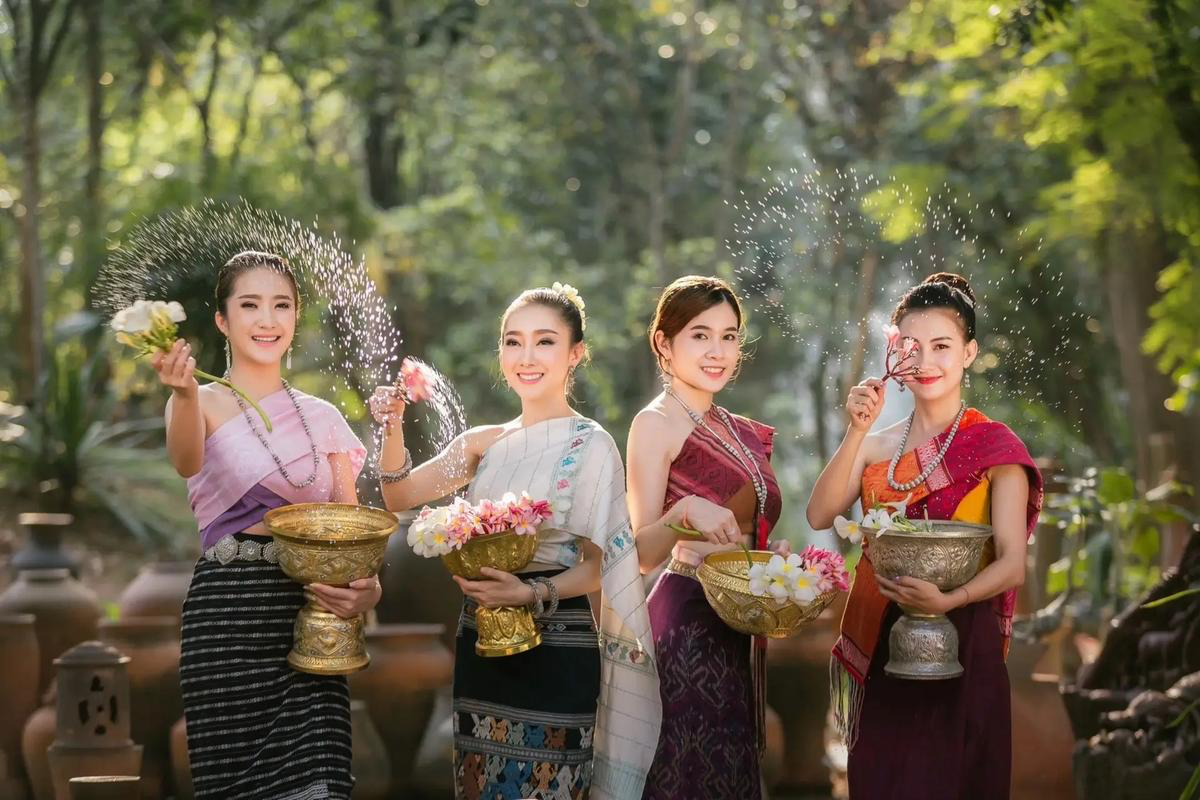
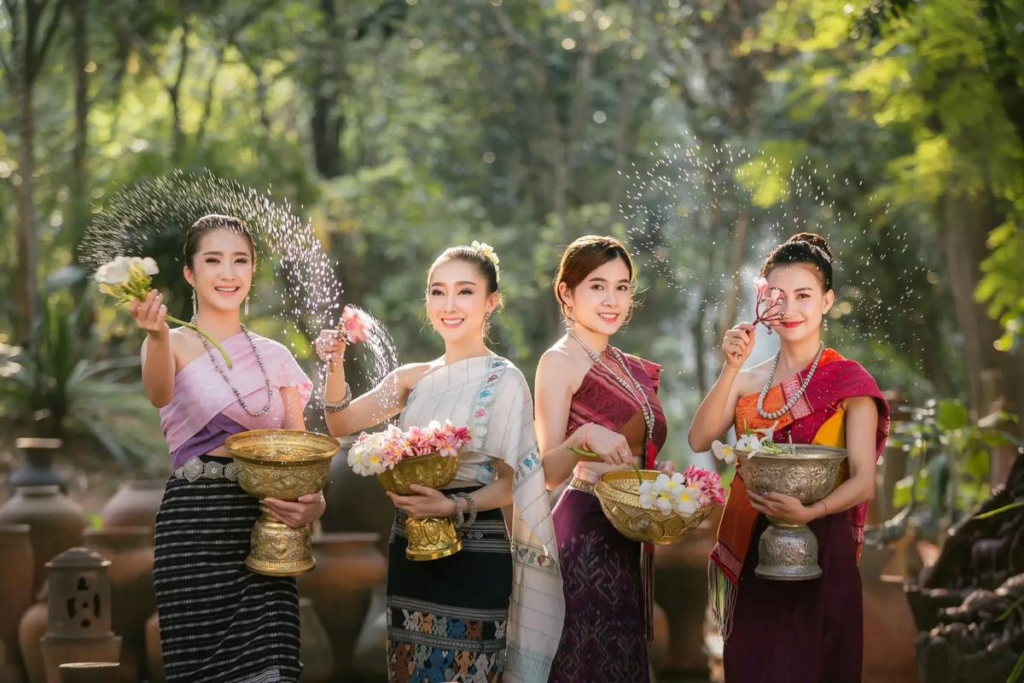
The most famous example is the Water Splashing Festival.
The Water Splashing Festival
Nothing symbolizes Dai culture more than the:
Water Splashing Festival
Every year, people gather in streets and public spaces to throw water at one another.
To outsiders, it looks like a giant water fight.
But the tradition carries deeper meaning.
Water symbolizes:
- Purification
- Good fortune
- Renewal
The festival marks the Dai New Year and remains one of China’s most colorful celebrations.
Foreign tourists often compare it to Thailand’s famous Songkran Festival.
That comparison is accurate because both festivals share common origins.
Buddhism Connects the Dai and Thai Worlds
Religion provides another major link.
Most Dai people traditionally practice Theravada Buddhism.
This is the same branch of Buddhism that dominates:
- Thailand
- Laos
- Myanmar
- Cambodia
This distinguishes them from many other Chinese communities.
Monasteries have long served as centers of:
- Education
- Religious life
- Community activities
The influence of Buddhism is visible throughout Dai society.
The Beautiful Dai Language
The Dai language belongs to the Tai language family.
Linguists have identified numerous similarities between Dai and Thai.
While speakers cannot automatically understand one another perfectly, they share common linguistic roots.
The relationship is comparable to certain European languages that descended from a common ancestor.
Traditional Dai Houses
Architecture reveals another connection.
Traditional Dai homes are often built on stilts.
This design helps protect against:
- Flooding
- Humidity
- Insects
Stilt houses are common throughout Southeast Asia.
Their appearance immediately reminds many visitors of Thailand and Laos.
The Importance of Rice
Rice forms the foundation of Dai cuisine and culture.
Historically, fertile river valleys allowed the development of intensive rice agriculture.
Rice cultivation shaped:
- Economy
- Society
- Festivals
- Daily life
This agricultural tradition mirrors patterns found across much of Southeast Asia.
The Famous Peacock Dance
One of the most celebrated Dai cultural traditions is the Peacock Dance.
The peacock symbolizes:
- Beauty
- Grace
- Good fortune
Performers imitate the elegant movements of the bird.
Today, the dance is recognized as one of China’s most famous ethnic cultural performances.
What Do Dai People Eat?
Dai cuisine differs significantly from many forms of Chinese cooking.
Popular ingredients include:
- Sticky rice
- Fresh herbs
- Bamboo shoots
- Grilled fish
- Tropical fruits
The food often feels lighter and more aromatic than northern Chinese cuisines.
Visitors frequently notice similarities with Thai and Lao cooking.
Are Dai People Chinese?
This question sometimes confuses foreigners.
The answer is straightforward:
Yes.
The Dai are Chinese citizens.
They are one of China’s officially recognized ethnic groups.
Their cultural heritage, however, is closely connected to the broader Tai world of Southeast Asia.
Just as ethnic Germans can live outside Germany or ethnic Kazakhs can live outside Kazakhstan, ethnic identity and nationality are not always the same thing.
What Foreign Visitors Usually Get Wrong
Many travelers assume China is culturally uniform.
The Dai challenge that assumption immediately.
Their traditions reveal that China contains extraordinary diversity.
Others assume the Dai are simply “Thai people living in China.”
This is also inaccurate.
The Dai possess their own history and identity.
They are related to the Thai, not identical to them.
Think of them as cousins rather than twins.
Why This Story Fascinates Historians
The relationship between the Dai and Thai peoples illustrates how cultures evolve across centuries.
Before modern borders existed, populations moved freely across large regions.
Kingdoms rose and fell.
Languages spread.
Religions expanded.
The Dai and Thai peoples emerged from this complex historical process.
Their shared heritage provides a living window into the ancient history of Southeast Asia.
Visiting Dai Communities Today
For travelers seeking a different side of China, Dai regions offer unforgettable experiences.
Visitors can explore:
- Buddhist temples
- Tropical forests
- Traditional villages
- Water festivals
- Local markets
The experience feels unlike almost anywhere else in the country.
Many tourists leave feeling they have visited two cultures at once.
Why China’s Dai People Matter
The Dai remind us that civilizations rarely fit neatly inside political borders.
Cultural families often extend across multiple countries.
The Dai connect China to a much broader Southeast Asian world.
Their traditions preserve ancient links that predate modern nation-states by centuries.
Conclusion: The Hidden Bridge Between China and Thailand
When most people think about China and Thailand, they imagine two completely separate civilizations.
The Dai tell a different story.
Living among the tropical landscapes of Yunnan, they preserve traditions that connect China to the wider Tai world of Southeast Asia.
Their language, religion, architecture, festivals, and customs reveal a shared heritage stretching back centuries.
They are not Thai.
They are not simply Chinese in the conventional sense either.
They are Dai.
A unique people whose story reminds us that cultures often travel farther than borders.
And in the rainforests of southwestern China, that ancient connection remains alive today.