




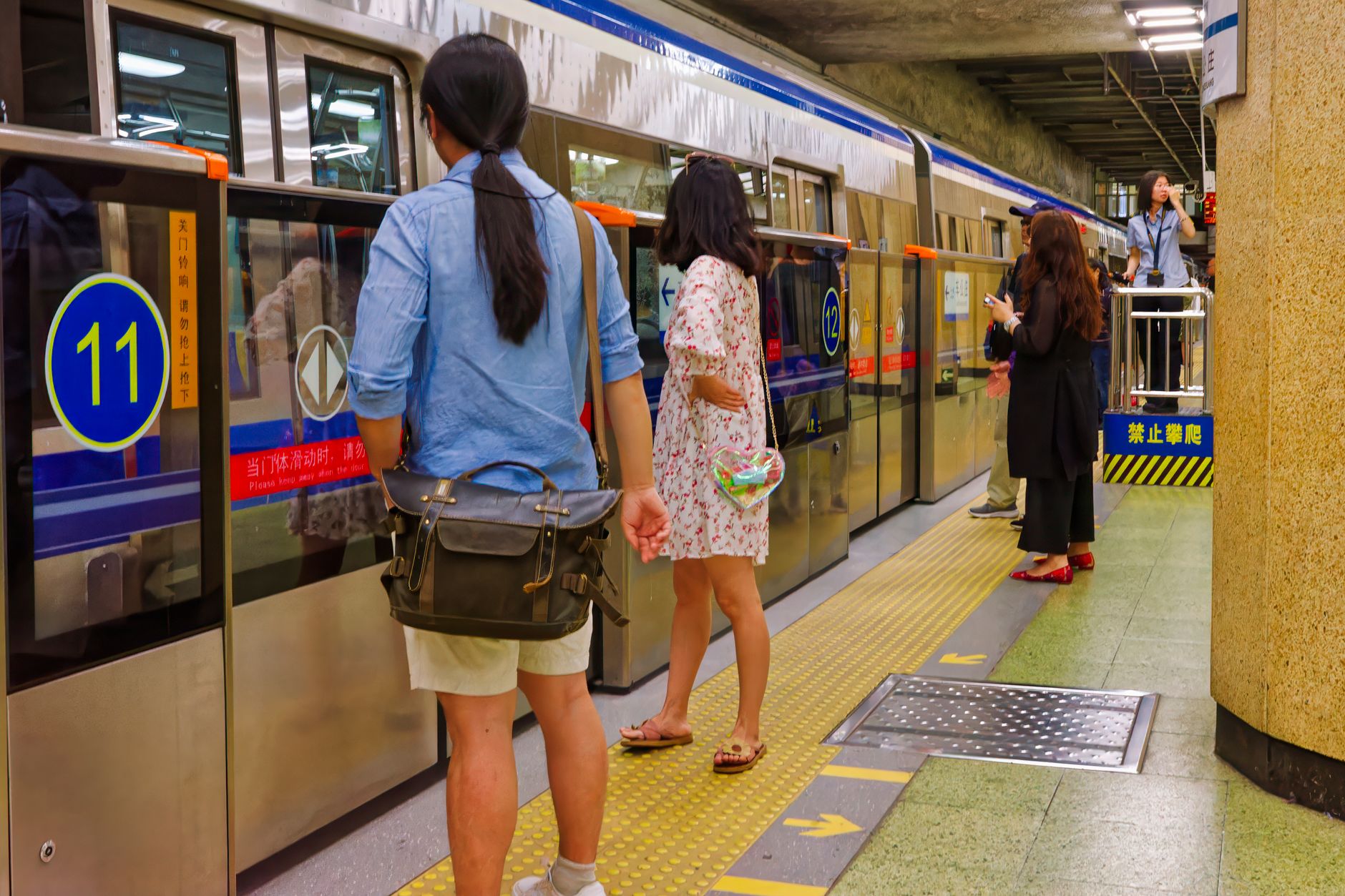
If you visit any major city in China, one of the easiest ways to get around is by subway.
From Beijing to Shanghai, Shenzhen to Guangzhou, China’s metro systems are known for being fast, clean, and extremely efficient.
For many foreign visitors, the experience often comes as a surprise—not only because of how modern the systems are, but also because of how affordable they are.
So why are Chinese subway systems so efficient, and how did they become such an important part of urban life?

Rapid Urban Growth Created a Need for Subways
China’s subway systems expanded quickly because of one major factor: urbanization.
As cities grew larger and more crowded, surface transportation alone was no longer enough.
Traffic congestion became a serious issue, especially in major metropolitan areas.
Subways provided a practical solution by moving large numbers of people underground, away from surface traffic.
Massive Investment in Urban Infrastructure
One of the key reasons China’s metro systems developed so quickly is large-scale infrastructure investment.
Many cities began building subway systems at roughly the same time, rather than one after another.
This coordinated development allowed cities to expand their networks rapidly across multiple lines.
As a result, even relatively new subway systems in smaller cities now feel highly modern and well-planned.
Why Subway Systems Are So Widely Used
Subways in China are not just transportation—they are part of daily life.
People use them for:
- Commuting to work
- Going to school
- Shopping in city centers
- Meeting friends
- Traveling across large cities quickly
Because cities are so large, subway travel is often faster than road transport.
Clean, Safe, and Organized Systems
One thing many foreign visitors notice is how clean and organized Chinese subway systems are.
Stations are usually well-maintained, with clear signage and security checks at entrances.
Trains are generally punctual, and routes are clearly mapped out in both Chinese and English in most major cities.
This makes the system accessible even for first-time visitors.
Extremely Affordable Ticket Prices
Another surprising aspect is the cost.
Compared to many major cities around the world, subway fares in China are relatively low.
Even long-distance rides within a city are often affordable for daily commuters.
This makes the subway not just convenient, but also practical for millions of people who rely on it every day.
Why Foreigners Are Often Impressed
Many visitors notice several things immediately:
- Trains arrive frequently
- Stations are very large and modern
- Payment is fully digital
- Signage is easy to follow
- Crowds move in an orderly way
For many people, it feels more advanced than expected, especially in cities that are still developing rapidly.
The Role of Digital Payment Integration
Almost all subway systems in China are fully integrated with mobile payment platforms.
Passengers can enter stations using:
- QR codes via mobile apps
- Transport cards
- Facial recognition in some cities
This makes the entire experience seamless and fast, with no need for paper tickets.
How Subways Changed City Life
Subway systems have significantly changed how people live in Chinese cities.
They have:
- Reduced dependence on cars
- Made commuting faster
- Connected distant districts
- Supported urban expansion
In many cities, new residential and business areas are built specifically around subway lines.
Final Thoughts
China’s subway systems are a key part of modern urban life.
They are not just transportation infrastructure, but a reflection of how cities in China are designed to function efficiently at scale.
For many visitors, riding the subway is one of the clearest ways to experience how organized and fast-moving Chinese cities are.
In daily life, the metro is not just a convenience—it is the backbone of how millions of people move through the city every day.