
Introduction: The Most Diverse Place in China
Most foreigners imagine China as a culturally uniform country.
After all, over 90% of China’s population belongs to the Han ethnic group.
But travel to southwestern China and you’ll discover a very different reality.
In one province alone, you can find:
- Tibetan monasteries
- Tropical villages
- Muslim communities
- Ancient kingdoms
- Languages unrelated to Mandarin
- Traditional clothing that has remained unchanged for centuries
That province is:
Yunnan
Often described as China’s most diverse province, Yunnan is home to 25 officially recognized ethnic minority groups.
That’s more ethnic groups than many countries have people aware of.
In some places, driving just a few hours can feel like crossing an international border.
So why is Yunnan so different?
And how did one province become one of the most culturally diverse places in Asia?
The Province at the End of China
The answer begins with geography.
Yunnan sits in the far southwest of China.
It borders:
- Myanmar
- Laos
- Vietnam
and lies close to:
- Thailand
- Tibet
- India
Historically, this region was not the center of Chinese civilization.
It was the frontier.
A place where different peoples, languages, religions, and kingdoms met.
Rather than being isolated, Yunnan became a crossroads.
A Landscape That Creates Diversity
Yunnan’s terrain is incredibly dramatic.
Within a single province, you can find:
- Snow-covered mountains
- Deep river valleys
- Tropical rainforests
- High plateaus
- Fertile basins
Some areas are separated by towering mountain ranges.
Historically, travel was difficult.
Villages often remained isolated for centuries.
As a result, communities developed their own:
- Languages
- Traditions
- Clothing
- Festivals
This geographic isolation helped preserve cultural diversity.
A Province of Mountains
There is a famous saying in Yunnan:
“The mountains are high, and the emperor is far away.”
For much of history, central governments had limited control over remote mountain communities.
Many groups maintained distinct identities long after other regions became more culturally unified.
This helped Yunnan remain one of China’s most diverse areas.
Home to 25 Ethnic Minority Groups
China officially recognizes 56 ethnic groups.
Remarkably, 25 of them live in Yunnan.
Among the best known are:
- Bai
- Yi
- Naxi
- Dai
- Hani
- Lisu
- Tibetan
- Miao
- Hui
- Wa
Each possesses its own history and traditions.
In some cases, the differences are as significant as those between European countries.
The Dai People: China’s Connection to Southeast Asia
One of Yunnan’s most fascinating communities is the Dai people.
Their culture shares deep connections with neighboring countries such as:
Thailand
and
Laos
Visitors often notice similarities in:
- Architecture
- Food
- Language
- Religion
Many foreigners are surprised to discover that parts of China can feel culturally closer to Southeast Asia than to Beijing.
The Naxi and Their Mysterious Ancient Script
Near:
Lijiang
live the Naxi people.
They are famous for possessing one of the world’s most unusual writing systems.
Known as Dongba script, it uses pictographic symbols.
Unlike alphabet-based systems, many characters resemble drawings.
Some scholars describe it as one of the last surviving pictographic writing systems still in use.
The Bai Kingdoms of Dali
The region around:
Dali
has long been associated with the Bai people.
Historically, powerful kingdoms emerged here.
For centuries, these states maintained varying degrees of independence from Chinese dynasties.
Their legacy remains visible in:
- Architecture
- Festivals
- Local customs
Dali today remains one of Yunnan’s most popular destinations.
The Hani and the Stairways to Heaven
One of the most spectacular cultural landscapes in China belongs to the Hani people.
Over many centuries, they constructed:
Honghe Hani Rice Terraces
These terraces climb mountainsides in enormous layers.
From above, they resemble giant stairways stretching into the clouds.
The system demonstrates extraordinary engineering skill and environmental knowledge.
The Tibetans of Yunnan
Many foreigners assume Tibetans only live in Tibet.
In reality, large Tibetan communities inhabit northwestern Yunnan.
Near:
Shangri-La
visitors encounter:
- Monasteries
- Prayer flags
- Tibetan architecture
- Buddhist traditions
The region offers a glimpse into Tibetan culture without entering the Tibet Autonomous Region.
Languages Everywhere
One reason Yunnan feels so different is linguistic diversity.
Many communities speak languages unrelated to Mandarin.
These languages belong to several families, including:
- Tibeto-Burman
- Tai-Kadai
- Hmong-Mien
In some villages, older residents may speak local languages more comfortably than standard Mandarin.
Different Clothes, Different Identities
Traditional clothing remains important in many communities.
Travelers can encounter garments featuring:
- Intricate embroidery
- Silver jewelry
- Bright colors
- Distinctive headwear
Historically, clothing helped identify a person’s ethnic background and home region.
Even today, traditional dress remains a source of pride.
A Festival for Every Month
Yunnan’s cultural diversity creates an astonishing calendar of festivals.
Examples include:
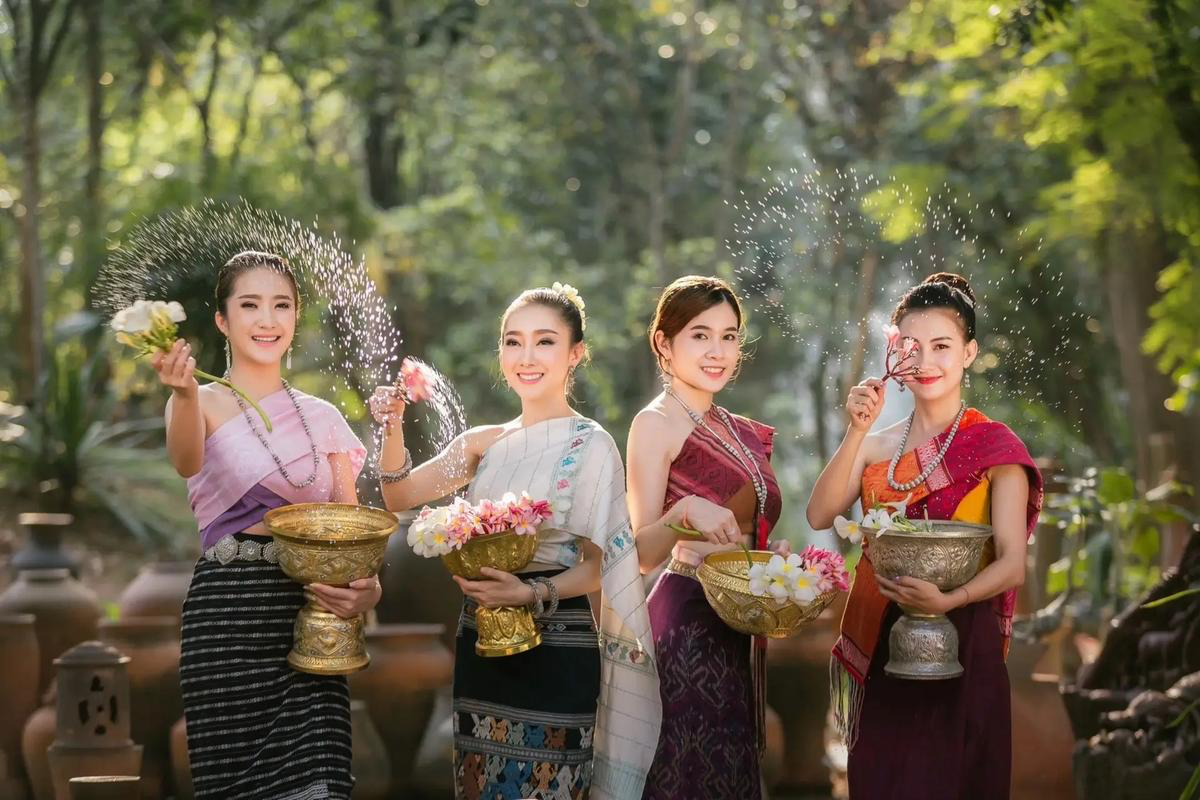
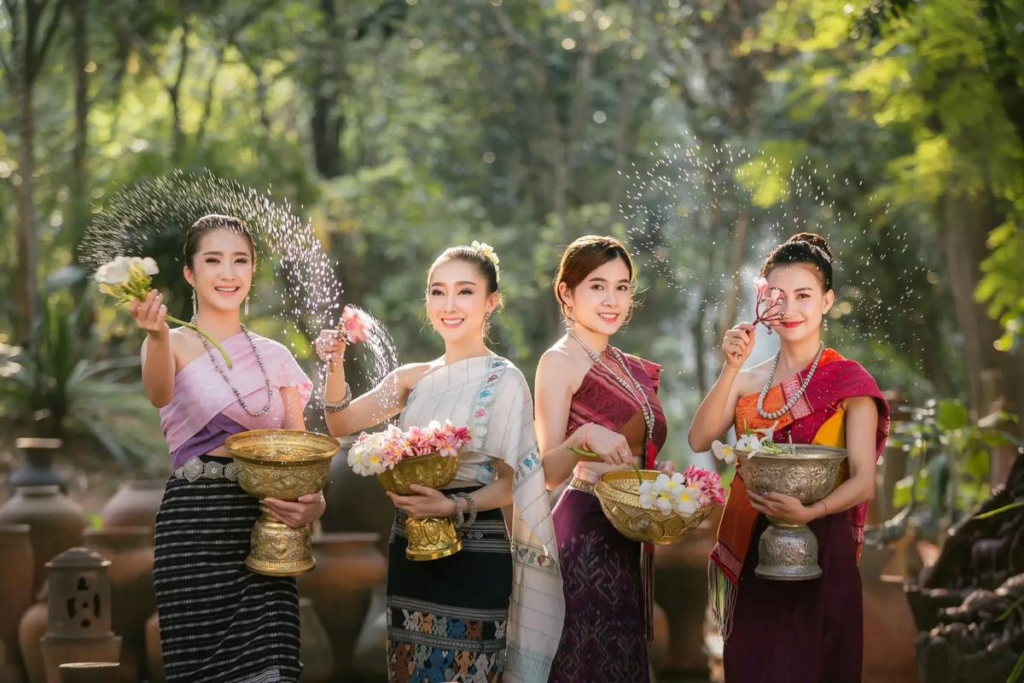
Water Splashing Festival
Celebrated by the Dai people.
Participants splash water on one another as a symbol of blessing and good fortune.
Torch Festival
Associated with the Yi people.
Large bonfires illuminate the night.
March Street Festival
A historic gathering linked to Bai culture.
These events attract visitors from across China and beyond.
Why Anthropologists Love Yunnan
Few places offer such extraordinary cultural variety within a relatively small area.
For researchers, Yunnan serves as a living laboratory of human diversity.
It provides opportunities to study:
- Migration
- Language evolution
- Cultural exchange
- Traditional knowledge
Many anthropologists consider it one of Asia’s most fascinating regions.
The Ancient Kingdoms of Yunnan
Historically, Yunnan was not simply a remote province.
It was home to powerful kingdoms such as:
Nanzhao Kingdom
and
Kingdom of Dali
These states controlled important trade routes and interacted with China, Tibet, and Southeast Asia.
Their influence shaped the region’s cultural landscape.
Why Yunnan Feels Like Several Countries in One
Travel across Yunnan and the changes can be dramatic.
In the north, you find Tibetan culture.
In the south, tropical Dai communities.
In the west, mountain villages with unique traditions.
In the center, historic Chinese towns.
The diversity is so great that many travelers describe Yunnan as feeling like multiple countries combined into one province.
A Different Side of China
For many foreign visitors, Yunnan challenges assumptions.
The province demonstrates that China is far more diverse than stereotypes suggest.
Rather than a single cultural experience, Yunnan offers dozens.
Every valley tells a different story.
Every community preserves unique traditions.
Every journey reveals something unexpected.
Conclusion: China’s Most Diverse Province
Yunnan is not just another province.
It is one of the most culturally diverse regions in Asia.
Its mountains preserved communities.
Its location encouraged exchange.
Its history produced an extraordinary mosaic of peoples and traditions.
Today, Yunnan remains a place where travelers can encounter multiple cultures, languages, religions, and histories within a single journey.
In a world where many places are becoming increasingly similar, Yunnan stands out for the opposite reason.
Its diversity is its greatest treasure.
And that diversity is precisely what makes it one of China’s most fascinating destinations.