
Fenghuang Ancient Town, located in the western border of Hunan Province in China, is one of the most well-preserved ancient river towns in southern China, widely known as “the most beautiful ancient town in China”. Nestled in the mountainous terrain of western Hunan and bordering Guizhou Province, this millennium-old town is famed for its primitive natural scenery, intact Ming and Qing ancient architecture, profound border military history, and diverse ethnic folk culture. More importantly, Fenghuang is the hometown of Shen Congwen, the master of modern Chinese rural literature and a two-time Nobel Prize in Literature nominee. His classic works Border Town and Xiangxing Notes have immortalized the town’s landscapes, folk customs, and simple human warmth, turning Fenghuang from a remote border fortress into a world-famous literary and cultural landmark. This article provides a comprehensive and in-depth introduction to Fenghuang Ancient Town’s long history, natural scenery, architectural features, ethnic customs, cultural celebrities, and modern tourism value.
1. Ancient History: From Military Border Fortress to Literary Ancient Town
Fenghuang Ancient Town boasts a history of more than 1,300 years, with unique historical positioning different from ordinary ancient towns in China. In ancient times, Fenghuang was named Zhengan, serving as a critical military garrison and border defense gateway separating Hunan, Guizhou and Chongqing. Due to its remote mountain location and complex terrain, the ancient town was an important strategic military stronghold in the Ming and Qing dynasties, undertaking the mission of stabilizing border ethnic areas and guarding regional security.
During the Ming Dynasty, the imperial court set up formal military institutions here, constructing city walls, defensive towers and military barracks, forming the initial pattern of Fenghuang ancient city. In the Qing Dynasty, the town continued to expand in scale, with booming commerce and frequent population exchanges among Han, Miao, Tujia and other ethnic groups. Military culture, immigrant culture and ethnic culture blended here, laying a diverse and inclusive cultural foundation for Fenghuang.
In modern times, Fenghuang transformed from a little-known military fortress into a top cultural town in China. It nurtured a large number of outstanding modern celebrities, including literary giant Shen Congwen, the first premier of the Republic of China Xiong Xiling, and famous contemporary painter Huang Yongyu. The rise of literary and artistic masters completely reshaped Fenghuang’s cultural temperament, ending its thousand-year military identity and making it a timeless literary holy land.
2. Natural Landscape: Picturesque Tuo River and Mountain Waterscape
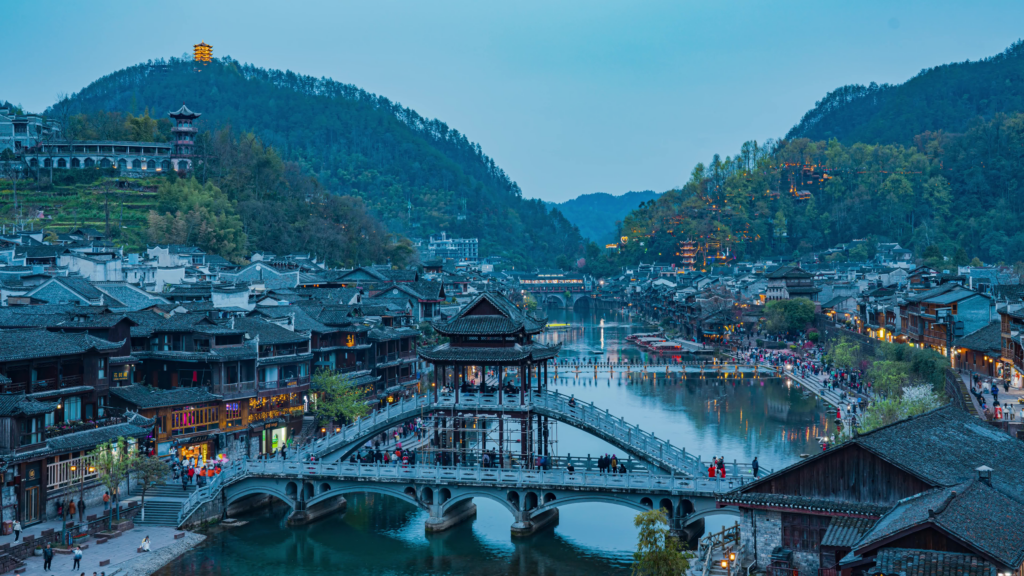
The core charm of Fenghuang’s scenery lies in its perfect integration of mountains, water, ancient city and folk dwellings. The entire ancient town is surrounded by green mountains and winding water systems, presenting a classic Chinese ink-wash landscape style. The Tuo River, the mother river of Fenghuang, meanders through the center of the ancient town, dividing the town into two banks and nourishing the town’s thousand-year vitality.
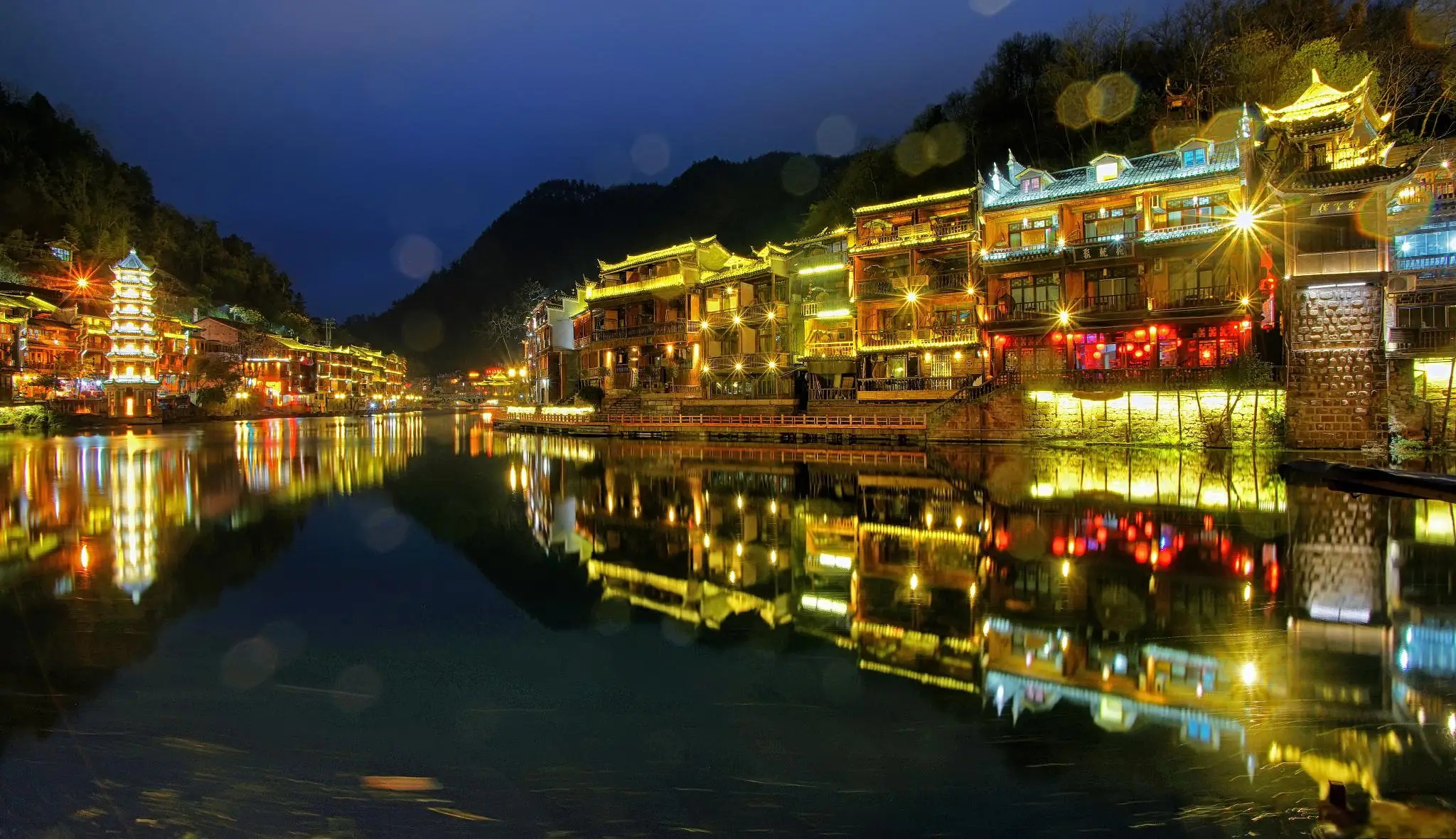
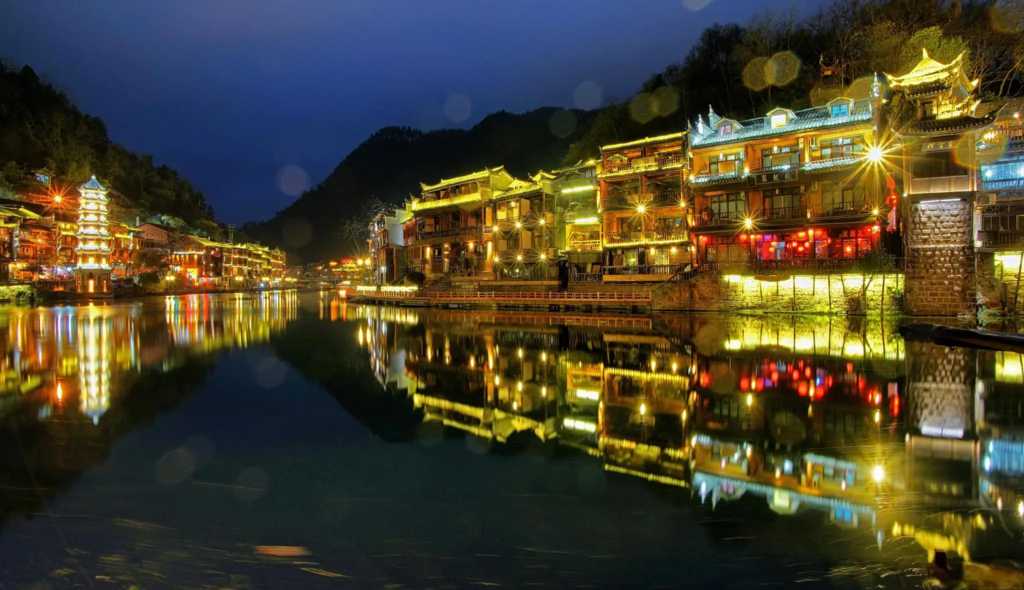
Unlike the wide and magnificent rivers in central China, the Tuo River features clear, gentle and limpid water. Wooden boats drift slowly on the river surface, with ripples reflecting ancient wooden stilt houses, stone bridges and green mountains. The most iconic scenery of Fenghuang is the riverside stilt-house complex built along the river. These hanging wooden buildings cling to the river banks, with unique layered structures, perfectly integrating human dwellings with natural waterscape.
The ancient town is surrounded by rolling green mountains with layered vegetation, creating a quiet and secluded ecological environment. The four seasons in Fenghuang are distinct: spring is full of blooming flowers and misty river surface; summer features lush greenery and cool river breeze; autumn presents clear sky and golden ancient city scenery; winter retains simple and tranquil ink-wash artistic conception. Especially the morning mist and night neon scenery of the Tuo River are renowned worldwide, forming the unique poetic landscape that Shen Congwen depicted repeatedly in his works.
3. Architectural Features: Unique Xiangxi Stilt Houses and Ancient Buildings
Fenghuang Ancient Town preserves a complete group of ancient buildings from the Ming and Qing dynasties, with a construction scale and integrity rare in southern China. The town’s architecture perfectly combines military defense style, southern China residential features and Xiangxi ethnic characteristics, forming an irreplicable regional architectural system.
Stilt Houses (Diaojiaolou) are the most representative buildings of Fenghuang. Built close to mountains and rivers, these traditional wooden structures hang half of the building above the river surface, supported by wooden stakes. This unique architectural design adapts to the local humid climate and complex terrain, preventing moisture and avoiding floods. The ancient wooden houses feature carved windows, railings and wooden doors, with exquisite and simple craftsmanship, fully reflecting the wisdom of ancient Xiangxi people.
In addition to stilt houses, the ancient town retains a large number of well-preserved historic buildings, including ancient city walls, city gates, stone streets, ancient bridges, ancestral halls and former residences. The bluestone paved ancient streets are polished smooth by hundreds of years of pedestrian traffic, winding through the whole town. Historic landmarks such as East Gate Tower, North Gate Tower, Yang Family Ancestral Hall and Tianwang Temple completely retain the style of Ming and Qing border towns, witnessing the town’s military and commercial prosperity in ancient times.
4. Shen Congwen: The Literary Soul of Fenghuang Ancient Town
No introduction to Fenghuang is complete without mentioning Shen Congwen (1902–1988), the greatest cultural symbol of the ancient town. Born and raised in Fenghuang, Shen Congwen is honored as the Father of Modern Chinese Rural Literature and was twice nominated for the Nobel Prize in Literature. His life and literary creations are deeply rooted in the land of Xiangxi, and Fenghuang’s mountains, rivers and folk customs constitute the eternal spiritual home of his works.
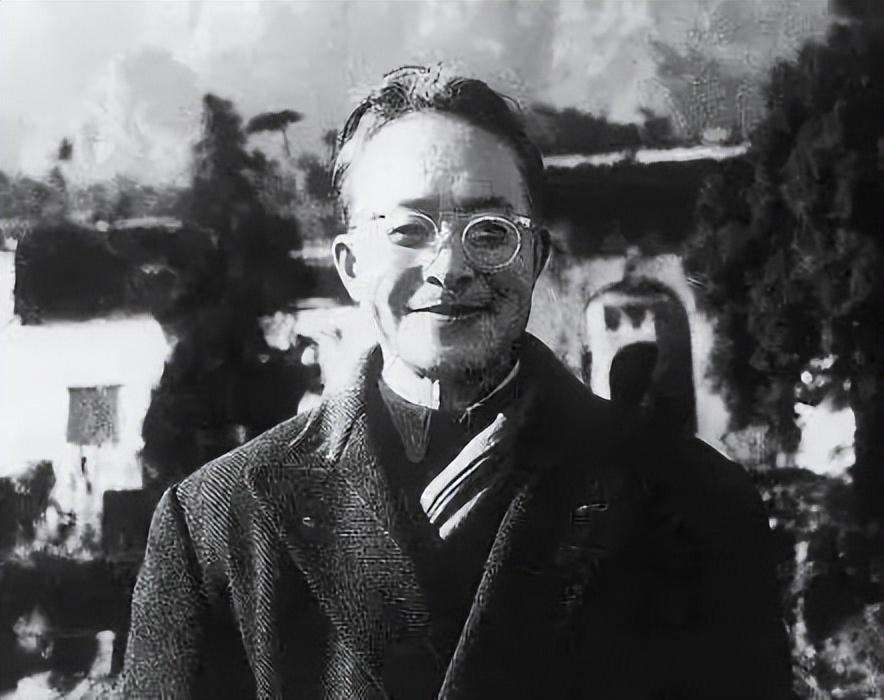
Shen Congwen spent his childhood and adolescence in Fenghuang. The Tuo River’s flowing water, ancient stilt houses, simple townsfolk and primitive ethnic customs deeply influenced his literary style. His representative novel Border Towntakes Fenghuang and the surrounding border towns as the prototype, depicting the pure love, simple folk customs and quiet life of Xiangxi people. The book does not have grand plots, but relies on delicate and warm brushstrokes to shape a poetic and pure border world, letting countless readers fall in love with Fenghuang’s gentle and primitive charm.
His prose collectionXiangxing Notes records in detail the landscapes, customs, folk stories and human warmth along the Tuojiang River and Xiangxi waterways, becoming the most precious literary and folk data of western Hunan. In his later years, Shen Congwen devoted himself to the research of Chinese cultural relics and ancient costumes, completing the monumental work Research on Ancient Chinese Costumes, showing his profound cultural accumulation beyond literature.
Shen Congwen’s Former Residence, located in the core area of Fenghuang Ancient Town, is a traditional Qing Dynasty courtyard built in 1866. The wooden courtyard is simple and elegant, retaining the original study, bedroom and living scene of Mr. Shen. It is now a key cultural exhibition site, attracting countless literary enthusiasts from all over the world to pay their respects and feel the origin of his literary inspiration.
5. Diverse Ethnic Folk Culture of Xiangxi
Fenghuang Ancient Town is a typical multi-ethnic settlement, integrating Han, Miao, Tujia and other ethnic cultures, retaining a large number of original Xiangxi folk customs that have disappeared in modern cities. Different from single Han folk culture, Fenghuang’s folk customs are diverse, mysterious and full of ethnic characteristics.
Local traditional folk arts such as Miao embroidery, batik, silver ornament forging and Xiangxi folk songs have been passed down for thousands of years and are well preserved in Fenghuang. Every traditional festival, the ancient town holds ethnic bonfire parties, folk song competitions and traditional sacrificial rituals. The simple, warm and sincere folk style described in Shen Congwen’s works is still completely preserved here.
In addition, Fenghuang retains unique Xiangxi folk customs and ritual cultures, forming a distinctive regional cultural system together with Meishan culture and Xiangchu witch culture. The integration of multi-ethnic customs makes the ancient town not only a scenic tourist spot, but also a living museum of southern Chinese ethnic folk culture.
6. Modern Tourism Value and Cultural Inheritance
Today, Fenghuang Ancient Town has evolved from a remote border ancient town into a world-famous cultural tourism destination. It has been listed as a national historical and cultural ancient town and a key intangible cultural heritage protection area in Hunan. Relying on its natural landscape advantages and Shen Congwen’s literary reputation, Fenghuang has become the cultural business card of western Hunan and even the whole Hunan Province.
While developing tourism, Fenghuang has always adhered to the protection of ancient architecture and original folk culture. The ancient town retains its original street pattern, architectural style and living atmosphere, avoiding excessive commercialization. It perfectly balances modern tourism development and traditional cultural inheritance, allowing thousands of tourists to feel the poetic landscapes depicted in Border Town and experience the most authentic charm of ancient Xiangxi.
For more than a thousand years, Fenghuang has transformed from a military border fortress to a literary holy land. Its mountains and rivers carry the gentle and profound literary heritage of Shen Congwen, and its ancient streets and buildings retain the primitive and simple folk customs of western Hunan. It is not only a visual landscape feast, but also a spiritual home carrying Chinese rural culture and border humanities.