


Zhangguying Village, located in Yueyang City, Hunan Province, is the most representative and well-preserved ancient rural village in Hunan and one of the most intact traditional clan settlements in southern China. With a history spanning more than 600 years since the Ming Dynasty, this ancient village is widely hailed as “the No.1 Ancient Folk House Complex in South China” and a “living fossil of ancient Chinese clan civilization”. Different from ordinary scenic rural villages, Zhangguying Village integrates grand ancient architectural clusters, complete traditional clan systems, primitive rural customs, and harmonious mountain-water ecological landscapes. It retains the original living style, etiquette traditions, and family inheritance model of ancient agricultural society. This article provides a comprehensive and detailed introduction to Zhangguying Village’s profound history, unique architectural art, natural scenery, folk customs, clan culture, and modern cultural inheritance value.
1. Ancient History: A 600-Year Inherited Clan Village
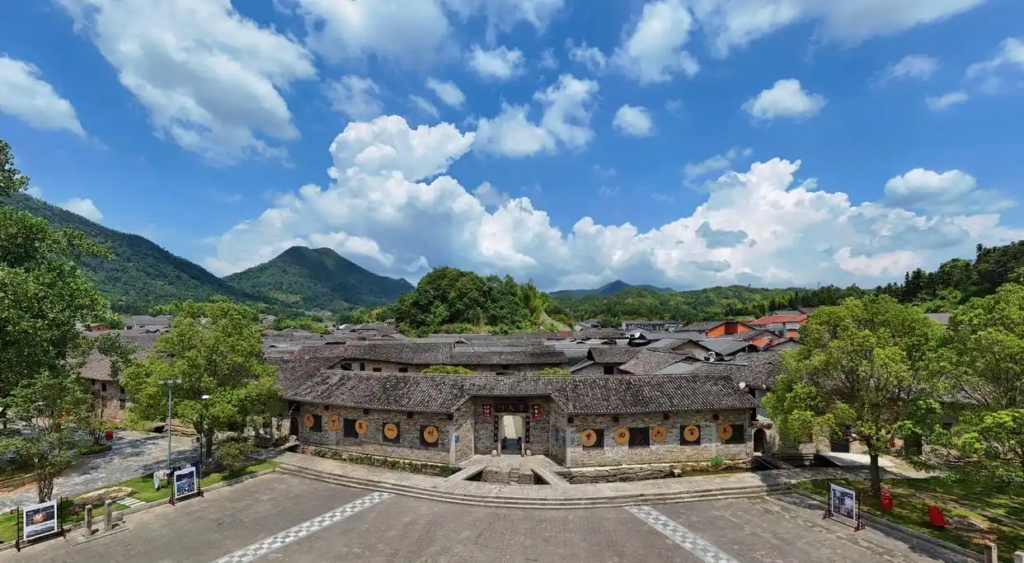
Zhangguying Village was founded in the Ming Jiajing Period (1552), named after its ancestor Zhang Guying, a famous ancient Confucian scholar and geomancer. Fleeing from war and seeking a peaceful homeland, Zhang Guying selected this treasured land surrounded by mountains and rivers to settle down and build houses. After more than 400 years of continuous construction and expansion from the Ming and Qing dynasties to the early Republic of China, the village gradually formed a huge integrated ancient building settlement dominated by the Zhang clan.
The most remarkable historical feature of Zhangguying Village is its single-clan inheritance. For six centuries, almost all villagers here are descendants of the Zhang family. The village has strictly followed ancestral precepts, clan rules, and traditional farming and reading traditions, realizing stable population inheritance, cultural continuity, and village pattern integrity. It has never experienced large-scale migration or reconstruction, retaining the purest ancient rural clan lifestyle in central China.
Today, Zhangguying Village is listed as a National Key Cultural Relic Protection Unit, a National Historical and Cultural Village, and a 4A-level tourist attraction, becoming the core model of Hunan’s traditional rural cultural inheritance and ancient village protection.
2. Unique Architectural Art: The Grand “Feng” Shaped Ancient Complex
The core charm of Zhangguying Village lies in its unparalleled large-scale ancient architectural group, covering more than 50,000 square meters with over 2,000 ancient houses. The entire village adopts a unique Chinese character “Feng” (丰, meaning abundance) overall layout, which is extremely rare in ancient Chinese rural architecture, symbolizing abundant grain, prosperous population, and prosperous family fortune.
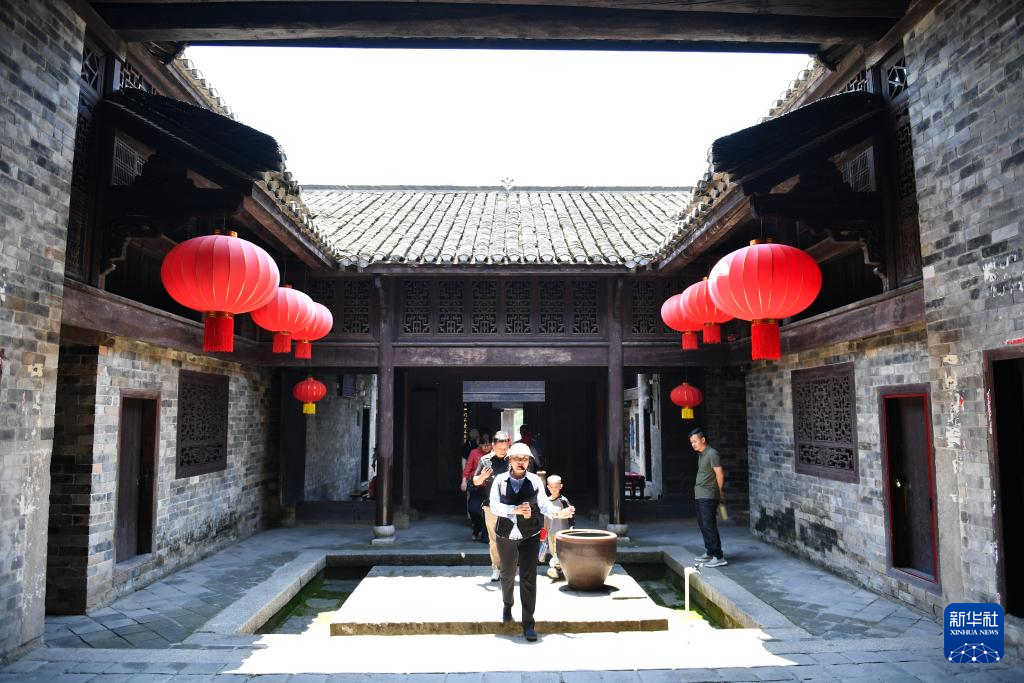
All buildings are constructed with blue bricks, black tiles, and wooden frames, adhering to the traditional southern Hunan residential style. The village layout is rigorous and orderly: houses are connected row by row, courtyards are nested layer by layer, and bluestone alleys crisscross the entire village. A complete underground drainage system built 600 years ago still operates perfectly today, with smooth water circulation and no waterlogging in rainy days, fully reflecting the superb architectural wisdom and geomantic layout of ancient craftsmen.
The ancient buildings are famous for exquisite three-carving art—wood carving, stone carving, and brick carving. The window grilles, door lintels, railings, and ancestral hall walls are carved with patterns of flowers, birds, dragons, phoenixes, and historical stories, with delicate craftsmanship and vivid expressions. Every beam and tile carries the aesthetic culture and moral blessings of ancient Hunan folk architecture.
The village retains a large number of core historic buildings including the Grand Ancestral Hall, Branch Ancestral Halls, ancient study courtyards, old wells, and ancient stone bridges. The integrated layout of dwelling, worship, education, and living perfectly reproduces the complete functional system of ancient Chinese traditional rural clan settlements.
3. Natural Ecological Scenery: Idyllic Mountain-Water Pastoral Landscape
Zhangguying Village boasts a superior natural ecological environment, conforming to the ancient Chinese geomantic pattern of backed by mountains and facing water. The village is surrounded by rolling green hills with dense vegetation and fresh air. A clear winding stream bypasses the village, nourishing the land and forming a quiet and beautiful pastoral landscape.
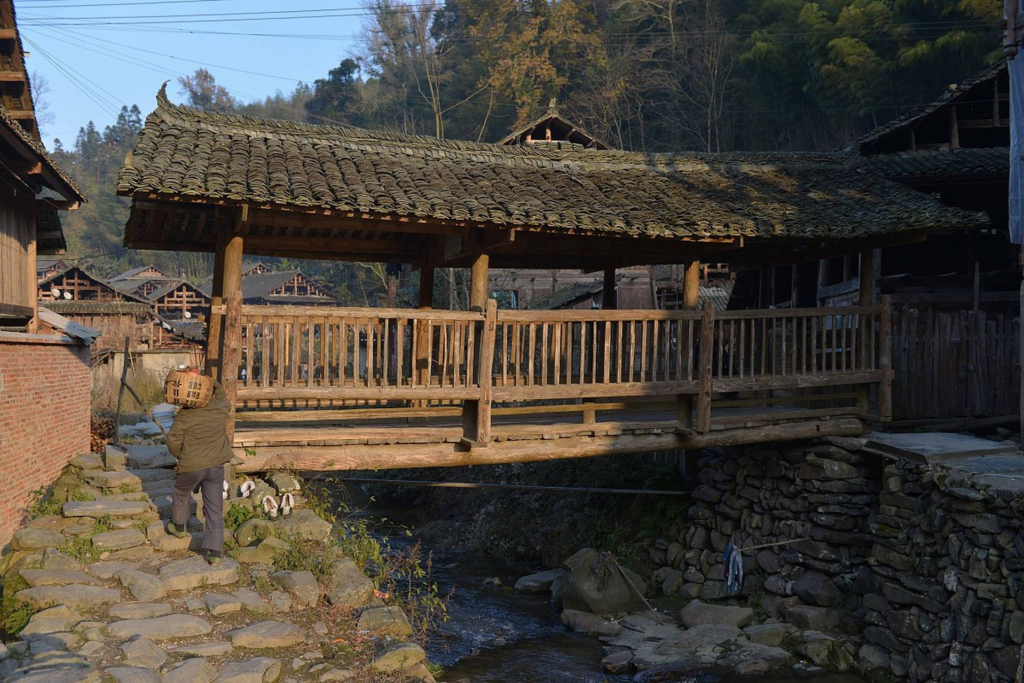
Different from the noisy commercial ancient towns, Zhangguying Village retains a primitive and tranquil rural atmosphere. The fields around the village are layered, with seasonal crop changes presenting different pastoral scenery all year round. In spring, golden rapeseed flowers bloom all over the fields, setting off blue-brick and black-tile ancient houses like a pastoral oil painting; in autumn, golden rice fields surround the ancient village, presenting a scene of bumper harvest and peace.
No modern high-rise buildings break the village’s overall style. The integration of ancient architecture, pastoral fields, mountain forests, and flowing water constitutes the most authentic and poetic idyllic scenery of southern Chinese countryside, known as “the hidden paradise in central Hunan”.
4. Profound Humanistic Culture: Farming and Reading Clan Tradition
Zhangguying Village’s most precious heritage is its long-standingfarming and reading inheritance culture. Since the founding of the village, the Zhang clan has adhered to the ancestral motto of “valuing education, advocating morality, diligent farming and honest living”. For hundreds of years, the village has attached great importance to education, setting up private schools and study courtyards for generations, cultivating a large number of scholars, officials, and virtuous talents.
The complete clan system is the core of the village’s humanistic spirit. The ancestral halls are not only sacrificial venues but also moral education and clan management centers. The ancient clan rules and precepts have standardized villagers’ words and deeds for hundreds of years, forming a simple, honest, harmonious and polite village style. The concept of “harmony makes prosperity” has been deeply rooted in the clan inheritance, making the village maintain unity and prosperity for six centuries.
Different from many ancient villages that have lost their original humanistic temperament due to commercialization, Zhangguying Village still has indigenous villagers living in the ancient houses. The old people work in the fields, children study in the village, and villagers maintain traditional neighborhood etiquette, retaining the warm and down-to-earth human touch of ancient rural China.
5. Traditional Folk Customs and Local Etiquette
Zhangguying Village completely inherits the traditional folk customs and ritual etiquette of southern Hunan rural areas, covering ancestor worship, festival celebrations, wedding and funeral rituals, and daily interpersonal etiquette.
Ancestor Worship Rituals: Every Spring Festival, Qingming Festival and Mid-Autumn Festival, the village holds grand collective ancestor worship ceremonies. Villagers gather in the grand ancestral hall to offer sacrifices, burn incense, and salute, inheriting the traditional virtues of respecting ancestors and remembering origins.
Festival Folk Customs: During traditional festivals, the village retains authentic rural customs such as making rice cakes, curing bacon, brewing rice wine, and hanging red lanterns. Dragon dance and lion dance performances are held during the Spring Festival, restoring the lively and festive atmosphere of ancient Hunan countryside.
Wedding and Funeral Etiquette: The village still retains complete traditional rural wedding and funeral rituals, including matchmaker introduction, betrothal gift delivery, hall worship, funeral vigil, and seven-phase memorial ceremonies, which are important living specimens of Hunan rural folk etiquette culture.
Handicraft Inheritance: Local villagers inherit traditional folk crafts such as bamboo weaving, straw weaving, and handmade tofu making. These intangible cultural heritages have been passed down from generation to generation, becoming unique folk cultural symbols of the ancient village.
6. Modern Value and Cultural Inheritance
As the most representative beautiful ancient village in Hunan, Zhangguying Village perfectly combines ecological pastoral scenery, ancient architectural art, and profound clan humanistic culture. It not only preserves the physical ancient building groups, but also inherits the spiritual core of traditional Chinese farming civilization, clan ethics, and educational culture.
In modern protection and development, Zhangguying Village adheres to the principle of protection first, moderate development, avoiding excessive commercialization. It retains the original rural style, living atmosphere and cultural traditions, becoming a classic model of Chinese traditional village protection and rural cultural inheritance. It is not only a precious cultural heritage of Hunan, but also an important window for the world to understand the traditional rural civilization of southern China.