


When people hear the phrase “Chinese hamburger,” many are surprised to learn that China has had its own version of a meat sandwich for more than two thousand years.
Known as Roujiamo (肉夹馍), this iconic street food from Shaanxi Province is one of China’s oldest and most beloved snacks. It combines slow-cooked meat with freshly baked flatbread to create a simple yet incredibly satisfying meal.
Today, Roujiamo can be found throughout China, from busy street markets in Xi’an to modern shopping malls in Beijing and Shanghai. For many travelers, it is one of the first authentic local foods they fall in love with.
But what exactly is Roujiamo, and why do some people call it the world’s original hamburger?
What Does Roujiamo Mean?
The name Roujiamo literally translates to “meat inside bread.”
- Rou (肉) means meat.
- Jia (夹) means to stuff or sandwich.
- Mo (馍) refers to a traditional Chinese flatbread.
Interestingly, the Chinese name suggests the bread is stuffed into the meat rather than the other way around. This unusual phrasing reflects the importance of the flavorful meat filling, which is considered the star of the dish.
The History of Roujiamo
Roujiamo originated in Shaanxi Province, a region in northwestern China known for its rich history and distinctive cuisine.
Many historians believe the dish dates back to the Qin and Han dynasties, making it well over 2,000 years old.
Xi’an, the capital of Shaanxi, was once the starting point of the Silk Road and served as China’s capital for several ancient dynasties. As merchants, travelers, and officials passed through the city, local foods evolved into unique culinary traditions.
Roujiamo became popular because it was affordable, portable, and filling—qualities that still make it a favorite today.
Because of its age, some food enthusiasts jokingly argue that Roujiamo predates the hamburger by nearly two millennia.
What Is Roujiamo Made Of?
Although recipes vary by region, traditional Roujiamo consists of two essential components:
The Bread
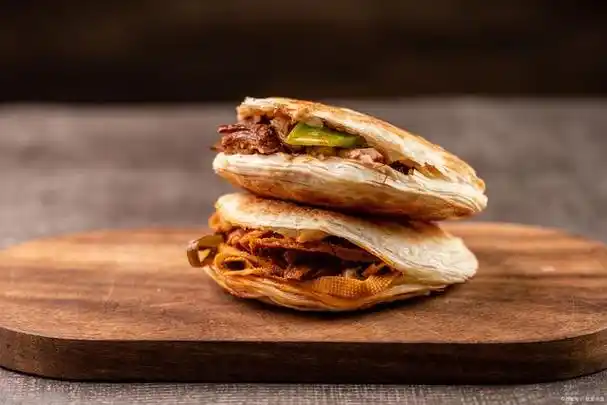
The bread, known as baijimo (白吉馍), is a round wheat flatbread.
It is:
- Crispy on the outside
- Soft and chewy inside
- Slightly toasted
- Dense enough to hold juicy meat
Unlike hamburger buns, baijimo contains no sugar and has a much firmer texture.
The Meat
The filling is usually pork that has been braised for many hours.
Common seasonings include:
- Soy sauce
- Star anise
- Cinnamon
- Cloves
- Ginger
- Garlic
The meat becomes incredibly tender and aromatic after slow cooking.
Before serving, vendors finely chop the meat and often mix it with some of the rich cooking juices.
The result is a sandwich that is both juicy and flavorful.
Why Is Roujiamo Called the Chinese Hamburger?
The comparison comes from the basic concept: meat served inside bread.
However, the similarities largely end there.
| Roujiamo | Hamburger |
|---|---|
| Braised meat | Grilled patty |
| Flatbread | Soft bun |
| Traditional spices | Western seasonings |
| 2,000+ years old | Modern invention |
| Chinese street food | Fast food staple |
Many Chinese people enjoy pointing out that Roujiamo existed long before the hamburger, leading to playful debates about which sandwich came first.
Regional Variations of Roujiamo
China’s vast size means there is no single version of Roujiamo.
Pork Roujiamo
The most common version uses slow-cooked pork.
This is the variety most visitors encounter in Xi’an.
Beef Roujiamo
Popular among Muslim communities in northwestern China, beef versions offer a richer flavor profile.
Lamb Roujiamo
In areas influenced by Silk Road cultures, lamb is frequently used.
The meat is often seasoned with cumin and other spices.
Spicy Versions
Some regions add chili peppers, chili oil, or pickled vegetables to create a more intense flavor.
Why Roujiamo Is So Popular
Several factors explain its enduring popularity.
Affordable
Roujiamo is relatively inexpensive compared to restaurant meals.
Convenient
It can be eaten while walking, making it perfect for busy city life.
Filling
The combination of bread and meat provides a satisfying meal.
Rich in Tradition
For many Chinese people, Roujiamo represents the culinary heritage of Shaanxi Province.
Where Can You Find the Best Roujiamo?
Many food lovers consider Xi’an the best place to try authentic Roujiamo.
Popular locations include:
- Muslim Quarter in Xi’an
- Local family-run shops
- Traditional Shaanxi restaurants
- Street food markets
While versions can be found throughout China, locals often argue that nothing compares to a freshly made Roujiamo in its hometown.
What Does Roujiamo Taste Like?
Foreign visitors often describe the flavor as:
- Savory
- Rich
- Aromatic
- Slightly smoky
- Comforting
The bread provides a satisfying crunch, while the meat remains juicy and tender.
The complex spice blend creates a depth of flavor that is very different from Western sandwiches.
For many travelers, Roujiamo becomes an unexpected favorite because it feels familiar yet completely unique.
Is Roujiamo Healthy?
Compared to many fried street foods, Roujiamo is relatively simple.
Its nutritional value depends on:
- The cut of meat used
- Portion size
- Amount of fat
- Additional ingredients
Because it contains protein and carbohydrates without deep-frying, some people consider it a more balanced street-food option.
However, like any meat sandwich, moderation is important.
Why Every Visitor to China Should Try Roujiamo
China’s food culture is incredibly diverse, and Roujiamo offers a perfect introduction to regional cuisine.
Unlike dishes designed specifically for international tastes, Roujiamo remains deeply rooted in local culinary traditions.
Trying one allows visitors to experience:
- Authentic Chinese street food
- Shaanxi culinary culture
- Ancient food traditions
- Everyday local life
It is one of those rare foods that combines history, convenience, and great flavor in a single bite.
Final Thoughts
Roujiamo is far more than a sandwich. It is a piece of living history that has survived for more than two thousand years.
From the ancient streets of Xi’an to modern cities across China, this humble combination of bread and braised meat continues to win over locals and visitors alike.
Whether you call it a Chinese hamburger or simply Roujiamo, one thing is certain: it remains one of China’s most iconic and delicious street foods.