
[Introduction] If you’re looking for a Chinese city that perfectly blends millennia of history with buzzing modern energy, Changsha—known as the “Star City”—deserves a top spot on your travel list. As the capital of Hunan Province, Changsha offers a rare “mountain-water-island-city” landscape, revolutionary heritage, world-class archaeology, and a street food scene that operates well past midnight. Here is our comprehensive guide to the most representative attractions you should recommend to any friend planning a visit.
I. Revolutionary Legacy & Natural Icons: The Soul of Changsha
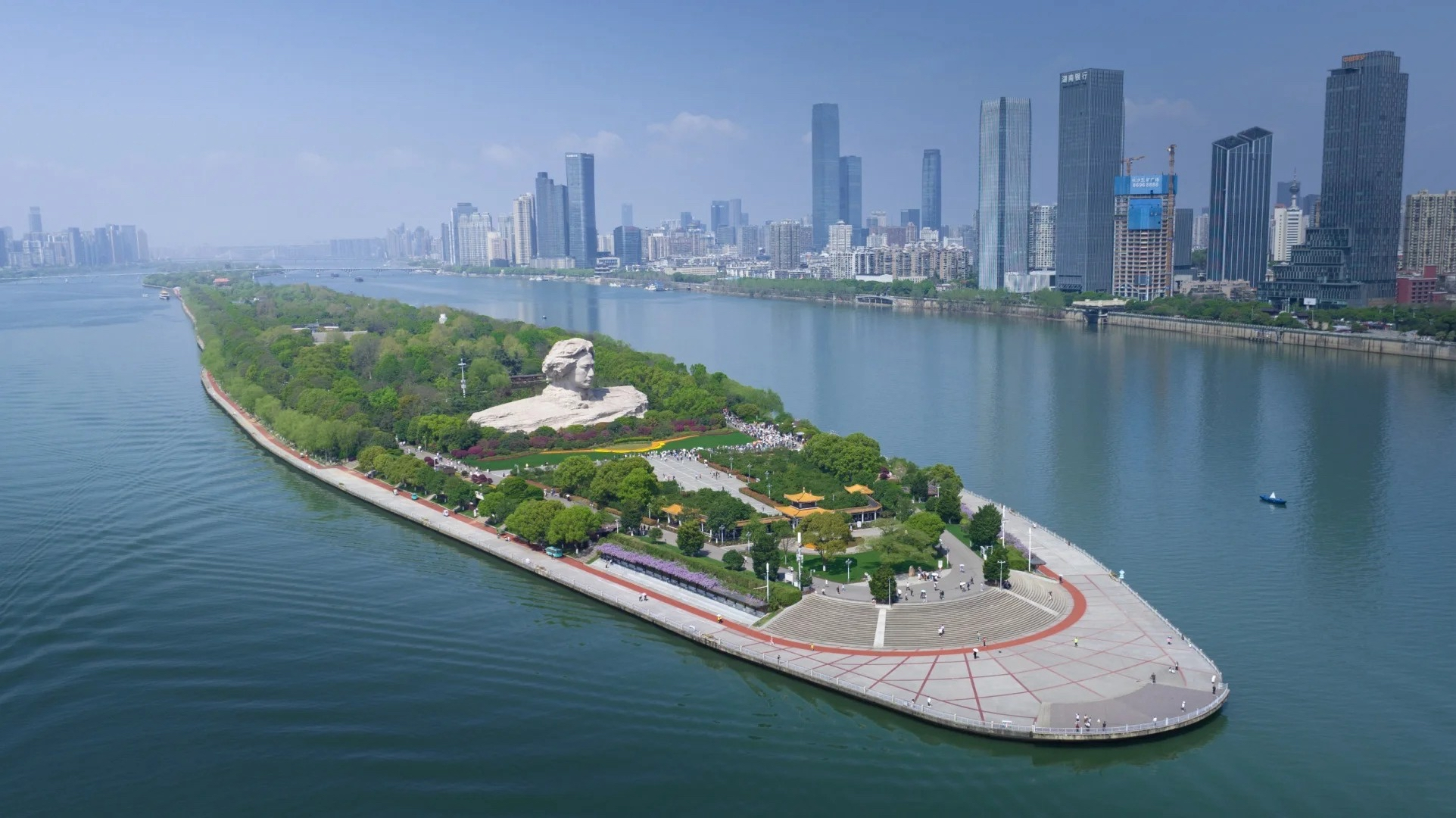
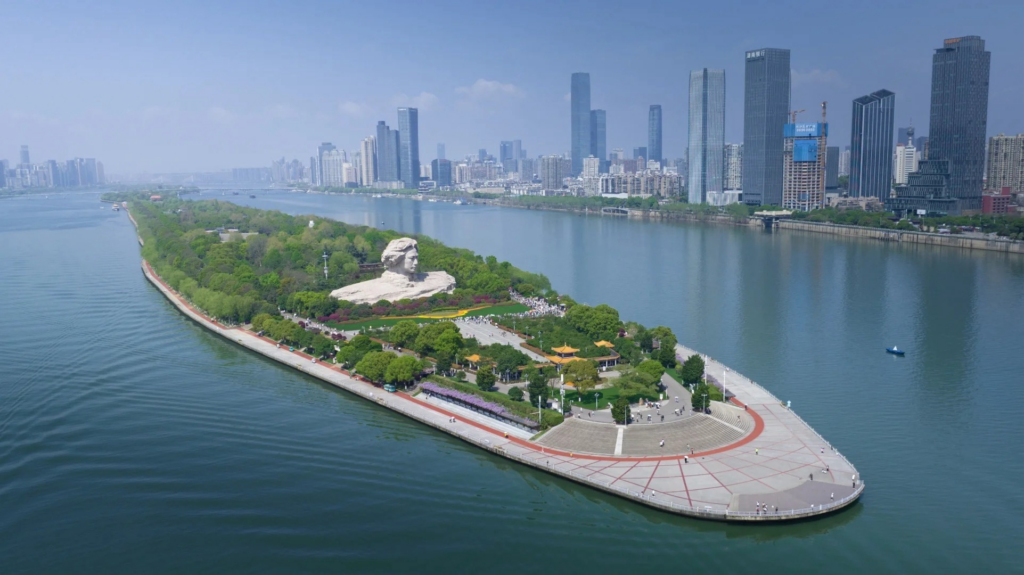
1. Orange Isle (Juzizhou) Situated in the heart of the Xiang River, Orange Isle is celebrated as “China’s First Isle” and stands as Changsha’s most iconic natural landmark. The island’s northern tip features a towering 32-meter Youth Mao Zedong Art Sculpture, which has become a spiritual pilgrimage site for visitors. Strolling along the riverside promenade, you are surrounded by water on all sides with Yuelu Mountain to the west and the Changsha skyline to the east—a perfect illustration of the city’s unique geography. During major holidays, spectacular fireworks light up the Xiang River sky.
2. Yuelu Mountain, Yuelu Academy & Aiwan Pavilion Rising 300.8 meters as one of the 72 peaks of the Hengshan range, Yuelu Mountain has long been praised as the finest scenery in western Hunan. At its foot lies Yuelu Academy, founded in 976 AD during the Northern Song Dynasty. As one of China’s Four Great Academies, it hosted lectures by Zhu Xi and Wang Yangming and remains a functioning part of Hunan University today—truly a “millennium-old institution.” Behind the academy sits Aiwan Pavilion, named after Du Mu’s Tang Dynasty poem. In autumn, the surrounding maple leaves turn fiery red, creating one of Changsha’s most photographed scenes. The summit offers panoramic views of the Xiang River and the city below.

II. Time Capsules of Hunan Culture: Museums & Historic Sites
3. Hunan Museum (Hunan Provincial Museum) As a first-grade national museum, the Hunan Museum houses over 180,000 artifacts, with the Mawangdui Han Tombs collection being the undisputed crown jewel. Excavated in 1972, these Western Han Dynasty tombs contained the world’s best-preserved ancient female corpse—Lady Xin Zhui—the 49-gram plain silk gown, and the T-shaped silk painting. These treasures offer an unparalleled window into aristocratic life 2,000 years ago and are regarded as one of the 20th century’s greatest archaeological discoveries.

4. Tianxin Pavilion Built in 1746 during the Qianlong era, Tianxin Pavilion is the last surviving section of Changsha’s ancient city wall and the city’s historical emblem. The three-story pavilion is supported by 46 vermillion columns and adorned with 62 stone lions and 32 dragon-head roof brackets. Climbing to the top, visitors witness a striking dialogue between the ancient ramparts and the modern metropolis beyond—an ideal vantage point to understand Changsha’s philosophy of “old city, new life.”

5. Jia Yi’s Former Residence & Taiping Old Street Taiping Old Street preserves Changsha’s most intact millennium-old streetscape, with bluestone paths, grey-tiled walls, and wooden lattice windows. Within the street lies the former residence of Jia Yi, a renowned Western Han political theorist who served as tutor to the King of Changsha—widely regarded as the cradle of Hunan culture. Today, the ancient street seamlessly integrates modern vitality: trendy brands like Wenheyou and SexyTea stand shoulder-to-shoulder with time-honored shops, creating a living museum where tradition and trend coexist.

III. Trendy New Landmarks: Changsha’s Modern Face
6. Changsha IFS (International Finance Square) As Hunan’s tallest building at 452 meters, the twin-tower complex dominates the skyline. The KAWS sculpture “SEEING/WATCHING” on the 7th-floor sculpture garden has become the city’s most Instagrammed spot, drawing young travelers from across the country. The view from the top juxtaposes the neon-lit urban jungle with the tranquil Xiang River below—an essential window into Changsha’s commercial dynamism.
7. Meixi Lake International Culture & Arts Centre Designed by the late starchitect Zaha Hadid, this complex resembles blooming hibiscus flowers—Hunan’s provincial flower. The Grand Theatre, Art Museum, and Small Theatre break from conventional geometry with fluid, futuristic forms. At night, the buildings appear to rise organically from the lake surface, creating Changsha’s most avant-garde cultural landmark. The surrounding Meixi Lake Park and musical fountain add to the leisure atmosphere.
8. Xie Zilong Photography Museum & Li Zijian Art Museum Located beside Yanghu Wetland Park, these twin art venues form a pilgrimage site for Changsha’s creative youth. The Xie Zilong Museum is celebrated for its raw concrete architecture and rotating international photography exhibitions. The Li Zijian Art Museum, China’s largest private art museum, houses the eponymous artist’s extensive oil painting collection. Both offer free admission (special exhibitions may charge), making them perfect for soaking in the city’s artistic atmosphere.
IV. Street Food & Nightlife: The Beating Heart of Changsha
9. Pozi Street & Huogongdian (Fire Palace) Pozi Street is one of Changsha’s oldest alleys and the epicenter of Hunan street food. At its heart stands Huogongdian, originally a Ming Dynasty temple dedicated to the fire god, now a cultural complex merging folk tradition, temple heritage, and culinary arts. Stinky tofu, sugar-oil baba, dragon-blood tofu, and spicy crayfish—here, you read Changsha’s rebellious spirit through your taste buds.
10. Super Wenheyou (Haixin Plaza) This is a “vintage Changsha city” embedded within a modern shopping mall. Six floors of meticulously recreated 1980s streetscapes—old barbershops, video halls, supply-and-marketing cooperatives, weathered utility poles—offer a time-travel experience. Eating a bowl of spicy crayfish while sipping a local soda, you unlock the key to Changsha’s collective memory. It represents the pinnacle of the city’s “nostalgia economy.”
11. Huangxing Road Pedestrian Street & Wuyi Square The commercial heart of Changsha never sleeps. Wuyi Square and Huangxing Road form an urban jungle of neon signs, dense crowds, endless queues for SexyTea milk tea, and impromptu street performances. After dark, Jiefang West Road’s bar district showcases Changsha’s legendary night economy, pulsing with energy until the early hours.
V. Nature & Urban Retreats
12. Hunan Botanical Garden & Yanghu Wetland Park For moments of tranquility amid the bustle, the Hunan Botanical Garden offers seasonal flower displays: spring azaleas, summer lotus, autumn sunflowers and pink muhly grass, and winter plum blossoms. Yanghu Wetland Park serves as the city’s western ecological lung, where the ancient-style Yanghu Water Street and serene wetland landscapes invite cycling and leisurely walks.
13. Du Fu Jiang Pavilion Standing on the Xiang River scenic belt, this pavilion commemorates the Tang Dynasty poet Du Fu’s sojourn in Changsha. Looking north, Orange Isle unfolds before you; gazing south, Yuelu Mountain looms in the distance. At night, when the pavilion lights reflect on the Xiang River waves, it becomes a classic vantage point for capturing Changsha’s nocturnal beauty.
[Practical Tips]
- Transportation: Changsha’s metro system covers all major attractions; Orange Isle, Yuelu Mountain, and Wuyi Square are directly accessible by subway. Taxis and ride-hailing are convenient; accommodation near Wuyi Square Metro Station is recommended.
- Reservations: Orange Isle, Yuelu Mountain, Hunan Museum, and Li Zijian Art Museum require advance online booking. Entry is free but capacity-controlled.
- Food Recommendations: Don’t miss local institutions like Yizhandeng Restaurant, perilla peach desserts, Dandan spicy hot pot, Jinji sugar-oil dumplings, and Hu Ji fried skewers.