



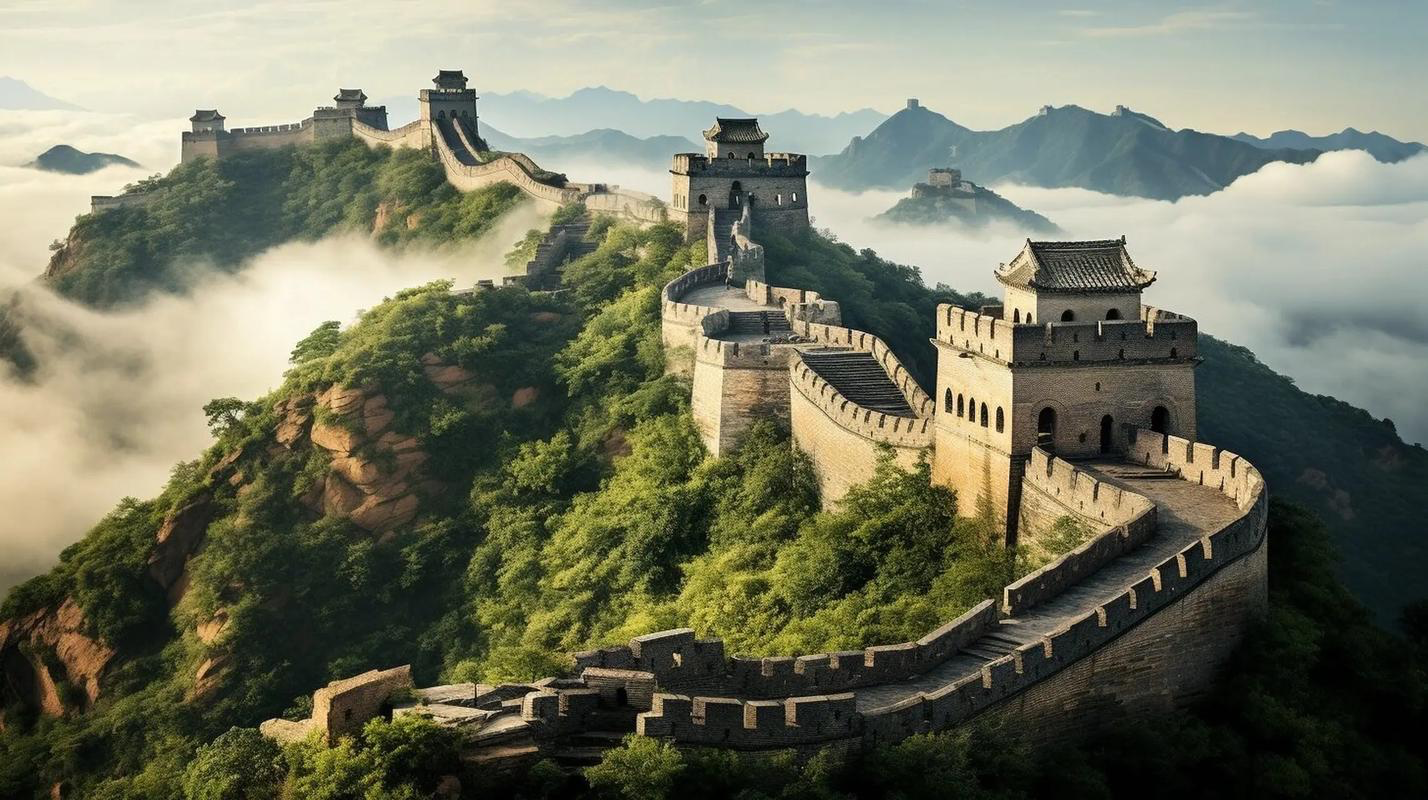
The Great Wall, resembling a gigantic dragon, sprawls across the vast expanse of northern China. Spanning thousands of years, it has witnessed the ebb and flow of history, embodying the profound memories and spiritual essence of the Chinese nation. As a marvel in the annals of world architecture, it stands as a symbol of the Chinese nation’s wisdom and strength, and is a magnificent historical epic, chronicling countless captivating tales and legends.
I. Historical Evolution of the Great Wall
(1) Origin and Embryonic Form: Spring and Autumn and Warring States Periods
The construction of the Great Wall can be traced back to the Western Zhou Dynasty. The well – known anecdote of “Lighting Beacons to Amuse the Feudal Lords” is associated with early military defense structures. During the Spring and Autumn and Warring States Periods, with vassal states vying for dominance, to fend off invasions from neighboring states, various vassal states successively erected city walls along their borders. For instance, the State of Chu built the “Fangcheng” to defend against northern forces, which is the earliest – recorded Great Wall in history. Subsequently, states such as Qi, Yan, Wei, Zhao, and Qin also constructed sections of the Great Wall. These segments were relatively short and unconnected, yet they laid the groundwork for the large – scale construction of the Great Wall in later times. At this stage, the Great Wall was primarily a by – product of the geopolitical landscape of the vassal states, bearing witness to the era of divided vassal states and frequent warfare.
(2) The First Great Unification: Qin and Han Dynasties
After the Qin Dynasty unified the six states, to repel the incursions of the Xiongnu in the north, Emperor Qin Shi Huang dispatched General Meng Tian with 300,000 troops to drive the nomadic tribes northward and then connected and renovated the Great Walls built by various states during the Warring States Period. Stretching over ten thousand li from Lintao in the west to Liaodong in the east, it earned the name “Ten – Thousand – li Great Wall”. The construction of the Qin Great Wall marked the first large – scale Great Wall – building endeavor in Chinese history. It signified the transformation of the Great Wall from fragmented defensive works of vassal states into a northern bulwark of a unified nation, playing a crucial role in consolidating the Qin Dynasty’s territory and maintaining the stability of the Central Plains region.
The Han Dynasty was a pivotal period for the development of the Great Wall. The Han Dynasty continued to conduct extensive construction and expansion of the Great Wall. Its reach extended from the southern foot of the Tianshan Mountains in the west to the Korean Peninsula in the east, with a total length of nearly twenty thousand li, the longest in Chinese history. Most of the Han – Dynasty Great Wall was built using rammed earth or stones. In regions lacking soil, such as the Hexi Corridor, a method of alternating layers of gravel and plant branches was employed, giving rise to the distinctive “Reed Great Wall” and “Red – willow Great Wall”. Moreover, to cut costs, the Han Dynasty did not construct a continuous wall throughout but instead established a defense line comprising beacons and other elements, creating a comprehensive beacon – based early – warning system. The Han – Dynasty Great Wall not only served as a military defense project but also safeguarded the Silk Road, facilitating economic and cultural exchanges between the Central Plains and the Western Regions.
(3) Development and Perfection: From the Wei, Jin, Southern and Northern Dynasties to the Song, Liao, and Jin Dynasties
During the Wei, Jin, Southern and Northern Dynasties, despite the volatile political situation, certain minority – led regimes, like the Northern Wei and the Northern Qi, built and renovated the Great Wall to defend against threats from northern nomadic tribes or southern regimes. The Northern Qi Great Wall, to some extent, set the stage for the construction of the Ming – Dynasty Great Wall.
During the Liao and Jin Dynasties, the northern minority – led regimes also recognized the significance of the Great Wall. The Jin Dynasty, aiming to defend against nomadic tribes on the Mongolian Plateau, built the Jin – Dynasty Boundary Ditch, also known as the “Jin Great Wall”. Although different from the traditional Great Wall, it served a similar military – defense function, demonstrating the efforts and ingenuity of the minority – led regimes in their confrontations with northern nomadic forces.
(4) The Pinnacle Work: Ming Dynasty
The Ming Dynasty witnessed the zenith of Great Wall construction. After its establishment, to resist the incursions of the Tartars and Oirats in the north, the Ming Dynasty carried out large – scale construction of the Great Wall over a continuous period of more than 200 years. The Ming – Dynasty Great Wall stretched from Hushan in Liaoning in the east to Jiayuguan in Gansu in the west, approximately 8,800 kilometers in length. The Ming – Dynasty Great Wall achieved the highest level in terms of engineering technology and overall scale in history. Its key sections were further clad with blue bricks in addition to rammed earth and stones, significantly enhancing the wall’s durability. Simultaneously, the Ming – Dynasty Great Wall was equipped with a more sophisticated military defense system. The Nine Frontiers and Thirteen Garrisons were established, and numerous passes, watchtowers, and beacons were distributed along the line, forming a tightly – knit defense network. Renowned sections of the Great Wall such as Juyongguan, Mutianyu, Gubeikou, Jinshanling, and Huangyaguan were all constructed on the basis of the Northern Qi Great Wall during the Ming Dynasty and still exude their majestic charm today.
(5) The Qing Dynasty and Beyond
In the Qing Dynasty, due to changes in the political landscape, the Qing government ceased large – scale Great Wall construction, although it still repaired and utilized some sections. Through policies such as inter – marriages and enfeoffments, the Qing Dynasty strengthened its ties with northern minorities, gradually diminishing the military – defense function of the Great Wall. However, its value as a historical and cultural heritage endured.
In modern times, the Great Wall became a symbol of the Chinese nation’s spirit during the resistance against foreign aggression. Especially during the War of Resistance against Japanese Aggression, numerous fierce battles erupted along the Great Wall. For example, in the Great Wall Campaign, Chinese soldiers and civilians heroically resisted the Japanese invaders along the strategic passes from Shanhaiguan in the east to Badaling in the west, including Yiyuankou, Lengkou, Xifengkou, and Gubeikou. This significantly inspired the whole nation’s patriotism and the national spirit of resistance and sacrifice.
After the founding of the People’s Republic of China, the Great Wall received high – level attention. It was designated as a major national cultural relic under protection and was inscribed on the World Heritage List in 1987. Subsequently, the state introduced a series of protection policies and measures, renovating and safeguarding the Great Wall, transforming it into a precious cultural heritage of the Chinese nation and a world – renowned tourist destination.
II. The Military Significance of the Great Wall
(1) A Formidable Barrier Against Nomadic Cavalry
The primary function of the Great Wall was military defense, mainly targeting the nomadic cavalry from the north. These cavalry were characterized by high mobility and strong impact, capable of launching sudden attacks in the vast plains. The Great Wall, like a solid rampart, effectively restricted the movement of the nomadic cavalry. Built along strategic terrains such as mountains and rivers, it was difficult for cavalry to scale or breach. This forced the enemy to concentrate their forces on attacking key passes, thus buying time and creating opportunities for the defenders.
(2) A Comprehensive Military Defense System
The Great Wall was not merely an isolated wall but a vast military defense complex composed of city walls, passes, beacon towers, watchtowers, and fortresses. The city wall was the main component, varying in height, thickness, and structure according to the terrain. It was tall and sturdy in plains or strategic locations and relatively lower and narrower in mountainous areas. Passes, such as Shanhaiguan, Juyongguan, and Jiayuguan, were the focal points of the Great Wall’s defense. Located at transportation arteries or strategic points, they were known for their impregnability and were crucial for halting enemy advances. Beacon towers formed a military – intelligence transmission system. By lighting beacons and beating drums, enemy intelligence could be rapidly relayed, enabling defenders thousands of miles away to be promptly informed and prepared. Watchtowers were connected to the city wall. Troops could attack enemies from an elevated position on the towers, and they could also store weapons and provisions. Even if the enemy breached the city wall, watchtowers could serve as strongholds for continued resistance. Fortresses were the settlements of garrison troops and civilians, providing logistical support and personnel reserves for the Great Wall defense line.
(3) In – depth Defense and Tactical Employment
The Great Wall’s defense was characterized by depth. In its design and layout, multiple lines of defense were carefully considered, with each line being relatively independent yet coordinated. When the enemy attacked the first line of defense, other lines could quickly prepare for battle, forming a three – dimensional combat situation. The rear lines could provide support to the front and carry out tactical maneuvers such as outflanking and cutting off the enemy’s retreat, trapping the enemy in a tight encirclement, thus greatly enhancing the effectiveness of the defense. For example, in the twelve defense zones of the Jizhou and Changping sections of the Ming – Dynasty Great Wall, the troops in each zone had clear responsibilities for mutual support, demonstrating the mature in – depth defense system of the Great Wall.
(4) Military 屯田 (Tuntian) and Economic Support
The military 屯田 (Tuntian) system was also implemented along the Great Wall. In addition to their defensive duties, the garrison troops reclaimed land and grew crops, which not only met their own food needs but also alleviated the supply pressure from the interior, providing economic support for long – term defense. Meanwhile, trade activities gradually developed around the passes of the Great Wall, promoting the economic development of the border areas and further strengthening the material foundation of the Great Wall defense line.
III. The Cultural Connotations of the Great Wall
(1) A Spiritual Symbol of the Chinese Nation
The Great Wall symbolizes the indomitable spirit of the Chinese nation. Enduring thousands of years of wind and rain and numerous wars, it still stands tall, representing the Chinese nation’s unwavering and tenacious spirit in the face of difficulties and foreign invasions. From repelling nomadic tribes in ancient times to resisting foreign aggression in modern times, the Great Wall has witnessed countless heroic struggles of the Chinese nation. It has inspired the Chinese people to forge ahead bravely and defend their homeland. The famous saying “He who has never been to the Great Wall is not a true man” vividly reflects the lofty status of the Great Wall in the hearts of the Chinese people. It serves as a spiritual motivation, encouraging people to strive for excellence, challenge themselves, and work unremittingly towards the great rejuvenation of the Chinese nation.
(2) An Eternal Theme in Literature and Art
The Great Wall is a vital source of inspiration for literature and art creation. Since ancient times, countless literati and artists have been captivated by it, leaving behind a wealth of popular poems, essays, paintings, music, and other works. “The moon of the Qin Dynasty shines over the passes of the Han Dynasty, and the soldiers who went on the long march have not yet returned,” Wang Changling’s poem depicts the grandeur and desolation of the Great Wall, expressing sympathy for the frontier – guarding soldiers and longing for peace. “I vainly boasted of being like the Great Wall in the north, but now my temples in the mirror are already speckled with gray,” Lu You uses the Great Wall to convey his sense of indignation over unfulfilled aspirations. These literary works not only showcase the majestic beauty of the Great Wall but also embody the Chinese nation’s feelings of home and country, homesickness, and yearning for a better life, enriching the Chinese cultural treasury.
(3) A Bond of National Integration
To some extent, the Great Wall promoted national integration. Although initially built as a military defense project, over the long course of history, it became a platform for exchanges between the farming and nomadic peoples. The passes along the Great Wall were important trading venues where both sides exchanged agricultural and livestock products, facilitating economic exchanges. Simultaneously, cultural, religious, and folk – custom exchanges also became increasingly frequent. Different ethnic groups learned from and borrowed from each other, jointly creating the rich and diverse Chinese culture and contributing to the formation and development of the Chinese nation’s multi – ethnic unity.
(4) An Outstanding Representative of Architectural Aesthetics
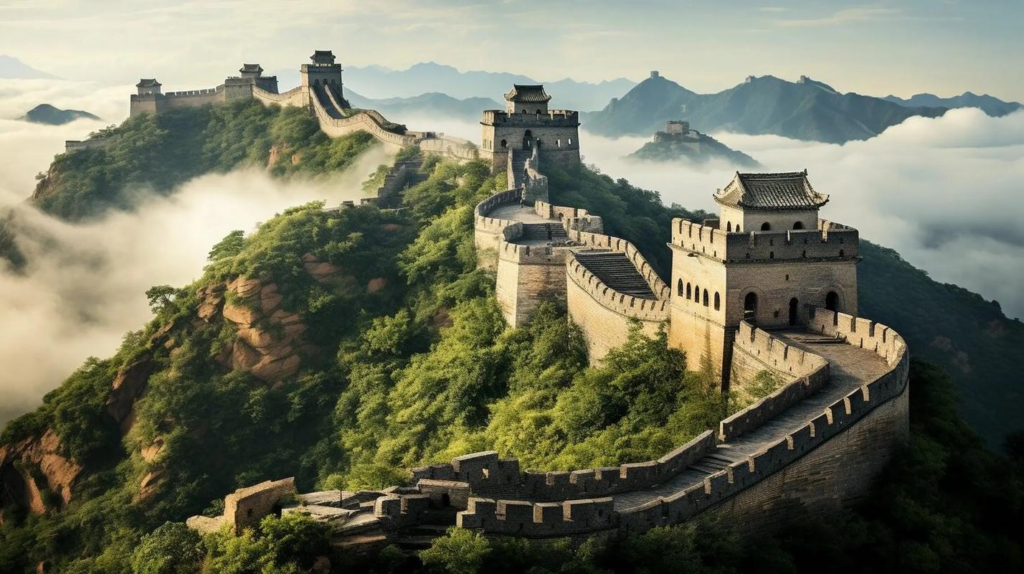
The Great Wall holds unique architectural aesthetic value. It is built in harmony with the natural environment, following the terrain of mountains and rivers, presenting a magnificent and imposing manner. Whether it is the city wall winding through the mountains, the towering pass city gates, or the well – arranged watchtowers, they all create a strong visual impact. In terms of details, the carvings and shooting holes on the Great Wall are exquisitely crafted, demonstrating the high – level skills of ancient Chinese architectural carving art and showcasing the wisdom and creativity of the Chinese nation.
IV. The Current Situation and Protection of the Great Wall
Today, as a world cultural heritage, the Great Wall has drawn global attention. After years of protection and renovation, many sections of the Great Wall, such as Badaling Great Wall and Mutianyu Great Wall in Beijing, Jinshanling Great Wall in Hebei, and Jiayuguan in Gansu, have been effectively preserved. These sections have become renowned tourist attractions, attracting a large number of domestic and foreign tourists. The renovated Great Wall not only showcases its historical appearance but also provides an important window for people to understand Chinese history and culture.
However, the Great Wall also faces numerous challenges. Due to its long – standing age, some sections of the Great Wall have severely weathered. Coupled with human – made damage and improper tourism development, the protection of the Great Wall remains a grave concern. In some areas, the city walls have collapsed, and beacon towers have been damaged, urgently requiring rescue – based protection. To better protect the Great Wall, the Chinese government has introduced a series of laws and regulations, such as the “Regulations on the Protection of the Great Wall”, clarifying the responsibilities and requirements for Great Wall protection. Meanwhile, local governments have increased investment in Great Wall protection, launched a series of protection projects and research initiatives, strengthened the renovation of the environment around the Great Wall, and enhanced public awareness of protection.
Furthermore, with the development of technology, technologies such as unmanned aerial vehicle (UAV) surveying and mapping and 3D reconstruction have been applied to the protection and research of the Great Wall, providing more scientific means and methods for its protection. Through these technologies, a more accurate understanding of the current situation of the Great Wall can be obtained, targeted protection measures can be formulated, and it also helps to deeply explore and display the historical and cultural value of the Great Wall.
The Great Wall, this immortal monument of the Chinese nation, bears the weight of history, contains the essence of culture, and has witnessed the rise and fall of the Chinese nation. It is not only the crystallization of the wisdom and hard work of the ancient Chinese working people but also a precious cultural heritage of all mankind. In the new era, we have the responsibility and obligation to protect the Great Wall well, allowing this resplendent historical pearl to continue shining on the world cultural stage, inheriting the spiritual lineage of the Chinese nation, and leaving this precious wealth to future generations.