


Introduction: The Mountains That Shouldn’t Exist
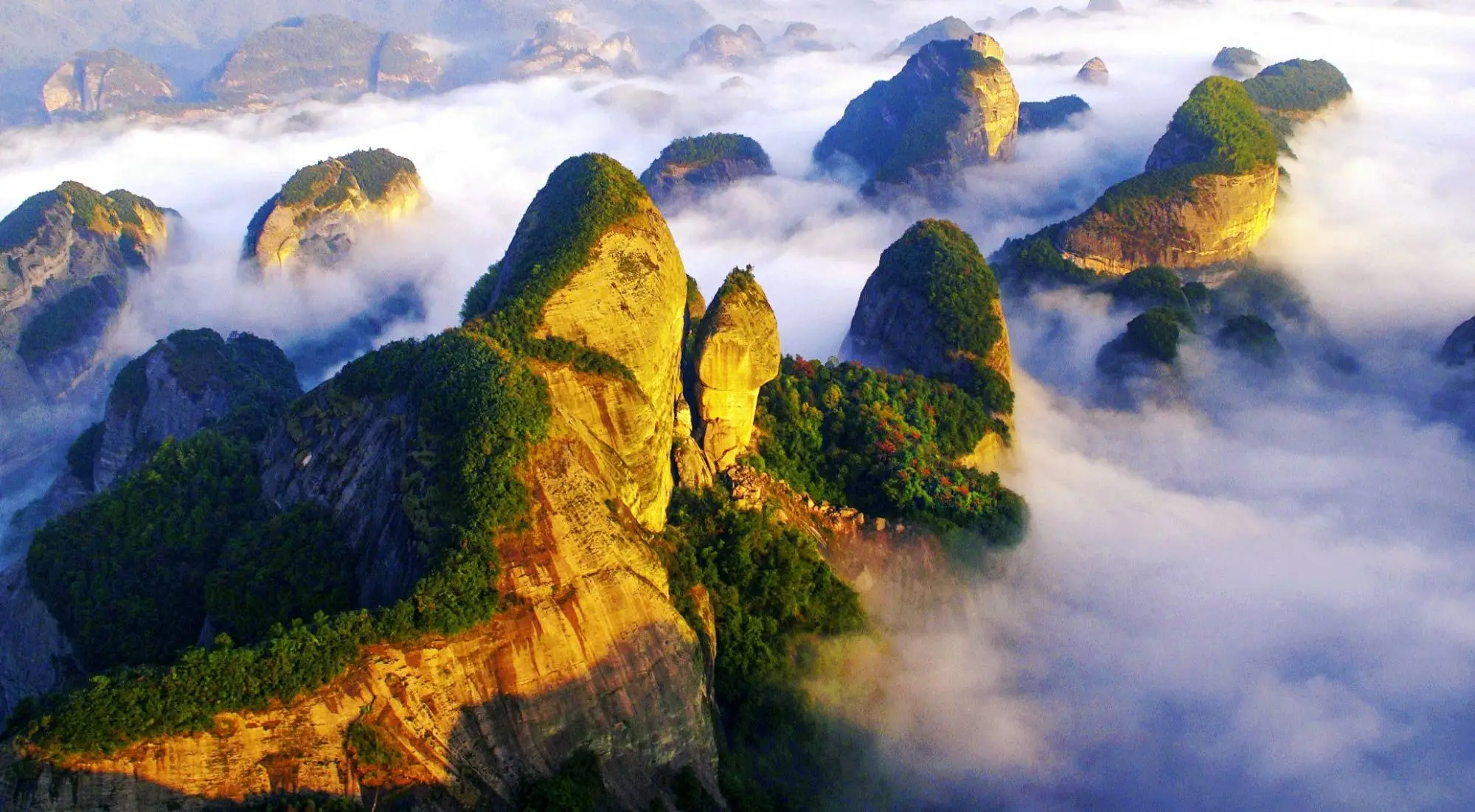
Imagine standing among thousands of towering stone pillars rising hundreds of meters into the sky.
Clouds drift silently between the peaks.
Dense forests cling impossibly to vertical cliffs.
Sunlight pierces through the mist, transforming the landscape into a dreamlike world that appears suspended between heaven and earth.
Many visitors describe their first glimpse of Zhangjiajie with the same reaction:
“This can’t be real.”
Yet it is.
Located in China’s Hunan Province, Zhangjiajie is one of the most extraordinary landscapes on Earth.
To millions of people around the world, it became famous as the inspiration behind the floating Hallelujah Mountains in James Cameron’s blockbuster film Avatar.
But the reality is even more astonishing than the movie.
Long before Hollywood discovered it, Zhangjiajie had already spent millions of years creating one of nature’s greatest masterpieces.
For travelers seeking a side of China beyond ancient temples and modern megacities, few destinations are more unforgettable.

A Landscape Unlike Anywhere Else on Earth
What makes Zhangjiajie so special?
The answer lies in its geology.
Unlike traditional mountain ranges, Zhangjiajie is famous for its sandstone pillars.
These are not ordinary peaks.
Thousands of narrow stone columns rise dramatically from the forest floor.
Some reach heights exceeding 200 meters (650 feet).
Many appear impossibly thin compared to their height.
When viewed from a distance, they resemble giant stone skyscrapers created by nature itself.
The result is a landscape that feels more alien than terrestrial.
Geologists estimate that these formations were created over hundreds of millions of years.
Wind, rain, temperature changes, and erosion gradually sculpted the original sandstone plateau into the extraordinary pillars seen today.
Each column is a monument to geological time.

The Birthplace of China’s First National Forest Park
Many international visitors are surprised to learn that Zhangjiajie holds a special place in China’s environmental history.
In 1982, Zhangjiajie National Forest Park became China’s first official national forest park.
This marked a significant turning point in conservation efforts.
For the first time, large-scale protection was given to one of China’s most unique natural landscapes.
Today, the park forms part of the larger Wulingyuan Scenic Area, which covers more than 26,000 hectares.
Its exceptional geological features eventually earned UNESCO World Heritage status.
The recognition placed Zhangjiajie among the world’s most important natural treasures.

The Mountains That Inspired Avatar
No discussion of Zhangjiajie is complete without mentioning Avatar.
When James Cameron’s Avatar premiered in 2009, audiences around the world were captivated by the floating mountains of Pandora.
The landscapes appeared fantastical.
Many assumed they were entirely computer-generated.
However, some of the visual inspiration came directly from Zhangjiajie.
One particularly famous pillar was later renamed “Avatar Hallelujah Mountain.”
Almost overnight, international interest exploded.
Visitors who had never heard of Zhangjiajie suddenly added it to their travel bucket lists.
Ironically, locals had admired these mountains for centuries before Hollywood arrived.
Avatar introduced Zhangjiajie to the world, but the landscape itself had always been extraordinary.
Walking Among the Stone Giants
One of the most remarkable aspects of Zhangjiajie is accessibility.
Unlike many spectacular natural environments that require strenuous expeditions, much of Zhangjiajie can be explored through an extensive network of trails, elevators, cable cars, and observation platforms.
Visitors can spend hours wandering through valleys surrounded by immense stone towers.
The experience is deeply immersive.
As the mist shifts throughout the day, the scenery constantly changes.
A peak hidden moments ago suddenly emerges from the clouds.
A familiar viewpoint transforms entirely under different lighting conditions.
No two visits are exactly the same.
Tianzi Mountain: The Kingdom Above the Clouds
Among Zhangjiajie’s many scenic areas, Tianzi Mountain is often considered the most breathtaking.
Its name means “Son of Heaven Mountain.”
The title feels appropriate.
From its elevated viewpoints, visitors gaze across an endless sea of sandstone pillars stretching toward the horizon.
On certain mornings, low clouds fill the valleys below.
Only the peaks remain visible.
The result resembles islands floating in a celestial ocean.
This phenomenon has inspired poets, painters, and photographers for generations.
Many travelers consider sunrise at Tianzi Mountain one of the most beautiful experiences in China.

Yuanjiajie: The Heart of the Avatar Landscape
If Tianzi Mountain offers the grand panorama, Yuanjiajie delivers the iconic views.
This area contains many of the formations most closely associated with Avatar.
Here, visitors encounter towering pillars separated by deep ravines and dramatic cliffs.
Observation platforms provide unforgettable perspectives.
The most famous viewpoints often become crowded, but the scenery justifies the popularity.
Every direction reveals a composition worthy of a postcard.
It is easy to understand why filmmakers found inspiration here.
The landscape already feels cinematic.
The World’s Tallest Outdoor Elevator
One of Zhangjiajie’s most unusual attractions is the Bailong Elevator.
Built directly into a cliff face, this glass elevator transports visitors hundreds of meters upward in just minutes.
At the time of its construction, it became the world’s tallest outdoor elevator.
The experience is simultaneously thrilling and surreal.
As the elevator ascends, the forest gradually disappears below.
Stone pillars emerge at eye level.
The scale of the landscape becomes increasingly apparent.
For many visitors, the elevator ride itself becomes a memorable attraction.

The Glass Bridge That Terrified the Internet
In 2016, Zhangjiajie once again captured global attention.
This time, it was not because of mountains.
It was because of a bridge.
Stretching across a dramatic canyon, the Zhangjiajie Glass Bridge quickly became one of the most famous pedestrian bridges in the world.
The bridge features a transparent glass floor suspended hundreds of meters above the ground.
For some visitors, crossing it is exhilarating.
For others, it is terrifying.
Videos of people cautiously crawling across the glass surface went viral worldwide.
Yet beyond the thrill, the bridge offers extraordinary views of the surrounding landscape.
It demonstrates how modern engineering can coexist with natural beauty.

Wildlife and Biodiversity
Although the sandstone pillars receive most of the attention, Zhangjiajie is also an important ecological sanctuary.
The region contains:
- Dense subtropical forests
- Rare plant species
- Diverse bird populations
- Wild monkeys
- Amphibians
- Numerous endemic species
The varied elevations create multiple ecological zones.
These habitats support an impressive range of biodiversity.
For nature enthusiasts, Zhangjiajie offers far more than dramatic scenery.
It is a living ecosystem.
The Cultural Side of Zhangjiajie
Many visitors focus exclusively on the landscape and overlook the region’s cultural heritage.
The area is home to several ethnic minority groups, including the Tujia and Miao peoples.
These communities possess unique traditions, architecture, music, festivals, and cuisine.
For centuries, they adapted to life among the mountains.
Their stories add a human dimension to the natural environment.
Exploring local villages can provide valuable insight into a side of China rarely seen by international tourists.
Why Photographers Love Zhangjiajie
Professional photographers frequently rank Zhangjiajie among the most photogenic destinations in Asia.
Several factors contribute to its appeal:
- Constantly changing weather
- Dramatic lighting conditions
- Morning mist
- Layered compositions
- Seasonal variation
Spring brings vibrant greenery.
Summer creates dense forests.
Autumn introduces warm colors.
Winter occasionally covers the peaks with snow.
Every season produces entirely different images.
This diversity explains why many photographers return repeatedly.
The Best Time to Visit
Each season offers unique advantages.
Spring (March–May)
Fresh vegetation and comfortable temperatures create ideal hiking conditions.
Summer (June–August)
The forests are lush and vibrant, although visitor numbers increase.
Autumn (September–November)
Often considered the best season.
Clear skies and colorful foliage provide spectacular views.
Winter (December–February)
Fewer tourists and occasional snow create a magical atmosphere rarely seen in photographs.
Why Zhangjiajie Represents a Different Side of China
When many foreigners imagine China, they think of:
- The Great Wall
- Beijing
- Shanghai
- Pandas
- Ancient temples
Zhangjiajie tells a different story.
It reveals China’s extraordinary natural diversity.
It demonstrates that some of the world’s most spectacular landscapes exist far beyond the country’s famous urban centers.
The region challenges assumptions and expands understanding.
Visitors leave with a broader appreciation of China’s geographic richness.
Conclusion: A Journey Into Another World
There are beautiful mountains throughout the world.
There are impressive forests, dramatic cliffs, and stunning viewpoints.
Yet very few places combine these elements in quite the same way as Zhangjiajie.
Its towering sandstone pillars seem to defy geological logic.
Its mist-covered peaks create scenes worthy of fantasy novels.
Its forests preserve ecosystems millions of years in the making.
Whether you arrive as an Avatar fan, a photographer, a hiker, or simply a curious traveler, Zhangjiajie offers something increasingly rare in modern tourism:
Genuine wonder.
For many visitors, the experience is unforgettable.
For some, it is transformative.
And for almost everyone, it confirms one simple truth:
The real world can be more extraordinary than fiction.