



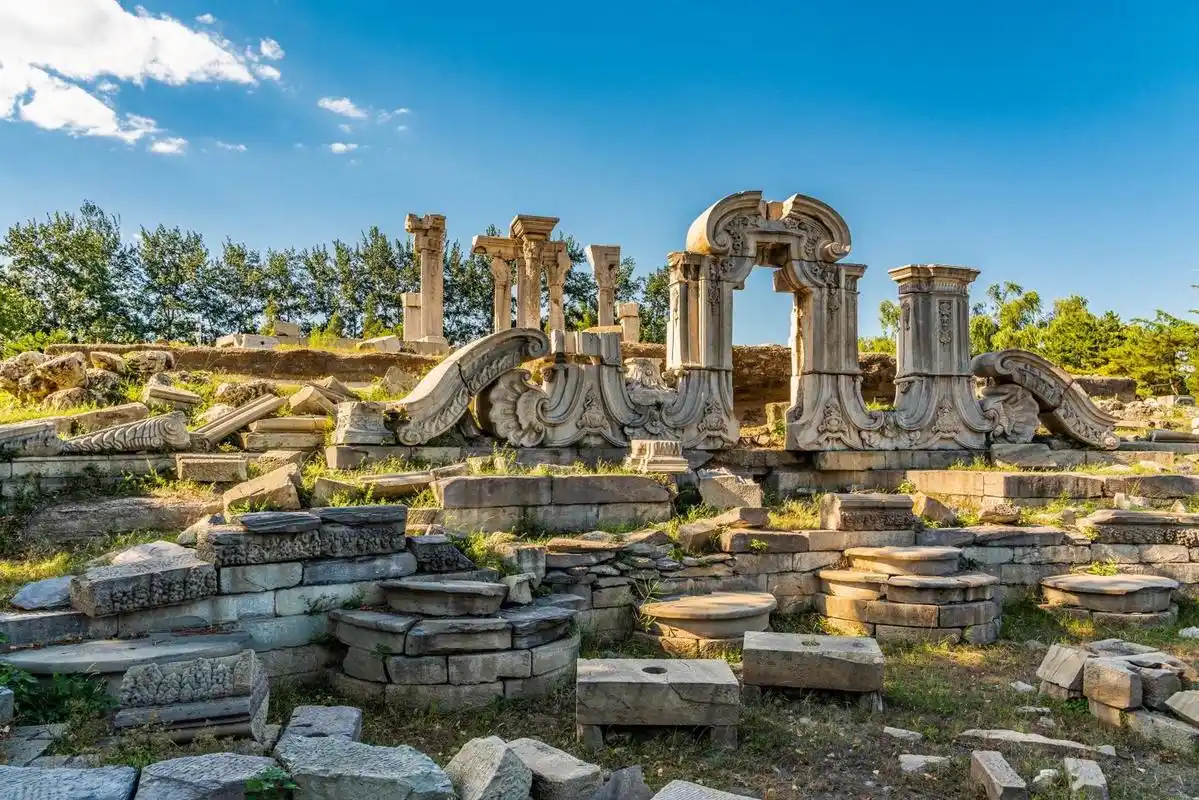
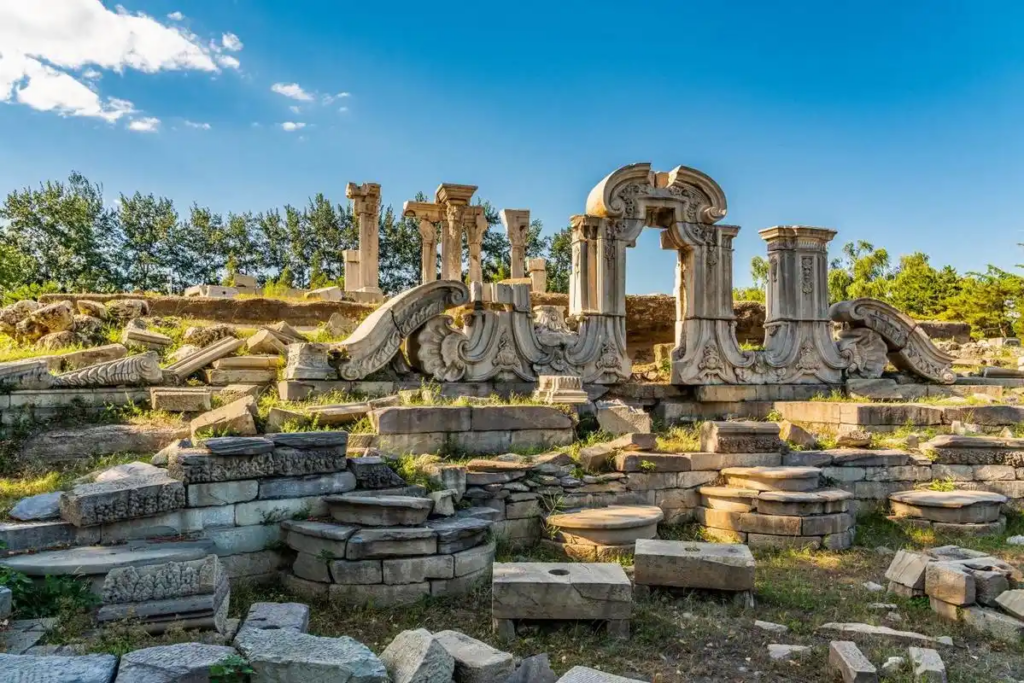
The Old Summer Palace in Beijing, once known as the “Garden of Gardens,” was a paragon of beauty and grandeur. Its existence was a testament to China’s rich cultural heritage and the pinnacle of garden – making art. However, the tragic events of 1860 transformed this wonder into ruins, leaving behind a deep – seated historical pain. Today, the ruins stand as a solemn reminder of the past, echoing with stories of both glory and devastation.
I. Historical Evolution
(I) The Genesis and Expansion in the Qing Dynasty
The Old Summer Palace’s story began in the early 18th century during the reign of Emperor Kangxi. Initially, it was a small garden bestowed upon Prince Yinzhen, who later became Emperor Yongzheng. Yongzheng expanded the garden significantly, integrating it into a vast imperial complex that served as both a residence and an administrative center.
Under Emperor Qianlong, the Old Summer Palace reached its zenith. Qianlong, an avid art collector and a patron of architecture, lavished resources on its development. He added numerous pavilions, temples, and gardens, and incorporated elements from different regions of China, creating a microcosm of the empire’s diverse landscapes. Moreover, influenced by Western missionaries at court, he commissioned the construction of a Western – style architectural complex, the European Palaces, which included iconic structures like the Hall of National Peace (Xieqi Qu), the Great Waterworks (Dashuifa), and the Belvedere of Far – reaching Views (Yuanying Guan).
(II) Decline and Ruin
Despite facing some challenges in the subsequent reigns of Jiaqing and Daoguang due to economic constraints, the Old Summer Palace retained much of its splendor. However, the Anglo – French Allied Forces’ invasion in 1860 marked a turning point. The invaders looted the palace of its countless treasures, and on October 18, 1860, they set it ablaze. The fire raged for three days and nights, reducing the magnificent palaces, gardens, and art – filled pavilions to ashes.
After the destruction, the Old Summer Palace continued to deteriorate during the late Qing Dynasty and the early Republican period. Lacking proper protection, its remaining structures were further damaged, and many valuable materials were scavenged.
(III) Preservation Efforts in Modern Times
After the founding of the People’s Republic of China, the government recognized the historical and cultural significance of the Old Summer Palace. In 1956, the first steps towards its protection were taken, including the removal of debris and the start of greening projects. In 1988, it was designated as a national key cultural relic protection unit. Since then, continuous efforts have been made to preserve the ruins, conduct archaeological research, and restore some of the key landscapes, such as the Sea of Blessing (Fuhai).
II. Architectural Marvel
(I) A Harmonious Blend of Chinese and Western Styles
The Old Summer Palace was a unique architectural ensemble that seamlessly combined Chinese and Western architectural styles. The Chinese – style architecture was characterized by its grand palaces, elegant pavilions, and carefully – designed gardens. The palaces, with their vermilion columns, yellow – glazed tiles, and elaborate woodcarvings, exemplified the traditional Chinese imperial architectural style. The pavilions, often perched on hilltops or beside lakes, provided vantage points to enjoy the surrounding scenery.
The Western – style architecture, on the other hand, was a rare example of European Baroque and Rococo styles in China. The European Palaces featured large – scale fountains, statues, and facades adorned with intricate carvings. The use of marble, colored glass, and metal in these structures was a departure from traditional Chinese building materials, adding a touch of European opulence.
(II) Ingenious Garden Layout
The garden layout of the Old Summer Palace was a masterpiece of landscape design. It was centered around the Sea of Blessing, a large artificial lake. The lake was surrounded by a series of islands, each with its own unique architecture and landscaping. These islands were connected by bridges, creating a sense of fluidity and continuity.
The garden also incorporated a network of smaller lakes, canals, and streams that meandered through the complex, adding to the overall charm. The use of rockeries, flower – filled gardens, and ancient trees further enhanced the natural beauty of the landscape, creating a harmonious co – existence between man – made structures and nature.
(III) Exquisite Architectural Details
The architectural details of the Old Summer Palace were a testament to the craftsmanship of the era. In the Chinese – style buildings, the woodcarvings on the doors, windows, and eaves depicted a wide range of themes, from mythological stories to scenes of daily life. The stone carvings, especially those on the steps and balustrades, were equally intricate, showcasing the skill of Chinese stonemasons.
In the Western – style architecture, the sculptures were the highlight. The bronze statues of the twelve Chinese zodiac animal heads, which once adorned the fountains, were masterpieces of Western – influenced sculpture. The reliefs on the facades of the buildings told stories of Western mythology, adding a cultural depth to the structures.
III. Cultural Significance
(I) A Repository of Royal and National Culture
As an imperial garden, the Old Summer Palace was the center of royal life and culture in the Qing Dynasty. It was where emperors held grand ceremonies, entertained foreign envoys, and pursued their artistic and intellectual interests. The palaces and pavilions were filled with treasures, including imperial robes, jade carvings, calligraphy, and paintings, which were not only symbols of imperial power but also represented the highest level of Chinese art and craftsmanship.
The Old Summer Palace was also a symbol of national pride and identity. It was a showcase of China’s cultural and technological achievements, a place where the empire presented its grandeur to the world.
(II) A Bridge of Cultural Exchange
The inclusion of Western – style architecture in the Old Summer Palace was a significant example of cultural exchange between China and the West. It demonstrated the Qing Dynasty’s openness to foreign cultures at a time when China was still relatively closed – off. Western missionaries, who were involved in the design and construction of the European Palaces, brought with them European architectural knowledge, art techniques, and scientific concepts.
This exchange was not one – sided. Chinese artisans, while working on the Western – style buildings, also incorporated some Chinese elements, creating a unique hybrid style. This cross – cultural interaction left a lasting mark on the history of Sino – Western relations.
(III) An Educational and Inspirational Site
Today, the Old Summer Palace serves as an important educational and inspirational site. The ruins are a living textbook, teaching visitors about China’s history, the rise and fall of empires, and the consequences of war and aggression. They also inspire a sense of national pride in Chinese cultural heritage and a determination to protect and preserve it.
For architects, landscape designers, and artists, the Old Summer Palace remains a source of inspiration. Its unique blend of architectural styles, innovative garden layout, and exquisite details continue to influence modern – day design and artistic creation.
Conclusion
The Old Summer Palace, though now in ruins, continues to hold a special place in the hearts of the Chinese people and the world at large. Its history, architecture, and cultural significance are a rich tapestry that weaves together stories of glory, tragedy, and resilience. As we look at its broken walls and overgrown gardens, we are reminded of the importance of history, the value of cultural heritage, and the need for peace and mutual respect among nations.