

Introduction: The Most Confusing Food in Hong Kong
Imagine walking into a traditional Hong Kong bakery.
The shelves are packed with golden pastries, egg tarts, and freshly baked buns.
Then you notice something called a:
Pineapple Bun.
Naturally, you assume it contains pineapple.
Perhaps pineapple jam.
Maybe pineapple cream.
Or at least some pineapple flavoring.
You buy one.
You take a bite.
And then comes the surprise:
There is no pineapple.
Not a single piece.
No pineapple filling.
No pineapple juice.
No pineapple flavor.
Nothing.
For many first-time visitors, the Pineapple Bun becomes their first great Hong Kong food mystery.
How did a bun with no pineapple become one of Hong Kong’s most beloved foods?
The answer reveals a fascinating story involving Cantonese culture, colonial-era bakeries, local creativity, and one of the world’s most unique food traditions.
What Is a Pineapple Bun?
The Pineapple Bun, known in Cantonese as:
Bo Lo Bao (菠萝包)
is one of Hong Kong’s most famous baked goods.
At first glance, it looks simple.
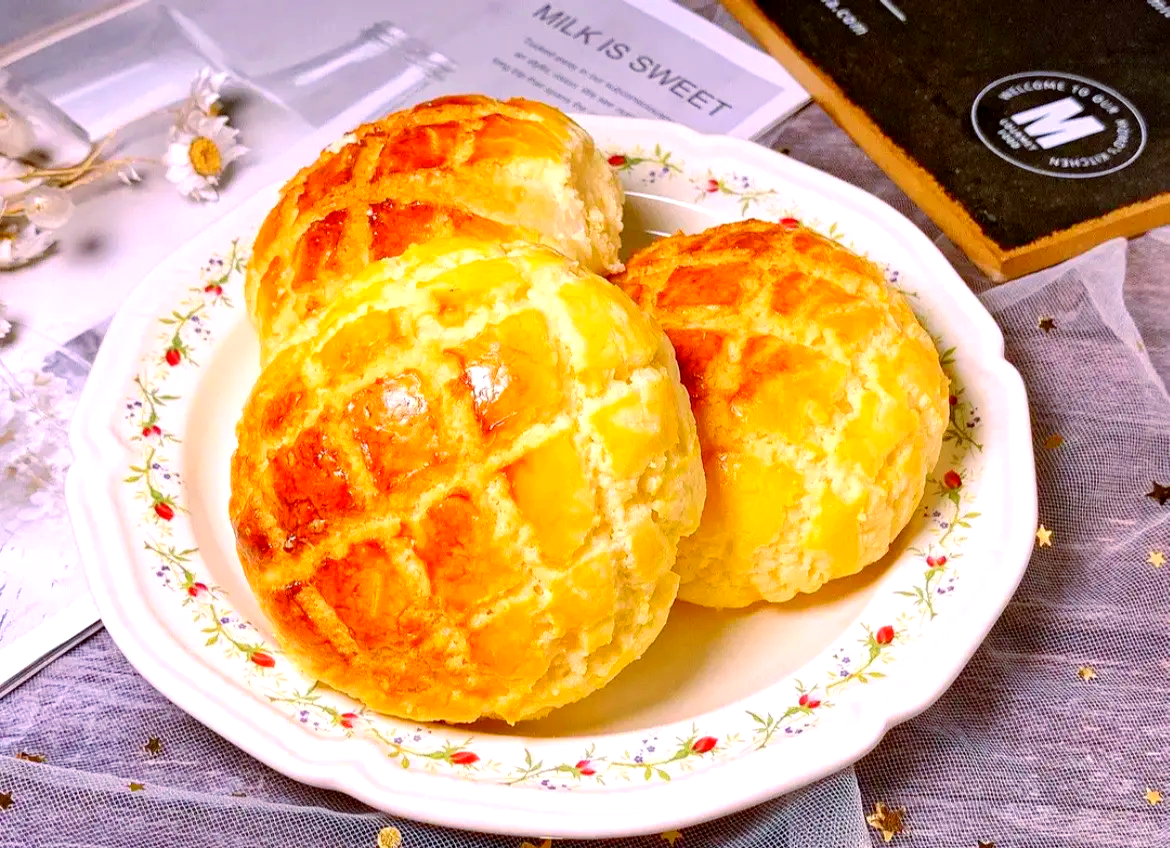
The bun consists of:
- A soft sweet bread base
- A crunchy golden topping
- A slightly sweet flavor
Freshly baked Pineapple Buns are:
- Crispy on top
- Soft inside
- Lightly sweet
- Richly aromatic
For many Hong Kong residents, it is comfort food.
So Why Is It Called a Pineapple Bun?
The answer has nothing to do with ingredients.
Instead, the name comes from appearance.
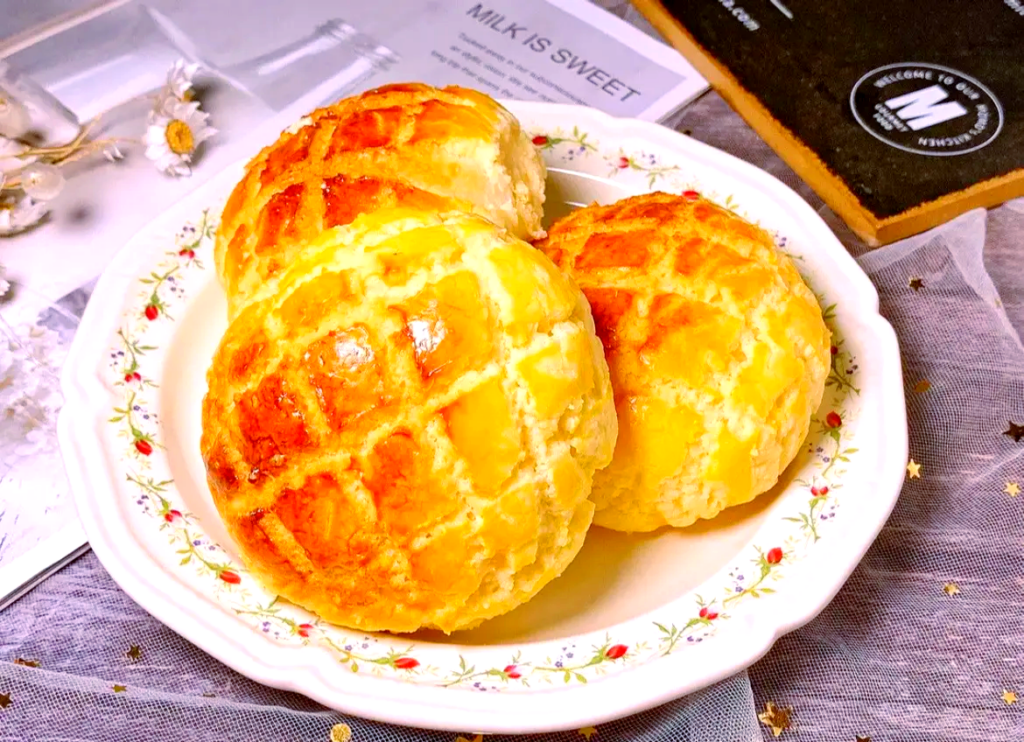
When baked, the sugary topping cracks into a pattern resembling the rough outer skin of a pineapple.
That’s it.
The bun looks like a pineapple.
Therefore, people called it a Pineapple Bun.
No pineapple was ever required.
To Western visitors, this can be confusing.
Imagine ordering a “banana cake” that contains no banana whatsoever.
Yet in Hong Kong, the name makes perfect sense.
A Product of Hong Kong’s Unique History
To understand the Pineapple Bun, we need to understand Hong Kong itself.
Hong Kong developed as a meeting point between:
- Chinese traditions
- British influence
- International trade
Throughout the twentieth century, local bakers began experimenting with Western-style breads and pastries.
Traditional Chinese cuisine historically focused less on baked bread.
The arrival of European baking techniques changed everything.
Local bakers adapted foreign ideas to Cantonese tastes.
The result was a new category of food:
The Hong Kong bakery.
The Birth of Hong Kong Bakery Culture
Unlike French bakeries or British bakeries, Hong Kong bakeries evolved into something entirely unique.
They combined:
- Chinese ingredients
- European baking methods
- Local creativity
This fusion produced many iconic foods, including:
- Pineapple Buns
- Egg Tarts
- Cocktail Buns
- Sausage Buns
These pastries became part of everyday life.
For generations, people purchased them for:
- Breakfast
- Afternoon tea
- Quick snacks
- School lunches
The Secret of the Golden Crust
The defining feature of a Pineapple Bun is its topping.
Before baking, a sweet dough mixture is placed over the bread.
This topping typically contains:
- Sugar
- Flour
- Butter or shortening
- Eggs
During baking, the surface expands and cracks.
The resulting pattern resembles pineapple skin.
More importantly, it creates the signature contrast between:
- Crunchy exterior
- Soft interior
That contrast is what makes the bun so addictive.
Why Hong Kong People Love It
Ask a Hong Kong resident why they love Pineapple Buns and you will receive many answers.
Some enjoy the texture.
Others love the nostalgic memories.
For many people, the bun represents childhood.
Generations grew up eating them before school or during family outings.
The Pineapple Bun is not merely food.
It is part of Hong Kong’s cultural identity.
The Ultimate Version: Pineapple Bun With Butter
If you want to start an argument among Hong Kong food lovers, ask:
“Should a Pineapple Bun contain butter?”
Many people will immediately answer:
Yes.
One of Hong Kong’s most famous variations is:
Bo Lo Yau (菠萝油)
which translates roughly as:
“Pineapple Bun with Butter.”
In this version, a thick slice of cold butter is inserted into a freshly baked bun.
The heat from the bread slowly melts the butter.
The combination creates an extraordinary contrast:
- Hot bread
- Cold butter
- Crispy topping
- Creamy richness
Many locals consider it the ultimate Hong Kong comfort food.
Why Tourists Become Obsessed
Foreign visitors often arrive skeptical.
After all, how exciting can a simple bun be?
Then they try one.
The experience is surprisingly memorable.
Unlike heavily sweetened Western pastries, Pineapple Buns are relatively balanced.
They are rich without being overwhelming.
Many travelers find themselves returning for another before leaving Hong Kong.
The Tea Pairing Tradition
A Pineapple Bun is rarely eaten alone.
It is often paired with:
- Hong Kong milk tea
- Coffee
- Lemon tea
This combination is especially popular in:
Traditional Hong Kong cafés known as:
Cha Chaan Tengs (茶餐厅)
These cafés are among the most distinctive aspects of Hong Kong food culture.
What Is a Cha Chaan Teng?
The Cha Chaan Teng is a uniquely Hong Kong institution.
Part diner.
Part café.
Part cultural phenomenon.
These restaurants serve an unusual mix of:
- Chinese dishes
- Western-inspired foods
- Local inventions
A typical order might include:
- Milk tea
- Pineapple Bun
- Instant noodles
- French toast
The combination seems strange to outsiders.
To locals, it feels completely normal.
The Working-Class Origins
One reason Pineapple Buns became popular is affordability.
Historically, they were inexpensive and filling.
Workers could quickly grab one on their way to work.
Students could buy them after school.
Families could enjoy them without spending much money.
The bun’s accessibility helped it become a citywide favorite.
Not Just a Hong Kong Food Anymore
Today, Pineapple Buns can be found far beyond Hong Kong.
They have spread to:
- Mainland China
- Taiwan
- Singapore
- Canada
- Australia
- The United Kingdom
- The United States
Anywhere there is a significant Cantonese community, you may find Pineapple Buns.
Yet many people still associate the pastry most strongly with Hong Kong.
Common Mistakes Tourists Make
Many visitors assume:
Mistake #1: It Contains Pineapple
It doesn’t.
Mistake #2: It Is a Dessert
Many locals eat it for breakfast.
Mistake #3: It Is Always Filled
Traditional versions are usually plain.
Mistake #4: It Is Just Bread
For Hong Kong residents, it represents much more than that.
Why Food Historians Find It Fascinating
The Pineapple Bun reflects Hong Kong’s unique position between cultures.
It combines:
- Chinese taste preferences
- European baking techniques
- Local innovation
In many ways, the bun tells the story of Hong Kong itself.
A place where East and West met and created something entirely new.
The Symbol of a City
Some cities have foods that define them.
New York has bagels.
Naples has pizza.
Paris has croissants.
Hong Kong has the Pineapple Bun.
Simple.
Unpretentious.
Yet deeply beloved.
Why Foreigners Remember It
Many tourists arrive in Hong Kong expecting:
- Dim sum
- Roast goose
- Seafood
Few expect a sweet bun to become one of their favorite food memories.
Yet that happens surprisingly often.
Because the Pineapple Bun is more than a bakery item.
It is an experience tied to the rhythm of everyday Hong Kong life.
Conclusion: The Bun That Fooled the World
The Pineapple Bun may be Hong Kong’s most misleadingly named food.
Despite containing no pineapple, it has become one of the city’s most iconic culinary creations.
Its golden crust, soft interior, and fascinating history have earned it a special place in Hong Kong culture.
For locals, it is comfort food.
For visitors, it is often a delightful surprise.
And for anyone trying to understand Hong Kong, it offers an important lesson:
Sometimes the most interesting stories are hidden inside the simplest foods.
Even when there is no pineapple at all. 🍍🥯