

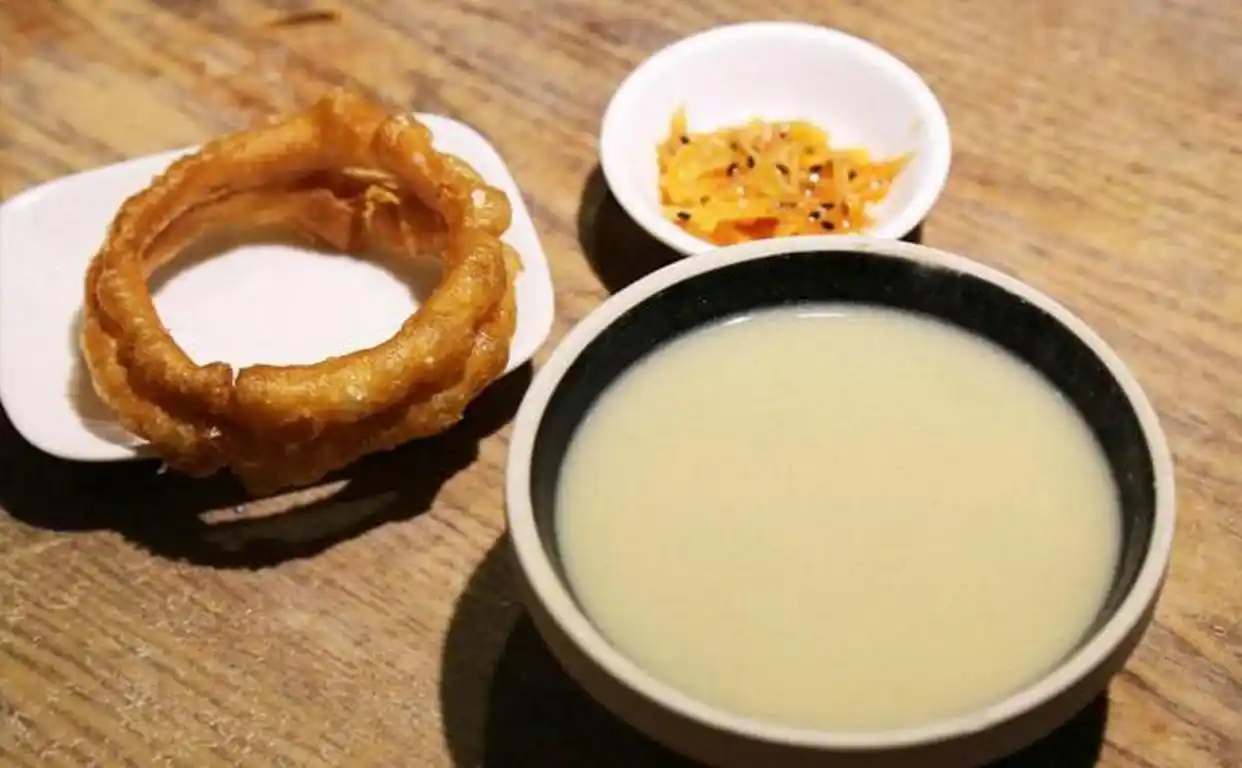
In the food world of Beijing, Douzhi is definitely an impressive presence. People who hear about or try it for the first time often use words like “strange” and “unacceptable” to describe it. However, behind this seemingly peculiar drink lies a profound historical and cultural heritage, carrying the unique local customs of old Beijing.
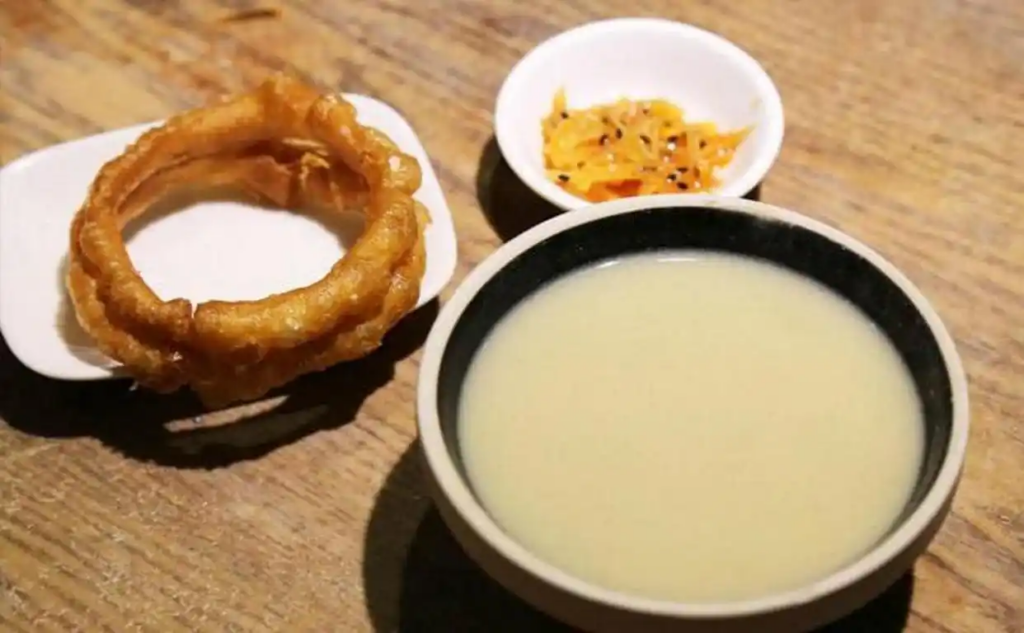
I. The First Experience of the “Strange Taste” of Douzhi
For those unfamiliar with Douzhi, its taste is truly special. Douzhi is gray – green in color and exudes an odor similar to that of spoiled water. The sour and astringent taste when first tasted 冲击 the taste buds, making people frown involuntarily. This unique taste is quite different from the drinks people usually come into contact with, so it’s no wonder that many people regard it as an “unacceptable” food. But why is such a seemingly “strangely – flavored” drink a favorite among old Beijingers? What’s the story behind it?
II. Legends of the Origin of Douzhi
There are various theories about the origin of Douzhi. One widely – spread legend is related to the Liao Dynasty. It is said that during the Liao Dynasty, people in the Beijing area mainly used beans as ingredients. By chance, someone left the slurry made from soaked and ground mung beans for a period of time. When they ate it again, they found that the slurry had fermented and produced a unique taste. Although this taste was strange, during a time when supplies were relatively scarce, people did not discard it. Instead, they tried heating and drinking it and found it had a special flavor. Thus, Douzhi was born.
Another theory is related to Emperor Qianlong. It is said that during the Qianlong period, someone brought Douzhi into the imperial court. After tasting it, Emperor Qianlong found it novel and ordered the imperial kitchen to make it. Since then, Douzhi gradually spread from the imperial court to the common people and became a special drink in the Beijing area.
III. The Historical Background of the Birth of Douzhi
Looking at the historical background, the emergence of Douzhi is closely related to the geographical location and economic development of Beijing. Beijing is located in the north, with a relatively dry climate, and bean crops are easy to plant and preserve. In the past, beans were not only an important food source for people but also widely used in the production of various foods. Douzhi is made by fermenting the residue of mung beans, which is a by – product of processing vermicelli and sheets from mung beans. This full utilization of ingredients reflects the wisdom of the working people at that time and made Douzhi an affordable drink, deeply loved by ordinary people.
IV. Douzhi and Old Beijing Culture
Douzhi is not just a drink but an important part of old Beijing culture. It has witnessed the historical changes of old Beijing and is closely related to the lives of Beijingers. In the past, the cries of “Douzhi, Jiaoquan” could often be heard in the streets and alleys of Beijing, which was a unique urban scene in old Beijing. In the early morning, old Beijingers are used to having a bowl of Douzhi, paired with freshly – fried Jiaoquan, to start a energetic day. For them, the taste of Douzhi is the taste of home, a symbol of old Beijing life.
In terms of social interaction, Douzhi also plays an important role. In their free time, old Beijingers like to gather in Douzhi shops, drinking Douzhi while chatting and sharing neighborhood gossip. Douzhi shops have become places for social interaction, carrying the friendship between neighbors and the hustle – and – bustle of the city. This social culture centered around Douzhi reflects the warm and simple characteristics of old Beijingers.
V. The Dietary Philosophy Behind Douzhi
From the perspective of dietary philosophy, Douzhi also has a unique meaning. The production process of Douzhi embodies the traditional Chinese idea of “making the most of everything.” It transforms the mung bean residue that might otherwise be discarded into a delicious drink, demonstrating the ancients’ respect for ingredients and their ingenious use. At the same time, although the taste of Douzhi is sour and astringent at first, careful tasting reveals its richness and the sweet aftertaste. This is just like life. Seemingly ordinary or even bitter, as long as you experience it with your heart, you can always find the beauty in it.
VI. The Inheritance and Changes of Douzhi in Modern Times
With the development of the times, the urban landscape of Beijing has undergone tremendous changes, but Douzhi still holds its ground on the city’s food stage. Many time – honored Douzhi shops still continue the traditional production process, insisting on manual fermentation to ensure the original taste of Douzhi. However, in the face of the fast – paced modern life and the impact of diverse cultures, Douzhi also faces some challenges. For the younger generation and tourists from other places, the unique taste of Douzhi is still a difficult threshold to cross.
In order to make Douzhi more acceptable to more people, some merchants and cultural inheritors have started to innovate. While retaining the traditional flavor of Douzhi, they have launched derivative products such as Douzhi popsicles and Douzhi cakes, trying to attract consumers in a more novel form. At the same time, through cultural publicity and experience activities, more people are being informed about the history and cultural connotations of Douzhi, gradually changing people’s views of Douzhi as “strange” and “unacceptable.”
VII. Douzhi: The Transformation from “Strange Taste” to a Cultural Treasure
Although the taste of Douzhi is still unacceptable to many people, it is undeniable that it has become a unique cultural symbol of Beijing. More and more people are beginning to recognize the historical and cultural value behind Douzhi and regard it as a cultural treasure of Beijing. It is not only a kind of food but also an emotional sustenance, connecting the past and the present, witnessing the development and changes of the city of Beijing.
Beijing Douzhi, this food once considered “strange” and “unacceptable,” has gradually won people’s respect and love with its unique charm and profound cultural heritage in the long river of time. It is like a vivid history book, with every sip telling the stories of old Beijing, waiting for more people to taste and interpret.