

Hunan traditional funeral customs are a solemn, systematic, and culturally profound part of southern Chinese folk etiquette and Huxiang traditional culture. Rooted in ancient Confucian ritual systems, local farming civilization, ancestor worship beliefs, and multi-ethnic folk traditions, Hunan’s funeral rituals are far more detailed and regionally distinctive than ordinary Chinese funeral customs. Integrating Han orthodox funeral ceremonies and unique funeral cultures of Tujia and Miao ethnic groups in western Hunan, a complete traditional Hunan funeral covers rigorous pre-funeral preparation, vigil rituals, formal funeral day procedures, burial etiquette, and post-funeral memorial rituals. Every ritual, taboo, sacrificial offering, and behavioral norm carries local people’s respect for life, filial piety ethics, ancestor worship beliefs, and blessings for the deceased’s peaceful afterlife. This article comprehensively elaborates on the full procedures, cultural connotations, regional differences, and ethnic characteristics of authentic Hunan traditional funeral customs.
Core Cultural Connotations of Hunan Traditional Funerals
Traditional Hunan funerals follow the ancient Chinese ritual concept of valuing filial piety, respecting ancestors, and sending off the deceased with solemnity. Different from modern simplified funeral procedures, old-style Hunan funerals pursue complete rituals and full etiquette, aiming to let the deceased leave the world with dignity and allow descendants to express sincere filial piety. White is the dominant ceremonial color, symbolizing solemnity, purity, and mourning. Locals strictly distinguish Xizang (joyful funeral) and ordinary funerals: peaceful and natural death of elderly people over 70 years old is regarded as a joyful funeral, representing a complete life and auspicious reincarnation, with mild and blessed ritual atmosphere instead of pure grief.
Affected by the multi-ethnic integration in western Hunan and traditional clan culture, Hunan funeral customs retain a large number of ancient ritual details that have faded in northern China. The entire funeral process emphasizes standardized procedures, hierarchical kinship etiquette, and strict folk taboos, forming a unique Huxiang funeral system that combines solemn Confucian rituals and primitive folk beliefs.
Full Pre-Funeral Emergency Rituals (Immediately After Passing Away)
Once a person passes away, Hunan folk customs require a series of immediate standardized rituals, which are the primary procedures to send off the deceased and eliminate mortal impurities.
1. Last Breath Ceremony and Initial Purification When the elderly is dying, all children and grandchildren must return home to keep watch and listen to the last will, which is locally called “shou zhong”. Immediately after the deceased takes the last breath, family members will burn special paper money named Luoqi Qian (last breath paper) to send the soul away and pray for a smooth journey to the afterlife. Meanwhile, the family will prepare warm water to wipe the deceased’s body, comb hair, trim nails, and change into neatly made traditional shrouds, representing cleaning mortal dust and welcoming a pure new life in the netherworld.
2. Firecracker Obituary and Village Notification Setting off firecrackers is the first public obituary ritual in Hunan rural areas. The sound of firecrackers informs the whole village of the passing away, inviting villagers to come to assist with funeral affairs and express condolences. This ancient custom symbolizes breaking mortal obstacles and guiding the soul to leave the world.
3. Kneeling Formal Obituary for Relatives For close kin and senior relatives, simple notification is disrespectful. The eldest son or direct filial children will wear plain linen mourning clothes, walk to relatives’ homes in person, and kneel at the door to deliver the funeral news. Regardless of age or seniority, the filial children must kneel to show sincere mourning and solemn etiquette, which is the most important human ritual in Hunan funeral culture.
4. Temporary Mortuary Bed Arrangement The deceased’s body will not be placed directly in the coffin at first. Families will set up a simple temporary bed in the main hall or backyard, cover the face with white paper, and place simple sacrificial offerings beside the body. According to local taboos, the body of people who pass away outside the house cannot be moved into the bedroom; a temporary awning must be built in the courtyard to place the body to avoid disturbing household feng shui.
Lingtang (Memorial Hall) Setup and Vigil Preparations
After completing the initial obituary rituals, the family will formally set up the Lingtang (spirit hall), the core ceremonial venue of the entire funeral. The memorial hall is arranged with white cloth curtains, white lanterns, elegiac couplets, and sacrificial altars. The center of the altar displays the deceased’s portrait, incense burners, candles, tributes of fruits and pastries, and endless burning joss sticks, symbolizing eternal blessing and continuous family descendants.
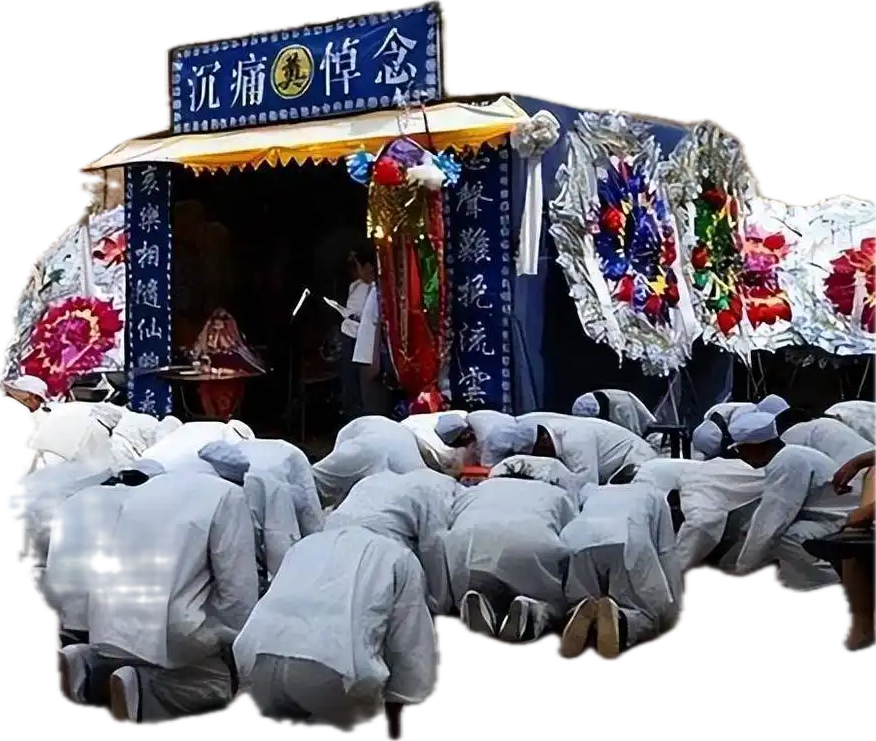
Traditional Hunan funerals adopt the lingering wake system, with a funeral duration ranging from 5 to 9 days. Wealthy and respectable families will hold 7-day or even longer full-course rituals to uphold the dignity of the deceased. During the wake period, professional Taoist priests are invited to perform religious rituals, recite scriptures all night, and hold transcendence ceremonies to pray for the deceased’s soul to rest in peace and avoid suffering in the netherworld.
Shou Ling (Keeping Vigil) is an essential ritual. Direct descendants take turns guarding the spirit hall day and night, ensuring incense and candles never extinguish. It is believed that extinguished incense will interrupt the blessing and affect the family’s future fortune. Meanwhile, folk bands with suona, gongs, and drums perform continuously, creating a solemn and ceremonial funeral atmosphere.
Core Formal Funeral Day Rituals
The formal funeral day gathers the most complicated and solemn rituals of Hunan traditional funerals, including small encoffining, large encoffining, coffin sealing, sacrificial ceremonies, and send-off procedures, with strict hierarchical norms.
1. Minor and Major Encoffining Rituals Minor encoffining means placing the cleaned and dressed deceased into the coffin, laying special paper and ash inside the coffin to keep the body stable and pure. Major encoffining is the final sorting and arrangement before sealing the coffin. Family members take one last look at the deceased to bid farewell, expressing endless nostalgia and filial piety.
2. Coffin Sealing and Nail Driving Taboos Coffin sealing is a crucial final farewell ritual. Local Hunan customs have unique nail-driving rules: craftsmen cannot drive the coffin nails completely to the bottom at one time. Instead, they leave a small section, allowing each filial child and grandchild to hammer the nails personally. This ritual is called “seeing the deceased off for the last journey”, symbolizing descendants’ final company and lifelong remembrance. After nailing, red paper with the deceased’s name, birth and death dates, and blessing words will be pasted on the coffin to complete the sealing ceremony.
3. Three Meals Sacrifice Rituals (Morning, Noon, Evening) During the wake period, fixed three-time sacrificial ceremonies are held daily, namely morning sacrifice, noon sacrifice, and evening sacrifice. Elders and filial relatives line up to present offerings, bow and kneel, and listen to ritual officials recite sacrificial texts. The layered sacrificial rituals fully reflect the rigorous procedural sense of traditional Confucian funeral etiquette.
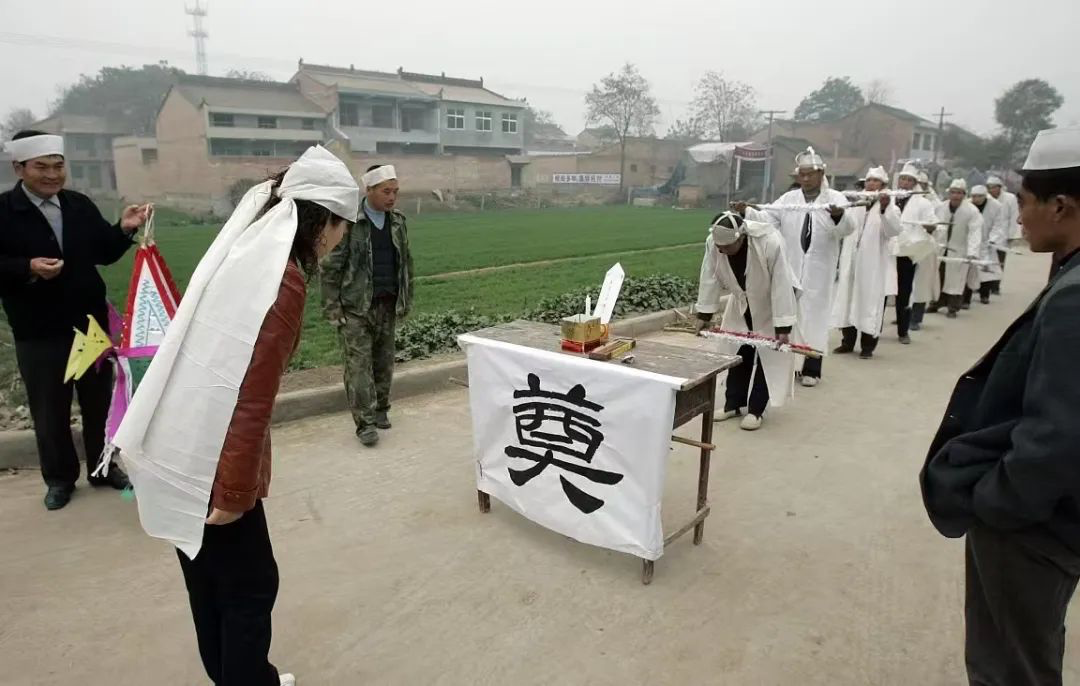
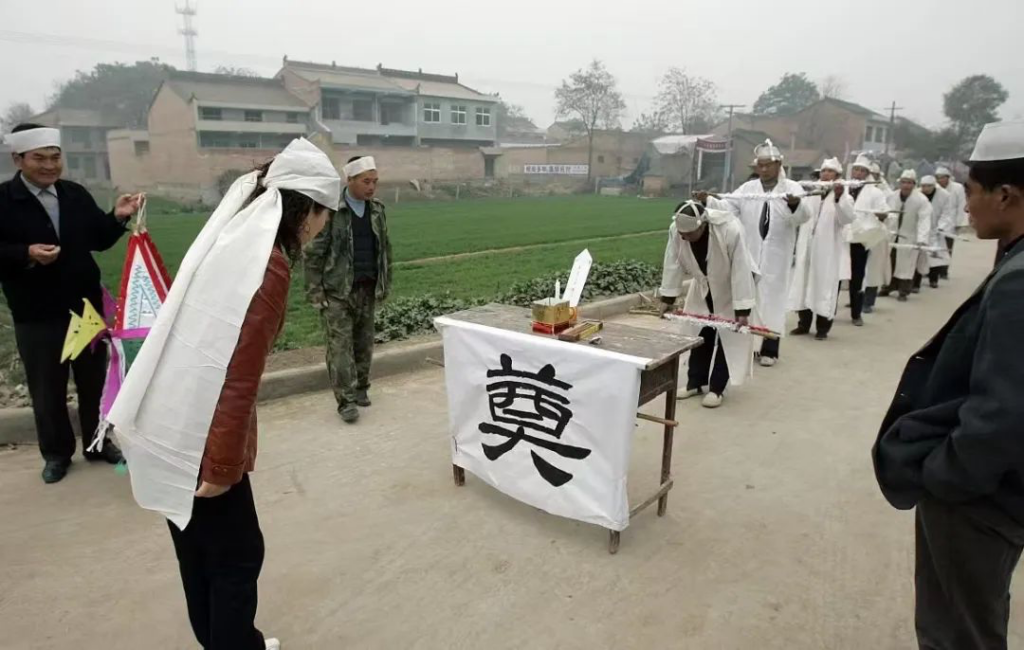
4. Funeral Procession and Road Sacrifice On the official burial day, the grand funeral procession sets off. Pallbearers carry the coffin, while relatives wear mourning clothes and walk in line. The front of the procession scatters road money paper all the way, used to bless the road and pray for no obstacles on the way to the netherworld. Neighbors light torches at their doorways to send blessings, forming a solemn folk send-off scene.
Burial and Post-Funeral Follow-Up Rituals
1. Mountain Burial and Tomb Sacrifice Hunan traditional funerals mainly adopt mountain burial. After the coffin is transported to the pre-selected auspicious tomb site, Taoist priests conduct feng shui blessing rituals. After the coffin is settled, soil is filled in layers, and the first round of tomb sacrifice is immediately held to pray for peaceful burial and sheltering of descendants.
2. Post-Funeral Seven-Day Memorial Rituals Hunan folk adhere to the traditional “seven-phase memorial system”. Family members hold fixed sacrificial activities every seven days after burial until the 49th day. It is believed that the soul will reincarnate and settle down after seven-phase blessings, which is the most important post-funeral filial piety ritual.
3. House Purification and Taboo Lifting After the funeral is fully completed, families will burn wormwood and spread glutinous rice water to purify the house, eliminate funeral yin energy, and restore household peace, ending the whole set of funeral rituals.
Unique Ethnic Funeral Customs in Western Hunan
Western Hunan areas such as Zhangjiajie, Huaihua, and Xiangxi retain primitive and unique funeral traditions of Tujia and Miao ethnic groups, which are obviously different from Han funeral rituals.
Tujia Ethnic Funeral Features Tujia funerals inherit the most complete ancient pre-funeral procedures, including blowing away bad luck, combing hair ritual, age thread binding, grain placing, and dog repellent stick placement. Tujia people regard funerals as solemn life rituals, matching Taoist transcendence ceremonies with ethnic folk songs, forming a unique combination of solemnity and ethnic customs.
Miao Ethnic Funeral Features Miao funerals focus on bonfire rituals and ethnic group worship. The whole village participates in the funeral send-off, with long-term bonfire gatherings and collective blessings. Miao people believe that group prayers can help the deceased’s soul return to the ethnic ancestor land, with strong collective ethnic cultural attributes.
Cultural Value and Modern Inheritance
Hunan traditional funeral customs are an important carrier of Huxiang culture and Chinese folk ritual civilization. The complete funeral procedures reflect the core traditional virtues of valuing life, advocating filial piety, and respecting ancestors. Although many cumbersome feudal rituals have been simplified in modern times, the core connotations of solemn send-off, filial remembrance, and ancestor worship have been well inherited. These unique funeral traditions not only record the living customs and spiritual beliefs of Hunan people for thousands of years but also preserve precious intangible cultural heritage of southern Chinese folk rituals.