



Introduction: The Greatest Tomb Humanity Has Never Opened
Imagine discovering the burial place of one of the most powerful rulers in history.
A tomb filled with unimaginable treasures.
A hidden underground palace larger than many modern cities.
Ancient texts describing rivers of liquid mercury flowing through miniature mountains and landscapes.
Crossbows designed to fire automatically at intruders.
And a burial chamber that remains sealed more than 2,200 years after it was built.
This is not the plot of an adventure movie.
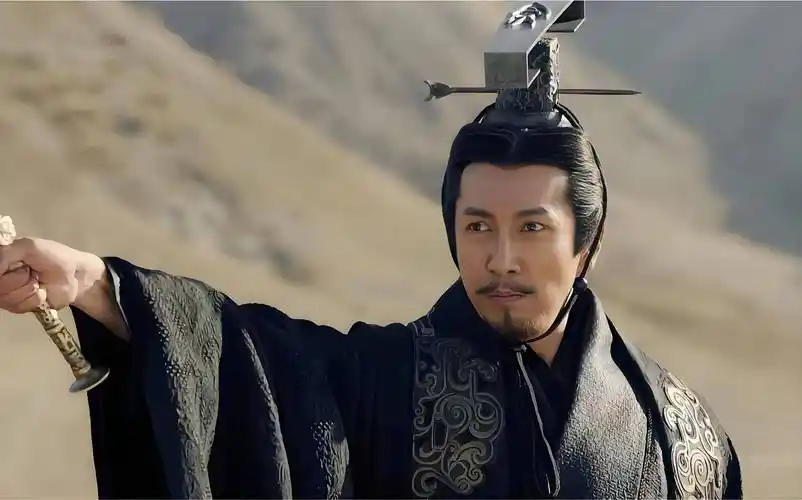
This is the real story of the tomb of China’s First Emperor.
Few archaeological mysteries in the world inspire as much fascination as the mausoleum of Qin Shi Huang.
His army of thousands of terracotta warriors has become one of the world’s most famous archaeological discoveries.
Yet the emperor’s actual burial chamber remains unopened.
No archaeologist has entered it.
No camera has explored it.
No treasure has been removed from it.
For more than two millennia, one of history’s greatest secrets has remained hidden beneath the earth.
The question is simple:
What exactly lies inside?
The Man Who United China
To understand the mystery, we must first understand the emperor.
Before Qin Shi Huang, China was divided into numerous rival states.
For centuries they fought brutal wars against one another.
This period became known as the Warring States Era.
In 221 BC, everything changed.
The king of Qin conquered his rivals and unified much of what is now China.
He declared himself Qin Shi Huang:
“The First Emperor.”
His achievements transformed Chinese history.
He standardized:
- Currency
- Weights and measures
- Writing systems
- Road networks
He also began construction projects that would eventually contribute to what became the Great Wall.
His influence was so profound that the English word “China” may even derive from the name Qin.
Yet despite his power, he feared one thing above all:
Death.
The Emperor Obsessed With Immortality
Qin Shi Huang spent much of his life searching for eternal life.
Ancient records describe how he sent expeditions across the seas seeking mythical islands where immortals supposedly lived.
He employed alchemists.
He consulted mystics.
He consumed substances believed to prolong life.
Ironically, some historians believe these “immortality medicines” may have contributed to his death.
Many contained mercury, now known to be highly toxic.
The emperor desperately wanted to escape death.
When that proved impossible, he focused on something else:
Creating the most extraordinary tomb the world had ever seen.
A Mausoleum Built for an Emperor-God
Construction of the mausoleum reportedly began when Qin Shi Huang was only thirteen years old.
According to historical records, hundreds of thousands of workers participated in the project.
For decades they transformed a mountain into an enormous underground complex.
The site covers roughly 56 square kilometers.
That is larger than many cities.
Yet only a tiny portion has been excavated.
Most remains hidden underground.
The Discovery That Shocked the World
For more than two thousand years, the mausoleum remained largely forgotten.
Then, in 1974, a remarkable accident changed everything.
Farmers digging a well near the city of Xi’an uncovered fragments of ancient pottery.
Archaeologists were called.
What they discovered stunned the world.
Beneath the soil stood an army.
Not a symbolic army.
An actual life-sized army made from clay.
Thousands of soldiers.
Thousands of weapons.
Hundreds of horses.
Chariots.
Commanders.
Archers.
Infantry.
Each face unique.
Each figure astonishingly detailed.
The discovery became known as the Terracotta Army.
It remains one of the greatest archaeological finds in history.
Yet the warriors were only the beginning.
The Terracotta Army Was Just the Guard
Many people assume the Terracotta Army is the tomb.
It isn’t.
The warriors stand outside the emperor’s actual burial chamber.
They are guardians.
Protectors.
A symbolic military force intended to serve the emperor in the afterlife.
Current estimates suggest there may be:
- More than 8,000 soldiers
- Hundreds of horses
- Numerous chariots
- Civil officials
- Acrobats
- Musicians
The underground complex appears to represent an entire empire.
The emperor intended to rule forever.
Even after death.
The Ancient Account That Changed Everything
Our most important description of the tomb comes from the ancient historian Sima Qian.
Writing roughly a century after Qin Shi Huang’s death, Sima Qian described the mausoleum in extraordinary detail.
According to his account:
The burial chamber contained a miniature model of China.
Mountains.
Palaces.
Cities.
Rivers.
And most astonishingly:
Rivers of flowing mercury representing the Yangtze River, Yellow River, and other waterways.
At first, many scholars dismissed these descriptions as exaggerations.
Then modern science produced a surprise.
The Mercury Mystery
In recent decades, scientists conducted soil tests around the tomb mound.
The results were astonishing.
Researchers discovered unusually high concentrations of mercury in the area.
Some measurements significantly exceeded natural levels.
These findings do not prove that underground mercury rivers exist.
However, they strongly suggest that Sima Qian’s account may contain substantial truth.
If so, one of history’s most incredible burial chambers may still lie intact beneath the mountain.
Waiting.
Unseen.
Ancient Booby Traps?
Sima Qian also described something that sounds remarkably modern.
According to his writings, craftsmen installed mechanical crossbows within the tomb.
If intruders entered, the weapons would automatically fire.
Could such traps really exist?
No one knows.
Some archaeologists consider it possible.
Others remain skeptical.
After more than two thousand years, even if the mechanisms once existed, they may no longer function.
Yet the possibility adds another layer to the mystery.
Why Hasn’t the Tomb Been Opened?
This is the question everyone asks.
If archaeologists know where the tomb is, why not open it?
The answer is surprisingly simple.
Modern archaeologists fear causing irreversible damage.
History provides a cautionary lesson.
When the Terracotta Army was first excavated, many statues still retained vibrant paint.
Their colors included:
- Red
- Blue
- Purple
- Green
However, exposure to air caused the pigments to deteriorate rapidly.
In some cases, colors vanished within hours.
Researchers worry the same thing could happen inside the emperor’s burial chamber.
Opening the tomb too soon might destroy priceless historical information forever.
Technology Is Not Ready Yet
Many experts believe the tomb should remain sealed until better technology becomes available.
Future techniques may allow researchers to:
- Preserve delicate materials immediately
- Scan the chamber in greater detail
- Analyze contents non-invasively
- Prevent environmental damage
In other words, opening the tomb is not merely about curiosity.
It is about responsibility.
Once the chamber is opened, there is no second chance.
What Might Be Inside?
Because no one has entered the burial chamber, speculation continues.
Possible contents include:
Imperial Treasures
Jewelry, gold, jade, and ceremonial objects.
Historical Documents
Records that could transform our understanding of ancient China.
Ancient Weapons
Some may remain remarkably well preserved.
Artistic Masterpieces
Paintings, sculptures, and decorative works unseen for over two millennia.
The Emperor Himself
Most importantly, the remains of Qin Shi Huang may still lie within the chamber.
If preserved, they could provide invaluable scientific information.
The World’s Largest Archaeological Time Capsule
Some archaeologists describe the tomb as the greatest unopened archaeological site on Earth.
Unlike many ancient burial places, it appears largely undisturbed.
Most Egyptian pharaohs were robbed long ago.
Many royal tombs worldwide suffered looting.
Qin Shi Huang’s central chamber appears to have remained sealed.
If true, it may represent one of the most complete ancient royal burials ever discovered.
Comparisons With Tutankhamun
The discovery of Tutankhamun’s tomb transformed archaeology.
Yet many experts believe Qin Shi Huang’s burial chamber could be even more significant.
Why?
Because:
- The tomb is vastly larger.
- The emperor’s historical importance is enormous.
- The site may contain unparalleled archaeological information.
Some researchers believe it could become the most important archaeological discovery of the twenty-first century.
If it is ever opened.
What the Tomb Reveals About Ancient China
Even without entering the burial chamber, the mausoleum tells us a great deal.
It reveals:
Imperial Power
Only a ruler of immense authority could mobilize such resources.
Belief in the Afterlife
The emperor expected to continue ruling after death.
Technological Sophistication
The Terracotta Army demonstrates extraordinary craftsmanship.
Obsession With Legacy
Qin Shi Huang intended to be remembered forever.
In this respect, he succeeded.
Why the Mystery Captivates the World
Most archaeological discoveries eventually reveal their secrets.
This one has not.
That uncertainty fuels endless fascination.
People naturally wonder:
- Are the mercury rivers real?
- What treasures remain hidden?
- Will the tomb ever be opened?
- What historical secrets lie inside?
The unanswered questions are part of the appeal.
Mystery is powerful.
And few mysteries are greater than a palace no one has entered for twenty-two centuries.
Conclusion: The Emperor Still Guards His Secrets
More than 2,200 years ago, Qin Shi Huang ordered the construction of a tomb unlike any other.
An underground empire.
A hidden palace.
A monument to power, ambition, and immortality.
Today, millions of visitors travel to see his Terracotta Army.
Yet the emperor himself remains beyond reach.
His burial chamber sits silently beneath the earth.
Unopened.
Unexplored.
Unrevealed.
Perhaps one day technology will allow archaeologists to enter safely.
Perhaps the secrets of the First Emperor will finally come to light.
Or perhaps the greatest archaeological mystery in China will remain sealed for generations to come.
For now, Qin Shi Huang continues to do what he has done for more than two millennia:
Keep the world guessing.