


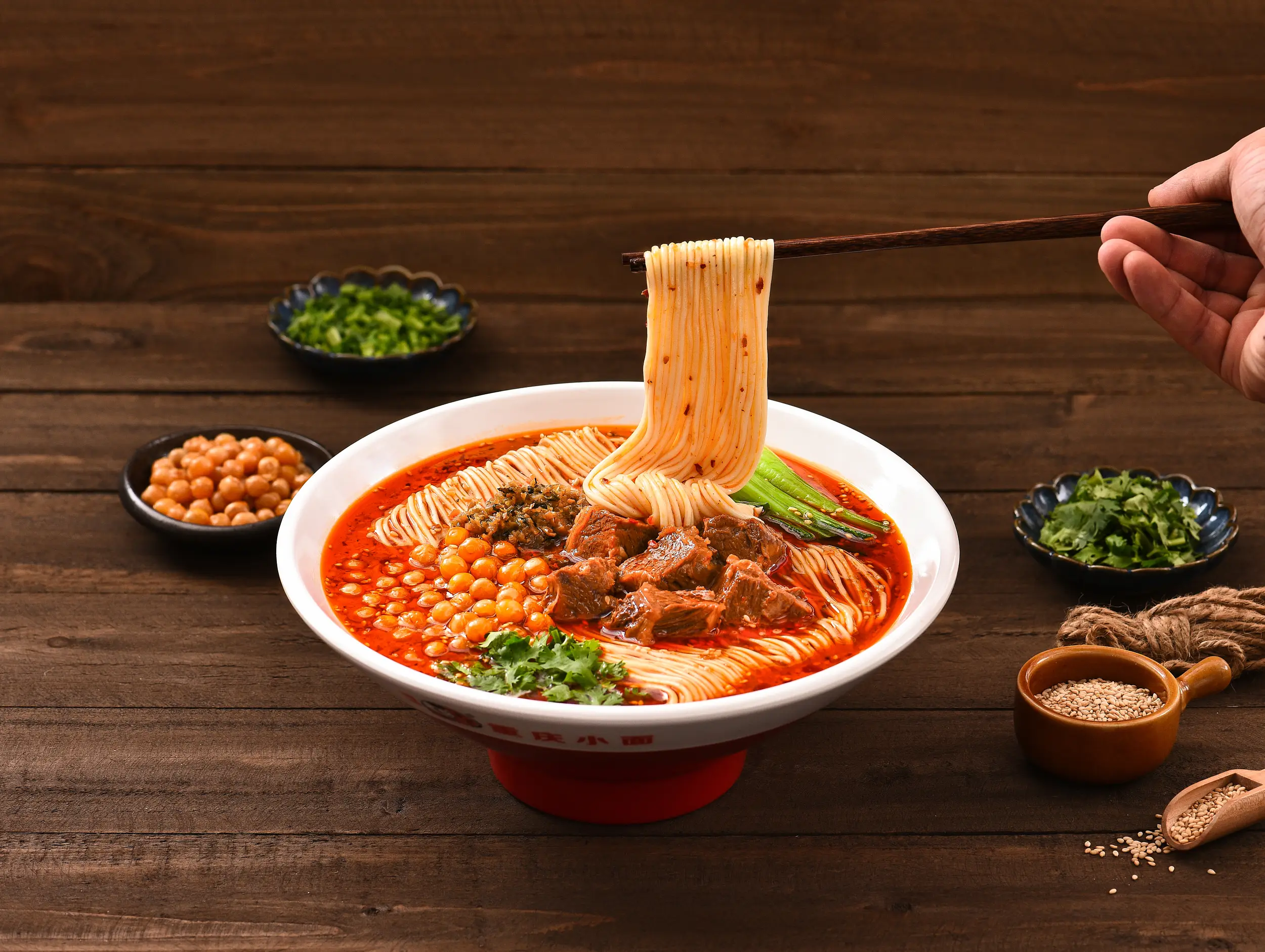
Chongqing Noodles, commonly known as Chongqing Xiao Mian, is the most representative folk delicacy of Chongqing cuisine and a classic spicy noodle specialty in Chinese food culture. Rooted in the local market culture of Bashu region, this simple bowl of plain noodles has evolved from an ancient traditional pasta to a nationwide popular national snack after thousands of years of cultural precipitation and hundreds of years of market iteration. It is not only an indispensable daily taste memory of Chongqing locals, but also a famous gourmet business card representing Chongqing city and Chinese folk catering culture.
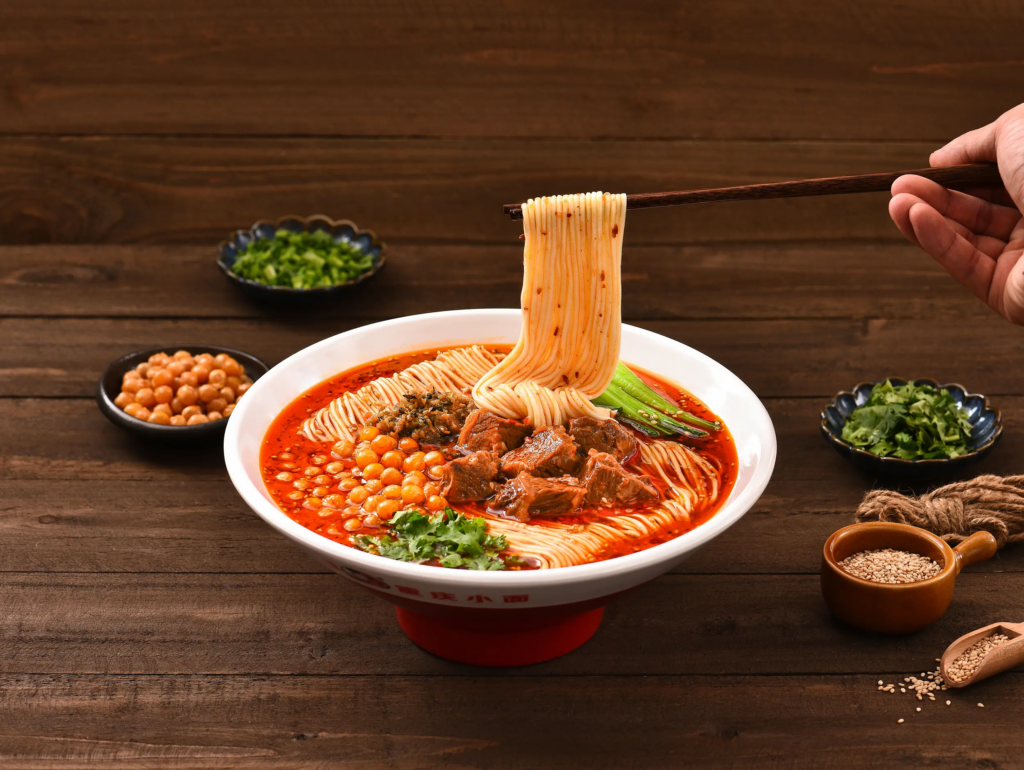
The origin history of Chongqing noodles can be traced back to the Tang Dynasty more than 1,200 years ago. The cold leaf noodles recorded in the poems of Du Fu, the great poet of the Tang Dynasty, were the earliest prototype of Chongqing noodles. After the development of the Song, Yuan and Ming dynasties, pasta craftsmanship in the Bashu area became increasingly mature, laying a solid foundation for the formation of modern Chongqing noodles. During the Ming and Qing dynasties, Chongqing thrived as a dock commercial city. Street vendors carried stoves, noodles and seasonings to sell portable noodles for dock workers and ordinary people. These street shoulder-pole noodles formed the original market form of Chongqing noodles, featuring simple production, affordable price and filling taste.
The modern Chongqing noodles with fixed flavor and official naming took shape in the 1930s during the War of Resistance against Japanese Aggression. A large number of immigrants from eastern China brought exquisite “big noodles” with rich meat toppings and thick soup. To distinguish from high-end refined noodles, the local plain noodles with multiple seasonings were officially named “Xiao Mian (small noodles)”. Integrating local Sichuan peppercorn and chili seasonings with introduced pasta techniques, Chongqing noodles gradually formed its exclusive flavor characteristics of spicy, numbing, fresh and fragrant, and established two mainstream styles: soup noodles and dry-mixed noodles, completing the final shaping of the classic taste system.
The core charm of authentic Chongqing noodles lies in its exquisite craftsmanship and unique seasoning system, adhering to the perfect combination of noodle texture, soup base, seasonings and cooking heat. Different from northern noodles focusing on wheat flavor and northwest noodles focusing on soup base, Chongqing noodles take compound seasonings as the soul. More than ten natural ingredients including chili oil, Sichuan peppercorn, soy sauce, vinegar, bean sprouts, crushed peanuts and garlic are precisely matched to create a layered taste of numbing, spicy, fresh, fragrant and crispy. Every experienced chef adjusts the seasoning ratio according to temperature and humidity, forming unique and pure authentic Bashu flavor.
Authentic Chongqing noodles adopt exclusive alkaline noodles made of high-quality wheat flour. The noodles are uniform in thickness, slightly yellow in color, rich in wheat and alkali aroma, chewy, smooth, non-sticky after long cooking, and have strong sauce absorption. Cooked with high fire and short time, the noodles retain moderate hardness and delicate texture. Dry-mixed noodles fully absorb seasonings with rich mellow flavor, while soup noodles present fresh and balanced taste, realizing the classic taste of spicy but not dry, fragrant but not greasy.
In the 21st century, especially after being reported by A Bite of China in 2014, Chongqing noodles broke regional restrictions and ushered in explosive national popularity. With the advantages of affordable price, fast serving and wide taste adaptability, Chongqing noodles quickly spread across the country, covering breakfast, lunch, dinner and supper scenarios. It has expanded from Chongqing’s street stalls to chain stores all over China, sinking into county and township markets and entering first-tier urban business districts, becoming one of the most popular local pasta specialties in China.
At present, Chongqing noodles have formed a complete industrial chain including raw material planting, noodle processing, seasoning production, chain catering and instant food derivatives. The industrial scale has exceeded 56 billion RMB, realizing standardized production, brand operation and large-scale development. A variety of instant Chongqing noodles and pre-made seasoning packages enable consumers across the country to taste authentic Chongqing flavor at home. Meanwhile, Chongqing noodles have been exported to more than 30 countries and regions worldwide, becoming an influential international gourmet symbol of Chinese folk cuisine.
From ancient Tang Dynasty pasta prototypes and Ming-Qing dock street snacks to today’s national popular delicacy and international gourmet card, Chongqing noodles carry thousands of years of Bashu dietary culture and local market warmth. It retains the most simple and authentic fireworks of Chinese folk food, and continues to glow with new vitality in the modern catering era.