



Introduction: A Place Where Marriage Doesn’t Exist
Imagine a society where:
- Women own the family home.
- Children take their mother’s surname.
- Fathers do not live with their children.
- Grandmothers lead the household.
- Marriage, as most of the world understands it, does not exist.
It sounds impossible.
Many people assume such societies disappeared thousands of years ago.
Yet one still survives today.
Hidden among the mountains of southwestern China, near the breathtaking waters of Lake Lugu, lives a small ethnic group whose way of life has fascinated anthropologists, travelers, filmmakers, and journalists for decades.
They are known as the Mosuo.
Often called “China’s Last Matriarchy,” the Mosuo have become famous worldwide for a relationship system known as the “Walking Marriage.”
For outsiders, the practice seems shocking.
For the Mosuo, it is simply normal life.
Their story challenges many assumptions about love, family, gender, and marriage.
Who Are the Mosuo?
The Mosuo are a small ethnic community living around Lake Lugu on the border between:
- Yunnan Province
- Sichuan Province
Their population is estimated at around 40,000 people.
Although often associated with the Naxi ethnic group, the Mosuo maintain their own distinct cultural identity.
For centuries, the mountains surrounding Lake Lugu helped isolate their communities from the outside world.
As a result, many ancient traditions survived far longer than elsewhere in China.
The Beautiful World of Lake Lugu
Before discussing their culture, it is important to understand their environment.
Lake Lugu is one of China’s most beautiful lakes.
Nestled among mountains at an elevation of approximately 2,700 meters (8,860 feet), the lake is famous for:
- Crystal-clear water
- Forest-covered hills
- Traditional villages
- Stunning sunsets
For generations, this isolated landscape helped preserve Mosuo traditions.
Many visitors describe the region as one of the most magical places in China.
Why Are They Called China’s Last Matriarchy?
The Mosuo are frequently described as a matriarchal society.
While scholars debate the exact definition, one fact is undeniable:
Women occupy an unusually central role in Mosuo society.
Traditionally:
- Property passes through the female line.
- Family homes belong to women.
- Children belong to the mother’s family.
- Grandmothers hold significant authority.
In many cultures throughout history, inheritance flowed from father to son.
Among the Mosuo, it traditionally flowed from mother to daughter.
This difference fundamentally shapes family life.
The Grandmother’s House
The center of Mosuo society is not the husband-wife household.
Instead, it is the extended maternal family.
Several generations often live together in a large family home.
A typical household may include:
- Grandmother
- Daughters
- Sons
- Grandchildren
- Great-grandchildren
The senior woman usually serves as the head of the family.
She manages property and important family decisions.
For many anthropologists, this structure offers a fascinating alternative to the nuclear family model common in the West.
What Is a Walking Marriage?
The Mosuo are most famous for a practice known as:
“Walking Marriage.”
In the Mosuo language, it is called “tisese.”
This system differs dramatically from conventional marriage.
Traditionally:
A man and a woman may choose to become romantic partners.
However:
- They do not marry.
- They do not establish a shared household.
- They do not combine property.
- They continue living with their own families.
At night, the man may visit the woman’s room.
In the morning, he returns to his own family home.
This practice led outsiders to call it a “walking marriage.”
No Weddings, No Divorce
One of the most surprising aspects of Mosuo culture is the absence of formal marriage ceremonies.
Historically, there were:
- No wedding contracts
- No marriage registration
- No bride price
- No divorce proceedings
Relationships continued only as long as both partners desired.
If a relationship ended, there was no legal process.
The couple simply stopped seeing each other.
To many outsiders, this seems radical.
To the Mosuo, it reduced many of the social conflicts associated with marriage.
What About the Children?
This is often the first question foreigners ask.
If fathers do not live with mothers, who raises the children?
The answer lies in the structure of the extended family.
Children remain in their mother’s household.
They are raised collectively by:
- Mothers
- Grandmothers
- Uncles
- Aunts
The biological father may still maintain a relationship with the child.
However, the most important male figure is often the maternal uncle.
This arrangement has existed for generations.
Why Uncles Matter More Than Fathers
In Mosuo culture, a man’s primary family responsibility traditionally lies with his sisters’ children rather than his own biological offspring.
This idea seems strange to many Western readers.
Yet within the Mosuo system it makes perfect sense.
A man remains a permanent member of his mother’s household throughout life.
Therefore, he contributes labor and resources to the family in which he lives.
As a result, maternal uncles often play major roles in child-rearing.
Love Without Ownership
Many anthropologists have argued that the Mosuo relationship system reflects a different understanding of love.
In many societies, marriage historically involved:
- Property
- Inheritance
- Economic arrangements
- Political alliances
Among the Mosuo, romantic relationships were traditionally separated from property ownership.
Love and family were viewed as distinct institutions.
This distinction fascinates researchers studying alternative family structures.
Were Women Really in Charge?
The answer is complicated.
Women traditionally controlled:
- Property
- Inheritance
- Household management
However, men also played important roles.
They often handled:
- Farming
- Construction
- Livestock management
- Religious ceremonies
The Mosuo system is therefore not simply the reverse of patriarchy.
Instead, it represents a different balance of social responsibilities.
The Role of Religion
Mosuo culture combines influences from:
- Tibetan Buddhism
- Indigenous Daba religion
Many traditional beliefs focus on:
- Ancestor worship
- Nature spirits
- Sacred mountains
- Community rituals
Religion remains an important part of cultural identity.
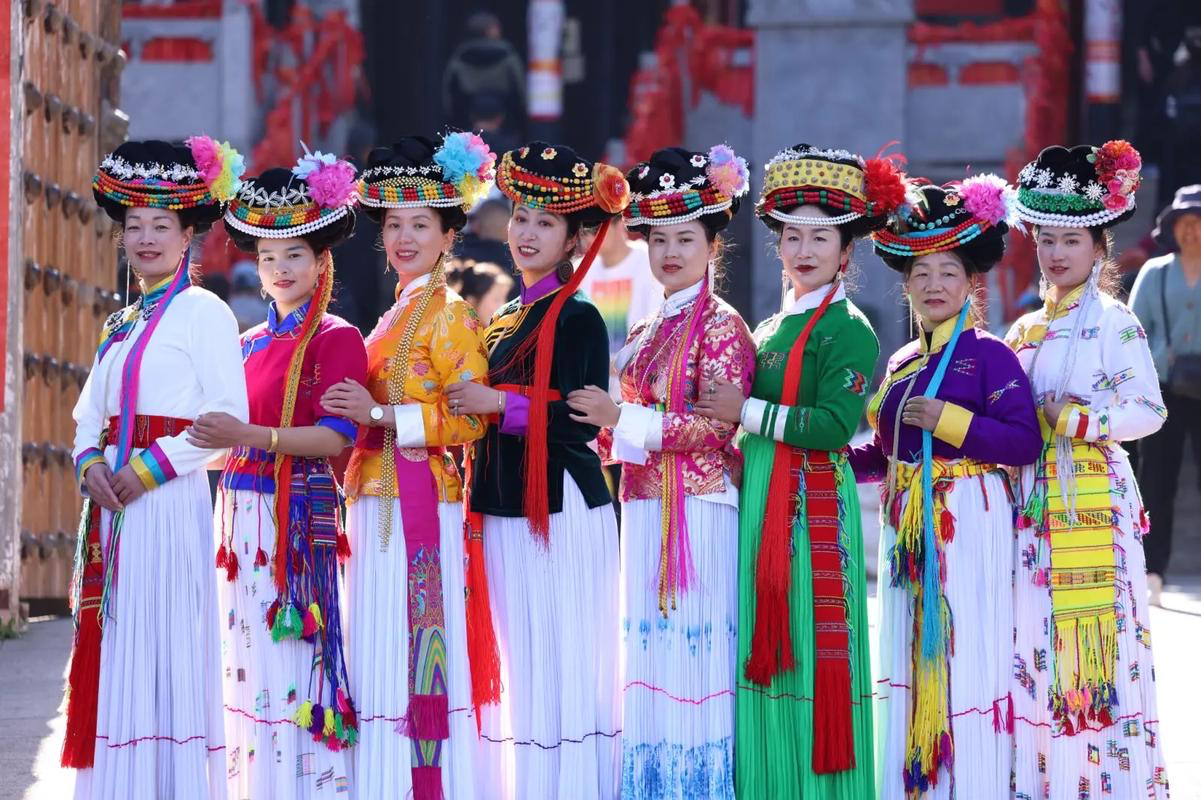
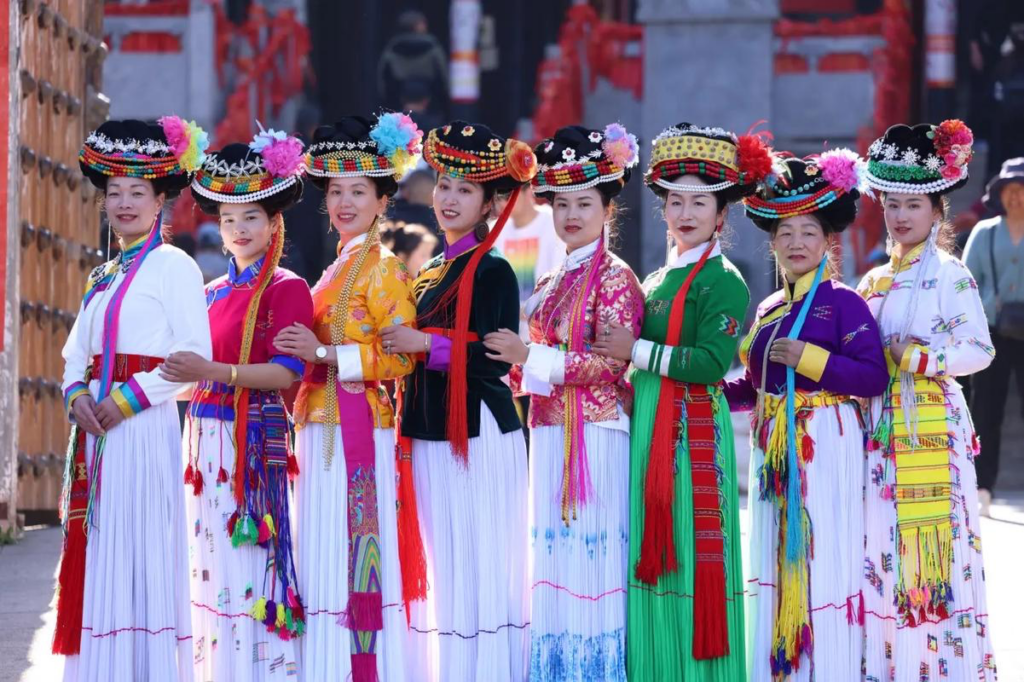
Visitors to the region often encounter colorful ceremonies that have survived for centuries.
How Did This System Survive?
One reason is geography.
Lake Lugu was historically isolated.
The surrounding mountains limited outside influence.
For centuries, the Mosuo developed according to their own traditions.
While neighboring societies adopted more conventional marriage systems, the Mosuo preserved older customs.
This isolation effectively acted as a cultural time capsule.
The Arrival of Tourism
Everything began to change during the late twentieth century.
As roads improved, tourists discovered Lake Lugu.
Journalists soon began publishing stories about:
“The Kingdom of Women.”
“The Land Without Marriage.”
“The Last Matriarchy.”
International media attention exploded.
Millions of visitors became curious about Mosuo culture.
The Problem With Media Stereotypes
Many sensational reports exaggerated aspects of Mosuo life.
Some media outlets portrayed the community as sexually permissive or exotic.
Anthropologists frequently criticize these portrayals.
The reality is much more nuanced.
Walking marriage is not casual dating.
It is a socially recognized relationship system governed by cultural expectations and responsibilities.
Understanding Mosuo society requires looking beyond stereotypes.
Are Walking Marriages Disappearing?
Modernization has transformed Mosuo life.
Today many younger Mosuo choose conventional marriages.
Reasons include:
- Urbanization
- Education
- Tourism
- Government administration
- Economic change
As a result, traditional walking marriages are less common than they once were.
However, many cultural values remain strong.
Why Anthropologists Love Studying the Mosuo
The Mosuo provide a rare opportunity to study a family system fundamentally different from dominant global models.
Their society raises fascinating questions:
- Is marriage universal?
- Must fathers live with children?
- Can inheritance work differently?
- How flexible are family structures?
For researchers, the Mosuo offer valuable insight into human cultural diversity.
What Foreign Visitors Usually Get Wrong
The biggest misconception is that Mosuo society is simply “women ruling men.”
It is not.
The reality is far more sophisticated.
Mosuo culture developed its own solutions to questions of:
- Family
- Property
- Child-rearing
- Relationships
These solutions differ from those found elsewhere, but they function within a coherent social system.
Why the Mosuo Fascinate the World
Few communities challenge modern assumptions as dramatically as the Mosuo.
In a world where marriage is often viewed as universal, they demonstrate that human societies can organize family life in very different ways.
Their existence reminds us that there is no single model for love, parenthood, or community.
Conclusion: A Different Way of Understanding Family
Deep in the mountains surrounding Lake Lugu, the Mosuo have preserved one of humanity’s most unusual social systems.
For generations, they built families without conventional marriage.
They placed women at the center of inheritance and household life.
They created a culture where extended families mattered more than nuclear families.
Whether these traditions survive modernization remains uncertain.
But one thing is clear:
The Mosuo offer a rare glimpse into an alternative way of organizing human society.
And in a rapidly changing world, that makes them one of China’s most fascinating cultural treasures.