


Introduction: The Koreans You Didn’t Know Lived in China
Imagine traveling through northeastern China.
You walk into a restaurant.
The menu is written in Chinese and Korean.
The shop signs are bilingual.
School children speak Korean fluently.
Traditional Korean foods fill local markets.
People celebrate Korean festivals.
And yet everyone around you is a Chinese citizen.
For many foreign visitors, this comes as a complete surprise.
Most people know about:
- South Korea
- North Korea
Few know about a third Korean community that has existed for generations:
China’s Korean ethnic minority.
Known in China as the Chaoxianzu (Korean Ethnic Group), they represent one of the country’s most fascinating and successful minority communities.
Today, hundreds of thousands of ethnic Koreans live in China, preserving their language, traditions, and culture while remaining an integral part of Chinese society.
Their story is one of migration, survival, identity, and cultural exchange.
Who Are China’s Koreans?
China officially recognizes 56 ethnic groups.
Among them is the Korean ethnic group.
Unlike immigrants who recently moved to China, most Chinese Koreans have lived in northeastern China for generations.
Many families have roots stretching back over a century.
Today, the majority live in:
- Jilin Province
- Heilongjiang Province
- Liaoning Province
Especially in one remarkable place:
Yanbian.
Where Is Yanbian?
The center of Korean culture in China is the Yanbian Korean Autonomous Prefecture.
Located in eastern Jilin Province, Yanbian borders:
- North Korea
- Russia
The region is roughly the size of Belgium.
For many visitors, Yanbian feels unlike anywhere else in China.
Road signs appear in two languages.
Schools teach Korean.
Restaurants serve authentic Korean cuisine.
The local culture reflects centuries of interaction between China and Korea.
Why Do Koreans Live in China?
The answer lies in history.
During the nineteenth century, many Koreans migrated into northeastern China.
Several factors encouraged migration:
- Poverty
- Famine
- Political instability
- Agricultural opportunities
At the time, the border region was relatively sparsely populated.
Many Korean families settled there and established farming communities.
Over time, these communities grew and prospered.
When modern borders and governments emerged, many descendants remained where they were.
As a result, generations of ethnic Koreans became citizens of China.
Not South Korean. Not North Korean. Chinese Korean.
One of the most important points for foreigners to understand is this:
Chinese Koreans are not South Koreans living in China.
Nor are they North Koreans.
They are Chinese citizens.
Their ethnicity is Korean.
Their nationality is Chinese.
This distinction can sometimes confuse outsiders.
A useful comparison would be ethnic Germans living in other countries or ethnic Hungarians living outside Hungary.
Ethnicity and nationality are not always the same thing.
A Unique Bilingual Culture
One of the most fascinating aspects of China’s Korean community is language.
Many ethnic Koreans grow up speaking:
- Korean
- Mandarin Chinese
In Yanbian, bilingual education has long been common.
Students often learn both languages from an early age.
This bilingual ability has become an important advantage.
Many graduates find opportunities in:
- International business
- Translation
- Tourism
- Education
Particularly when dealing with Korea-related industries.
Korean Language Schools in China
China’s Korean minority operates schools that teach in Korean.
Students study:
- Mathematics
- Science
- History
Alongside Korean language and literature.
This helps preserve cultural traditions across generations.
For foreign visitors, seeing Korean-language schools inside China is often surprising.
Yet this educational system has existed for decades.
The Food: A Taste of Korea Inside China
Perhaps the easiest way to experience Korean culture in China is through food.
Yanbian cuisine combines:
- Korean traditions
- Chinese influences
Popular dishes include:
Kimchi
Virtually every household has its own recipe.
Cold Noodles
Especially popular during summer.
Rice Cakes
A common snack and festival food.
Barbecue
Widely enjoyed throughout the region.
Dog Meat Controversy
Historically, some communities consumed dog meat.
Today the practice has declined significantly and remains controversial, especially among younger generations.
Food culture continues to evolve, just as it does elsewhere in the world.
Why Korean Restaurants Are So Popular in China
Korean cuisine enjoys enormous popularity across China.
Part of that popularity comes from the influence of ethnic Korean communities.
Long before Korean pop culture became globally famous, Korean-Chinese communities had already introduced many Korean foods to Chinese consumers.
Today:
- Korean barbecue
- Kimchi
- Bibimbap
can be found throughout China.
Traditional Festivals
Chinese Koreans celebrate many traditional Korean festivals.
These include:
Lunar New Year
One of the most important holidays.
Chuseok
Often compared to Korea’s harvest festival.
Traditional Weddings
Featuring distinctive clothing and customs.
These celebrations help preserve cultural identity while also reflecting local Chinese influences.
Traditional Korean Clothing
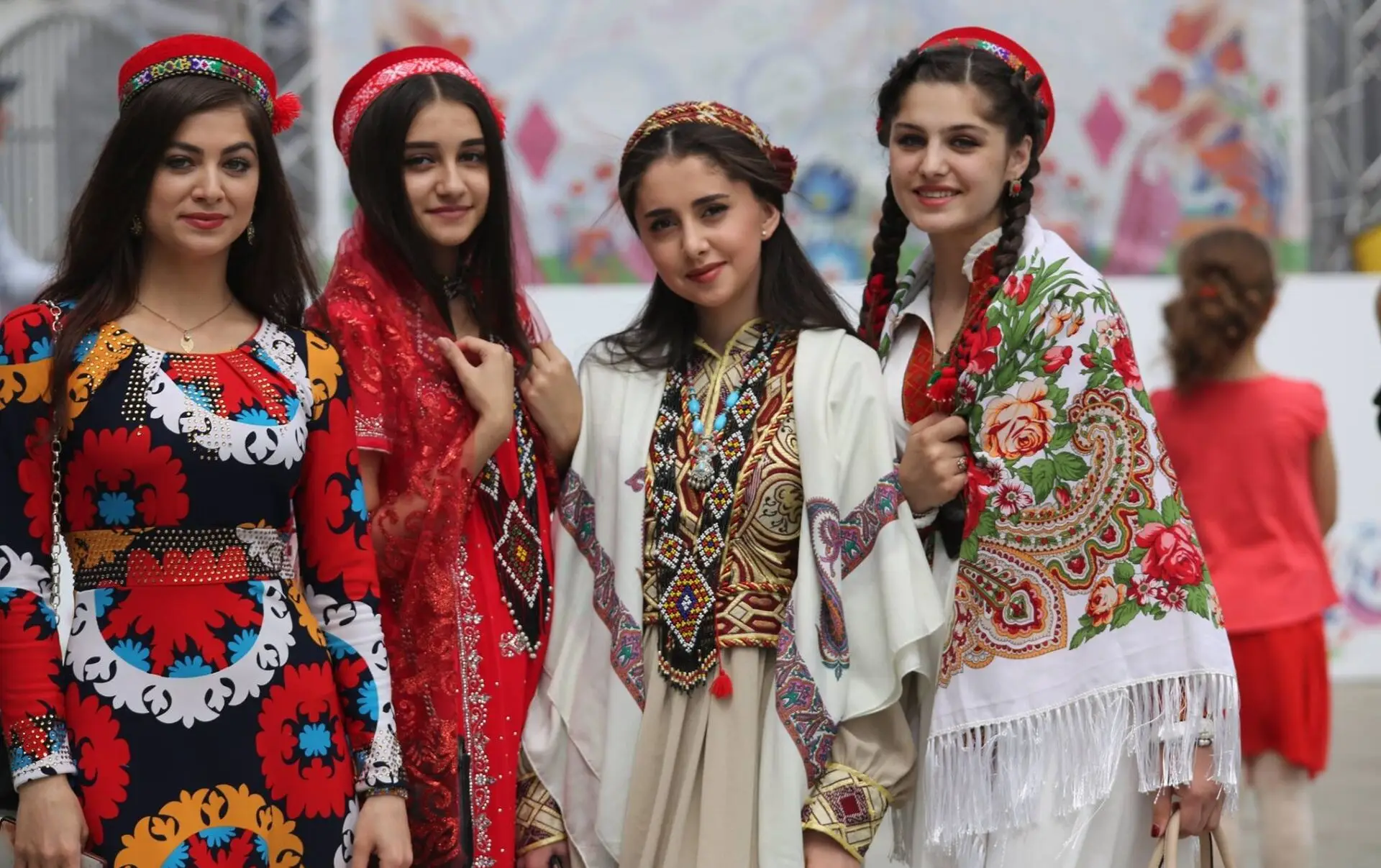
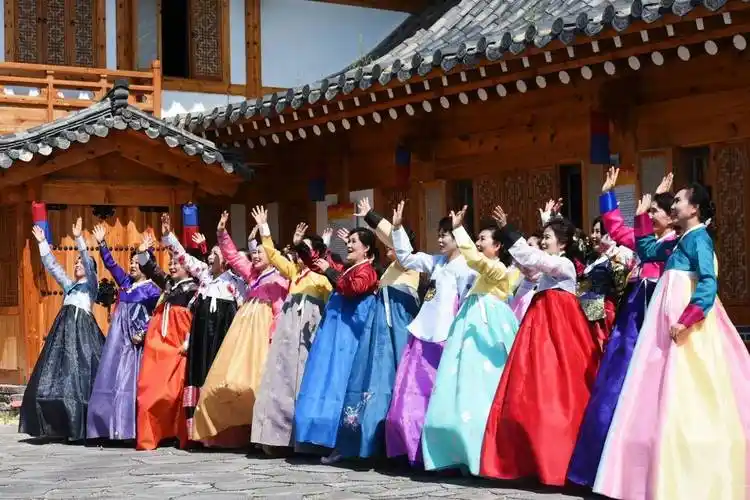
Many Chinese Koreans still wear traditional Korean clothing during festivals and ceremonies.
The colorful Hanbok remains an important cultural symbol.
Visitors to Yanbian frequently encounter traditional performances showcasing Korean heritage.
The Famous Korean Dance Tradition
Dance occupies an important place in Korean culture.
Chinese Korean communities are particularly known for:
- Fan dances
- Drum performances
- Folk dances
These performances are common during cultural festivals and public celebrations.
Their elegance attracts visitors from across China.
Why Korean Pop Culture Is So Popular Here
An interesting phenomenon occurs in Yanbian.
People there often consume:
- Chinese media
- South Korean media
This creates a unique cultural environment.
Residents may be familiar with both Chinese and Korean entertainment industries.
As Korean dramas and K-pop expanded globally, many people in Yanbian already possessed deep cultural connections to Korea.
Economic Links With South Korea
Because of their language skills and cultural familiarity, many Chinese Koreans have played important roles in economic cooperation between China and South Korea.
They often serve as:
- Translators
- Managers
- Business consultants
Their ability to navigate both cultures makes them valuable intermediaries.
The Yanbian Football Phenomenon
Football enjoys unusual popularity in Yanbian.
The region has produced numerous talented players.
Local fans are passionate and loyal.
Sports have become another source of regional pride.
How Chinese Koreans See Their Identity
Identity can be complex.
Most Chinese Koreans view themselves as:
- Ethnically Korean
- Nationally Chinese
These identities are not contradictory.
They coexist.
Like many ethnic minorities around the world, Chinese Koreans maintain cultural traditions while participating fully in national life.
What Foreign Visitors Often Get Wrong
Many visitors assume that everyone speaking Korean in China must be from South Korea.
This is incorrect.
The Korean community in China has its own unique history.
Their experiences differ significantly from those of people living on the Korean Peninsula.
Over generations, Chinese Koreans developed a distinct identity shaped by both Korean heritage and Chinese society.
Why China’s Korean Community Matters
The story of China’s Koreans challenges simplistic ideas about borders and identity.
It demonstrates how cultures can cross political boundaries.
It also reveals something many outsiders overlook:
China is far more ethnically diverse than stereotypes suggest.
Behind the image of a single civilization lies a rich mosaic of peoples, languages, and traditions.
Visiting Yanbian Today
Travelers visiting Yanbian often discover:
- Korean restaurants
- Korean-language signs
- Traditional festivals
- Distinctive architecture
- Beautiful mountain landscapes
The region offers one of the most unique cultural experiences in China.
Many visitors describe it as feeling like a bridge between two civilizations.
Conclusion: A Korean Culture That Flourished in China
When most people think about Korean culture, they think of Seoul or Pyongyang.
Few realize that one of the world’s largest Korean communities exists outside the Korean Peninsula.
For more than a century, ethnic Koreans in China have preserved their language, food, traditions, and identity.
At the same time, they have become an integral part of modern China.
Their story is not simply about migration.
It is about adaptation.
It is about cultural survival.
And it is about how identity can flourish across borders.
For travelers seeking a different side of China, Yanbian offers a remarkable lesson:
Sometimes the most surprising stories are found where cultures meet.