



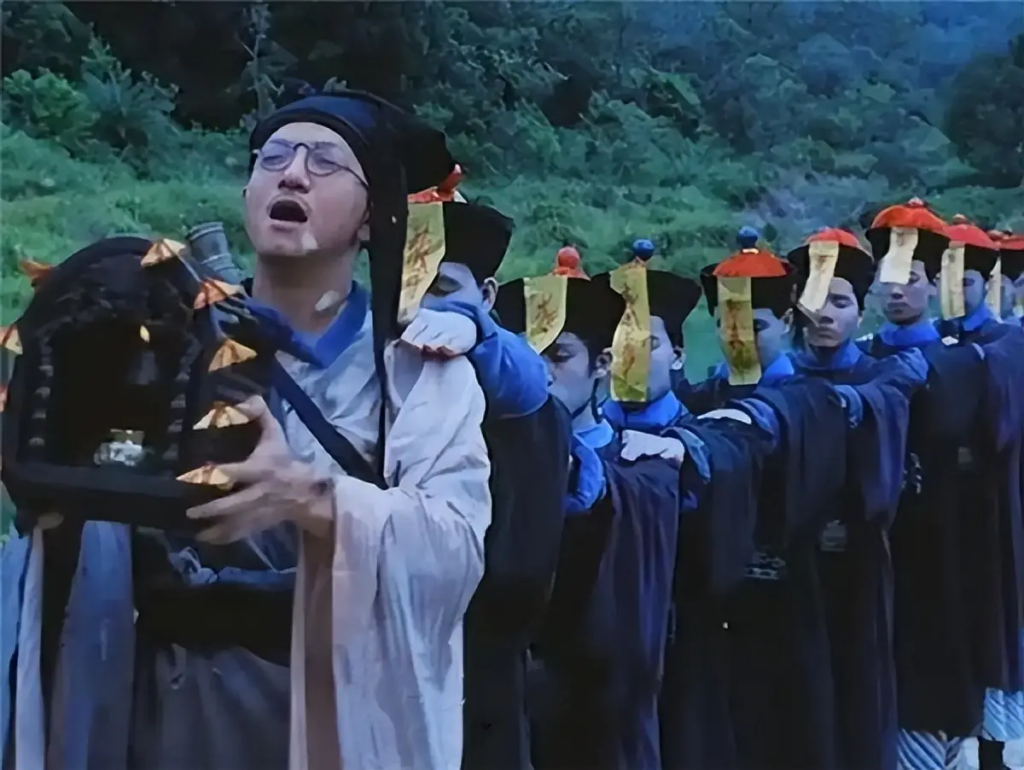
Introduction: China’s Answer to Dracula
Ask most Westerners to name a famous monster.
The answers are usually familiar:
- Dracula
- Vampires
- Werewolves
- Zombies
- Ghosts
Now ask a Chinese person.
Many will immediately think of something else entirely.
A pale corpse.
Dressed in ancient robes.
Arms stretched forward.
Moving through the darkness with stiff, unnatural hops.
Its eyes glow.
Its face is expressionless.
And it is searching for the living.
This creature is known as the Jiangshi.
Often translated as “Chinese vampire” or “Chinese hopping zombie,” the Jiangshi is one of the most famous supernatural beings in Chinese folklore.
Yet neither translation is completely accurate.
It is not exactly a vampire.
It is not exactly a zombie.
Instead, it belongs to a uniquely Chinese tradition shaped by centuries of folklore, Taoist beliefs, ghost stories, and fears surrounding death.
For generations, Jiangshi stories terrified children, inspired movies, and became an unforgettable part of Chinese popular culture.
What Exactly Is a Jiangshi?
The Chinese characters for Jiangshi literally mean:
“Stiff corpse.”
According to traditional folklore, a Jiangshi is a dead body that has somehow reanimated.
Unlike modern movie zombies, it does not run in large groups.
Unlike Dracula, it does not transform into a bat.
Instead, it is a solitary supernatural creature trapped between life and death.
The body becomes rigid after death.
Because its joints are stiff, the creature cannot walk normally.
This explains the characteristic hopping movement that made the Jiangshi famous.
The image is both strange and terrifying.
A corpse moving toward you in complete silence, hopping through the darkness.
Why Does the Jiangshi Hop?
This is one of the most common questions foreigners ask.
The answer comes from traditional beliefs about rigor mortis.
After death, the body becomes stiff.
Ancient storytellers imagined that if a corpse somehow returned to life, it would remain rigid.
Unable to bend its knees normally, it would be forced to move by hopping.
Over time, this became the defining characteristic of the Jiangshi.
In movies and illustrations, the creature often travels with both arms extended forward while bouncing across the landscape.
The image became so iconic that it is instantly recognizable throughout much of East Asia.
Is the Jiangshi a Vampire?
The answer is both yes and no.
Western media often calls it a “Chinese vampire.”
The comparison exists because Jiangshi are believed to absorb life energy from living people.
However, they do not typically drink blood like Dracula.
Instead, traditional stories describe them consuming:
- Life force
- Vital energy
- Spiritual essence
In Chinese philosophy, this energy is often associated with qi (pronounced “chee”), the invisible life force believed to animate living beings.
By draining qi, the Jiangshi sustains its unnatural existence.
This concept makes the creature fundamentally different from Western vampires.
How Does a Person Become a Jiangshi?
Chinese folklore offers many explanations.
Different regions developed different stories.
Common causes include:
Improper Burial
If funeral rites were not performed correctly, the dead might fail to rest peacefully.
Violent Death
People who died suddenly or tragically were considered especially vulnerable.
Powerful Emotions
Extreme anger, hatred, or obsession could supposedly prevent a spirit from moving on.
Supernatural Forces
Lightning strikes, dark magic, or spiritual disturbances sometimes appeared in legends.
In each case, the result was the same:
The deceased became trapped between worlds.
Neither fully alive nor fully dead.
The Fear of Unburied Bodies
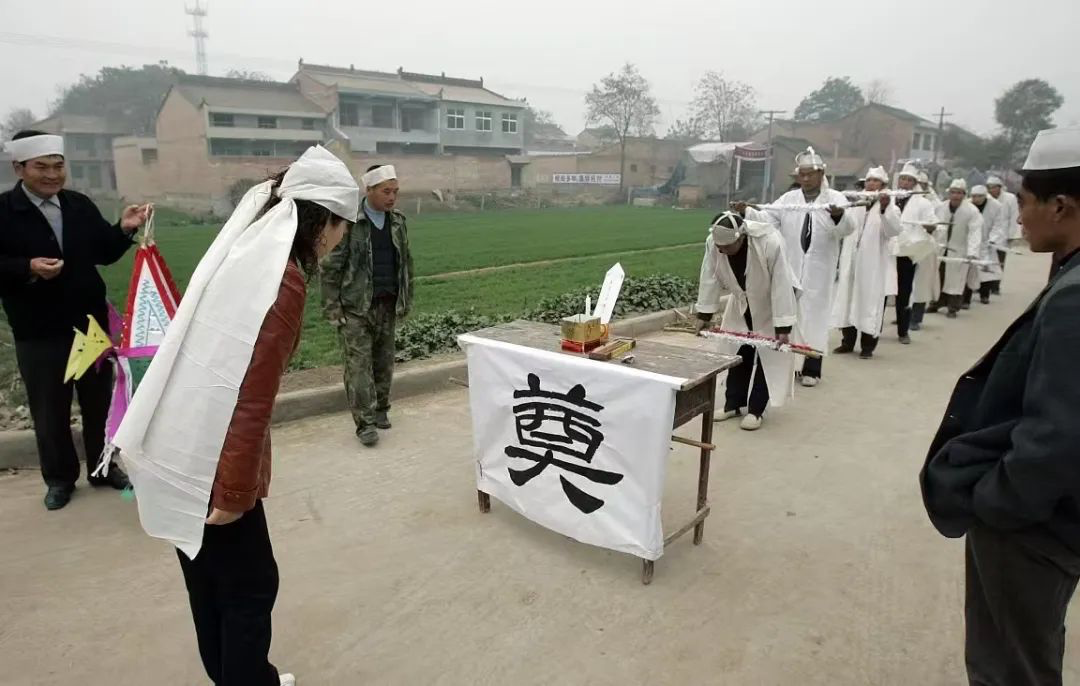
To understand the Jiangshi, one must understand the importance of burial in traditional Chinese culture.
For centuries, proper burial was considered essential.
Families invested enormous effort in funeral ceremonies.
Why?
Because people believed that a peaceful burial helped ensure a peaceful afterlife.
An improperly buried body could become restless.
A restless spirit could become dangerous.
The Jiangshi emerged partly from these fears.
It represented everything that could go wrong after death.
The Strange Story of Corpse Transportation
One theory about the origin of Jiangshi legends involves a real historical practice.
In ancient China, many people died far from home.
Families wanted their loved ones buried in ancestral lands.
Transporting bodies over long distances was difficult.
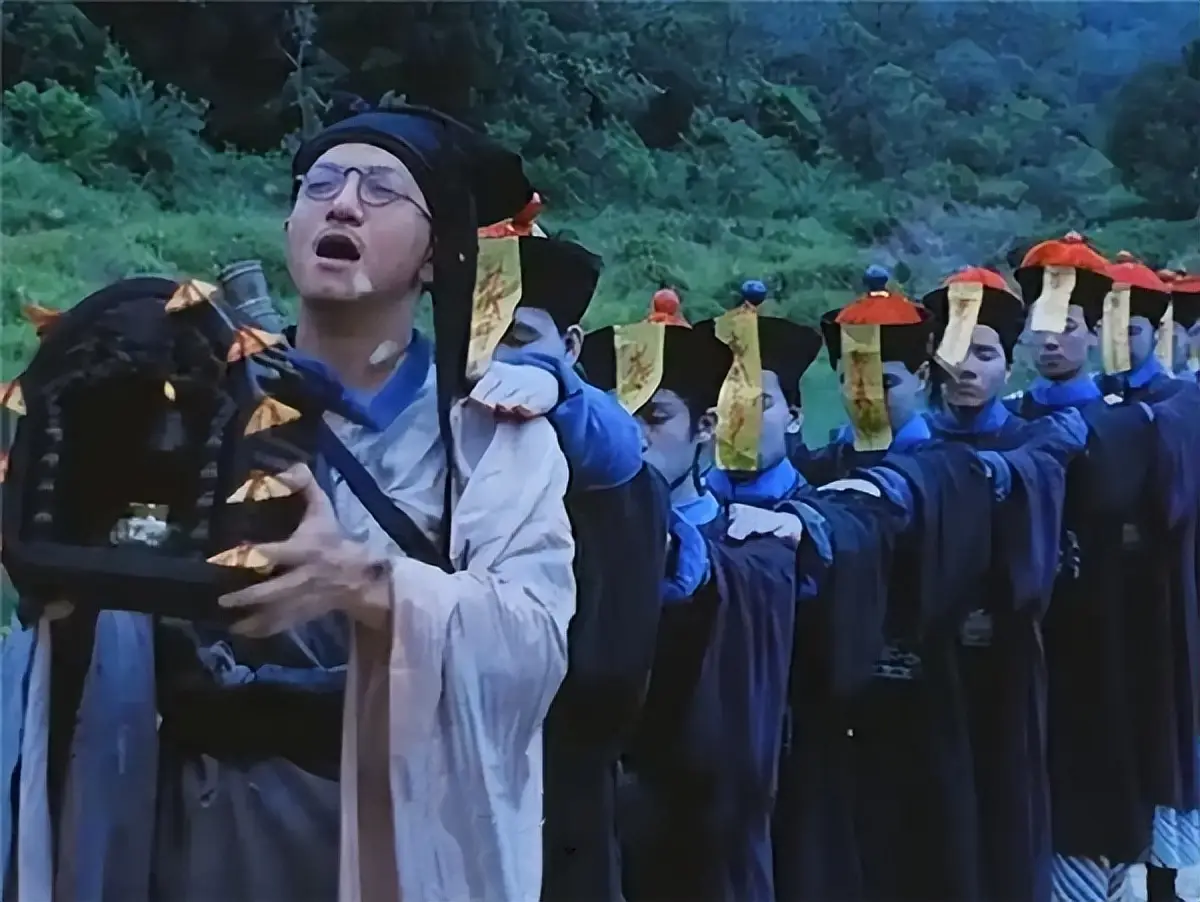
According to historical accounts, some specialists carried corpses suspended between bamboo poles.
At night, the bodies appeared to bounce up and down as they moved.
To distant observers, it may have looked as though the corpses were hopping on their own.
Some historians believe these sightings contributed to Jiangshi folklore.
Whether true or not, the story remains fascinating.
How to Defeat a Jiangshi
Like all legendary monsters, Jiangshi have weaknesses.
Traditional folklore provides numerous methods of protection.
Taoist Talismans
Perhaps the most famous defense involves yellow paper talismans covered in mysterious symbols.
A Taoist priest could place one on the creature’s forehead.
The talisman would immobilize it instantly.
This image became a staple of Chinese horror films.
Sticky Rice
Many stories claim that sticky rice possesses supernatural properties.
Throwing it at a Jiangshi could weaken or repel the creature.
No one knows exactly why this belief developed, but it remains a recurring theme in folklore.
Mirrors
Mirrors were often thought to reveal or repel evil spirits.
Some legends suggest that Jiangshi feared their own reflection.
Rooster Crowing
Just as vampires dislike sunlight, Jiangshi often fear dawn.
The crow of a rooster symbolizes the arrival of daylight and the retreat of darkness.
The Role of Taoist Priests
In many stories, Taoist priests serve as the heroes.
Armed with:
- Talismans
- Rituals
- Incantations
- Spiritual knowledge
They confront supernatural threats that ordinary people cannot handle.
These priests occupy a role similar to vampire hunters in Western fiction.
Their battles against Jiangshi became a popular subject in literature and storytelling.
Why Children Were Terrified of Jiangshi
For generations, Chinese parents used ghost stories to encourage good behavior.
Children were warned:
- Don’t stay out too late.
- Don’t wander alone at night.
- Respect the dead.
- Follow family traditions.
The Jiangshi became a powerful symbol of these warnings.
Unlike distant monsters living in castles, it was imagined as something that might appear just outside the village.
This sense of proximity made the creature especially frightening.
The Golden Age of Jiangshi Movies
Although the legend is ancient, the Jiangshi achieved international fame through cinema.
During the 1980s and 1990s, Hong Kong filmmakers created an entire genre of Jiangshi movies.
These films combined:
- Horror
- Comedy
- Martial arts
- Supernatural folklore
The most influential was the movie Mr. Vampire.
The film introduced countless viewers to the hopping undead.
Its success inspired numerous sequels and imitators.
Today, many people know the Jiangshi primarily through these movies.
Why the Jiangshi Looks So Strange
One detail often surprises foreign audiences.
Why is the Jiangshi dressed like an ancient government official?
The answer lies in history.
Many depictions feature clothing associated with the late Qing Dynasty.
This style became standardized through theater, art, and film.
Over time, the image became so iconic that it replaced earlier variations.
As a result, modern audiences instantly recognize the creature’s distinctive appearance.
The Difference Between Jiangshi and Zombies
At first glance, the two seem similar.
Both are reanimated corpses.
However, important differences exist.
Zombies
- Usually mindless
- Often appear in large groups
- Spread infection through bites
Jiangshi
- Usually solitary
- Driven by spiritual forces
- Connected to Taoist folklore
- Absorb life energy rather than spreading disease
The Jiangshi belongs to a completely different cultural tradition.
The Difference Between Jiangshi and Dracula
The comparison with Dracula is also imperfect.
Dracula
- Drinks blood
- Often charismatic
- Can transform shape
Jiangshi
- Absorbs qi
- Appears corpse-like
- Moves through hopping
- Is controlled by supernatural laws
Both creatures reflect fears surrounding death, but they emerge from very different worldviews.
What the Jiangshi Reveals About Chinese Culture
Like all folklore, the Jiangshi tells us more about people than monsters.
The legend reflects cultural concerns about:
Respecting the Dead
Improper burial can have consequences.
Family Responsibility
Ancestors must be cared for.
Spiritual Balance
The boundary between life and death should remain stable.
Social Order
Traditions exist for a reason.
These themes appear repeatedly throughout Chinese folklore.
Why the Jiangshi Remains Popular Today
Modern China is one of the world’s most technologically advanced societies.
Yet Jiangshi stories remain popular.
They appear in:
- Movies
- Television series
- Video games
- Novels
- Comics
Why?
Because great monsters never truly disappear.
They evolve.
The Jiangshi continues to fascinate because it is uniquely Chinese.
Unlike generic zombies, it carries centuries of cultural history.
It represents a blend of horror, mystery, and folklore found nowhere else.
Why Foreigners Love the Jiangshi
For international audiences, the Jiangshi offers something refreshing.
Most people already know vampires and zombies.
The Jiangshi feels different.
It introduces:
- New mythology
- New beliefs
- New storytelling traditions
It challenges assumptions about what monsters can be.
And perhaps most importantly, it demonstrates that every culture has its own way of confronting the mysteries of death.
Conclusion: More Than a Chinese Zombie
The Jiangshi is often described as China’s vampire or China’s zombie.
But neither label fully captures its uniqueness.
It is a creature born from ancient fears.
A monster shaped by funeral customs, spiritual beliefs, and centuries of storytelling.
Its hopping silhouette has haunted imaginations for generations.
Its legends continue to inspire filmmakers and writers.
And its enduring popularity reminds us of something important.
Every civilization creates monsters.
But those monsters often reveal the deepest truths about the people who imagined them.
The Jiangshi is no exception.
Behind the horror lies a fascinating window into Chinese history, culture, and beliefs about life, death, and everything in between.
For curious travelers and readers, that may be the most interesting mystery of all.