


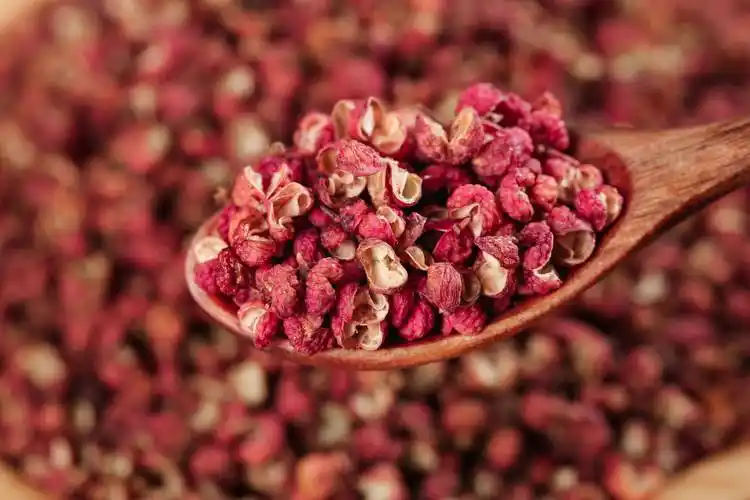
Introduction: The Spice That Confuses Almost Everyone
Imagine sitting in a restaurant in Chengdu.
You order a famous Sichuan dish.
The food arrives covered in red chili peppers.
You take a bite.
The heat is intense.
But then something stranger happens.
Your lips begin to buzz.
Your tongue tingles.
Your mouth feels slightly numb.
For a moment, you wonder if you’re having an allergic reaction.
You’re not.
You’ve just experienced one of the most unusual ingredients in the world:
Sichuan Peppercorn.
For centuries, this mysterious spice has fascinated Chinese cooks and bewildered foreign visitors.
It is neither a pepper nor particularly spicy.
Yet it creates a sensation unlike anything most people have ever experienced.
Today, Sichuan peppercorn is one of China’s most influential culinary exports and the secret behind the famous malaflavor that defines Sichuan cuisine.
But what exactly is it?
And why does it make your mouth feel electric?
First Things First: It Isn’t Actually Pepper
One of the biggest misconceptions begins with the name.
Despite being called a peppercorn, Sichuan pepper is not related to:
- Black pepper
- White pepper
- Chili peppers
In fact, it belongs to an entirely different plant family.
Sichuan pepper comes from plants in the genus:
Zanthoxylum
which is more closely related to citrus trees than to true pepper.
This explains why many people notice a subtle citrus aroma when smelling it.
A Spice Older Than Chili Peppers
Many foreigners assume chili peppers have always been central to Chinese cuisine.
Surprisingly, this is not true.
Chili peppers arrived in China only a few hundred years ago after the Columbian Exchange.
Sichuan peppercorn, however, had already been used in Chinese cooking for thousands of years.
Ancient records mention it long before chilies appeared in Asia.
This means the original spicy cuisine of Sichuan relied heavily on peppercorns rather than chili peppers.
What Does Sichuan Peppercorn Taste Like?
Describing the flavor is difficult.
People often compare it to:
- Lemon zest
- Pine needles
- Floral herbs
- Citrus peel
Yet the flavor itself is only part of the experience.
The real magic lies in the sensation it creates.
And that sensation is nearly impossible to forget.
The Famous Numbing Effect
The Chinese character associated with Sichuan peppercorn is:
麻 (Ma)
which roughly translates as:
“Numbing” or “tingling.”
This sensation is so distinctive that it forms half of the famous flavor profile known as:
Mala (麻辣)
where:
- Ma = Numbing
- La = Spicy
Together they create the signature taste of Sichuan cuisine.
Without Sichuan peppercorn, true mala cannot exist.
Why Does It Make Your Mouth Tingle?
For centuries, people had no idea.
Then scientists began investigating.
The answer lies in a natural compound called:
Hydroxy-alpha-sanshool
This chemical interacts with nerve endings in the mouth.
Rather than producing heat like chili peppers, it stimulates touch receptors.
The brain interprets these signals as:
- Tingling
- Vibrating
- Buzzing
- Numbness
Some scientists compare the sensation to tiny electrical currents.
In reality, your nerves are simply receiving unusual signals.
It Doesn’t Cause Numbness the Way You Think
Many people describe Sichuan peppercorn as numbing.
Technically, that’s not entirely accurate.
The spice does not shut down sensation.
Instead, it overloads sensory receptors.
The result feels similar to numbness even though your nerves remain active.
This distinction helps explain why the sensation feels so unique.
The Spice That Tricks Your Brain
Researchers often describe Sichuan peppercorn as a neurological illusion.
Your mouth isn’t actually vibrating.
Nothing is physically moving.
Yet your brain perceives a buzzing sensation.
Few culinary ingredients can manipulate sensory perception so dramatically.
This is one reason food scientists find Sichuan peppercorn fascinating.
Why It Works So Well With Chili Peppers
One of the greatest innovations in culinary history occurred when Chinese cooks combined:
- Chili peppers
- Sichuan peppercorn
At first glance, this seems unnecessary.
Why combine two powerful ingredients?
The answer lies in balance.
The numbing sensation helps soften the perception of extreme heat.
Meanwhile, the chili enhances the peppercorn’s tingling effect.
Together they create an experience greater than either ingredient alone.
The Birth of Mala
Eventually, this combination became known as:
Mala.
Today, mala is one of the most famous flavor profiles in Chinese cuisine.
It appears in:
- Hot pot
- Noodles
- Barbecued dishes
- Street food
- Snacks
What began as a regional culinary tradition has become a global phenomenon.
Why Sichuan People Love It So Much
To outsiders, the experience may seem overwhelming.
Yet many people in Sichuan grow up eating mala regularly.
For locals, the sensation is comforting rather than intimidating.
The flavor is associated with:
- Family meals
- Gatherings with friends
- Street food culture
- Regional identity
In many ways, Sichuan peppercorn is more than an ingredient.
It is a cultural symbol.
The Spice That Was Once Banned in America
One of the strangest chapters in the history of Sichuan peppercorn occurred in the United States.
For decades, imports were restricted because of concerns about plant diseases that could affect citrus crops.
As a result, many Americans had never encountered authentic Sichuan peppercorn.
When restrictions eased, chefs quickly embraced it.
Today it has become a favorite ingredient among adventurous cooks.
Why Top Chefs Are Obsessed With It
Many renowned chefs consider Sichuan peppercorn one of the most exciting spices in the world.
Why?
Because it creates experiences rather than simply flavors.
Most seasonings alter taste.
Sichuan peppercorn alters perception.
That distinction opens endless culinary possibilities.
Modern chefs now use it in:
- Cocktails
- Chocolate
- Ice cream
- Fine dining dishes
Its influence extends far beyond traditional Chinese cuisine.
The Different Types of Sichuan Peppercorn
Not all Sichuan peppercorns are identical.
The two most common varieties are:
Red Sichuan Peppercorn
The classic version.
Known for:
- Strong aroma
- Intense numbing sensation
Green Sichuan Peppercorn
Often described as:
- Brighter
- Fresher
- More citrusy
Many chefs use both depending on the dish.
The Heart of Sichuan Cuisine
No ingredient is more closely associated with:
Sichuan
than Sichuan peppercorn.
It appears in countless iconic dishes, including:
- Mapo Tofu
- Kung Pao Chicken
- Dan Dan Noodles
- Sichuan Hot Pot
Without it, Sichuan cuisine would lose much of its identity.
Why Foreign Visitors Never Forget It
Most travelers remember their first experience with Sichuan peppercorn.
The reaction is often immediate.
Surprise.
Confusion.
Laughter.
Then curiosity.
People instinctively try to understand what is happening inside their mouths.
Very few foods create such a memorable first impression.
More Than a Spice
Sichuan peppercorn represents something larger.
It demonstrates how different cultures define flavor differently.
In many Western cuisines, taste revolves around:
- Sweet
- Salty
- Sour
- Bitter
Chinese culinary traditions often place equal importance on texture and sensation.
Sichuan peppercorn perfectly illustrates this philosophy.
Why It Became a Global Food Trend
As interest in authentic regional Chinese cuisine has grown, so has fascination with Sichuan peppercorn.
Food enthusiasts increasingly seek experiences that are:
- New
- Unexpected
- Memorable
Few ingredients satisfy those criteria better.
Today, what was once a regional Chinese seasoning has become a global culinary sensation.
Conclusion: The World’s Most Mysterious Spice
Sichuan peppercorn is one of the rare ingredients that can genuinely surprise experienced food lovers.
It is not particularly spicy.
It is not especially hot.
Yet it produces a sensation unlike almost anything else on Earth.
For thousands of years, Chinese cooks have used it to create unforgettable dishes.
Modern science has explained how it works, but that explanation has done little to diminish its mystery.
Because the real magic of Sichuan peppercorn is not in the chemistry.
It’s in the experience.
One bite is enough to understand why generations of Sichuan people fell in love with it.
And why the rest of the world is finally catching up.