


When people think about Muslims in China, they often think first of the Uyghurs in Xinjiang.
However, China’s largest Muslim community is actually the Hui people.
The Hui are found throughout the country, from Beijing and Xi’an to Ningxia and Yunnan.
Unlike some other Muslim groups in China, many Hui people speak Mandarin as their first language and share many cultural traditions with other Han Chinese communities.
So who exactly are the Hui Muslims?
How did Islam arrive in China?
And how can a community be both deeply Chinese and deeply Muslim at the same time?
The answers reveal one of the most fascinating cultural stories in Chinese history.
Who Are the Hui People?
The Hui are one of China’s officially recognized ethnic groups.
Today, there are more than 11 million Hui people living across China.
Unlike many ethnic minorities who are concentrated in a single region, Hui communities can be found almost everywhere in the country.
Large populations live in:
- Ningxia
- Gansu
- Qinghai
- Henan
- Yunnan
- Beijing
- Xi’an
This widespread distribution makes the Hui one of China’s most visible minority communities.
How Did Islam Reach China?
Islam arrived in China more than 1,300 years ago.
During the Tang Dynasty (618–907), merchants from:
- Arabia
- Persia
- Central Asia
traveled along both the Silk Road and maritime trade routes.
Many settled permanently in Chinese cities.
Over generations, these traders married local women, adopted Chinese customs, and formed communities that blended Islamic faith with Chinese culture.
The descendants of these communities eventually became known as the Hui.
Are the Hui and Uyghurs the Same?
No.
This is one of the most common misunderstandings.
Although both groups are predominantly Muslim, they are very different.
The Hui:
- Primarily speak Mandarin Chinese
- Share many cultural traditions with Han Chinese
- Are dispersed throughout China
- Descend largely from mixed Chinese and Muslim ancestors
The Uyghurs:
- Speak a Turkic language
- Have cultural roots in Central Asia
- Are concentrated mainly in Xinjiang
- Possess distinct linguistic and cultural traditions
Religion connects the two communities, but their histories and identities are quite different.
What Makes the Hui Unique?
The Hui occupy a unique position in Chinese society.
In many ways, a Hui community may appear similar to neighboring Han communities.
People often:
- Speak the same language
- Wear similar clothing
- Follow similar social customs
The most obvious difference is usually religion.
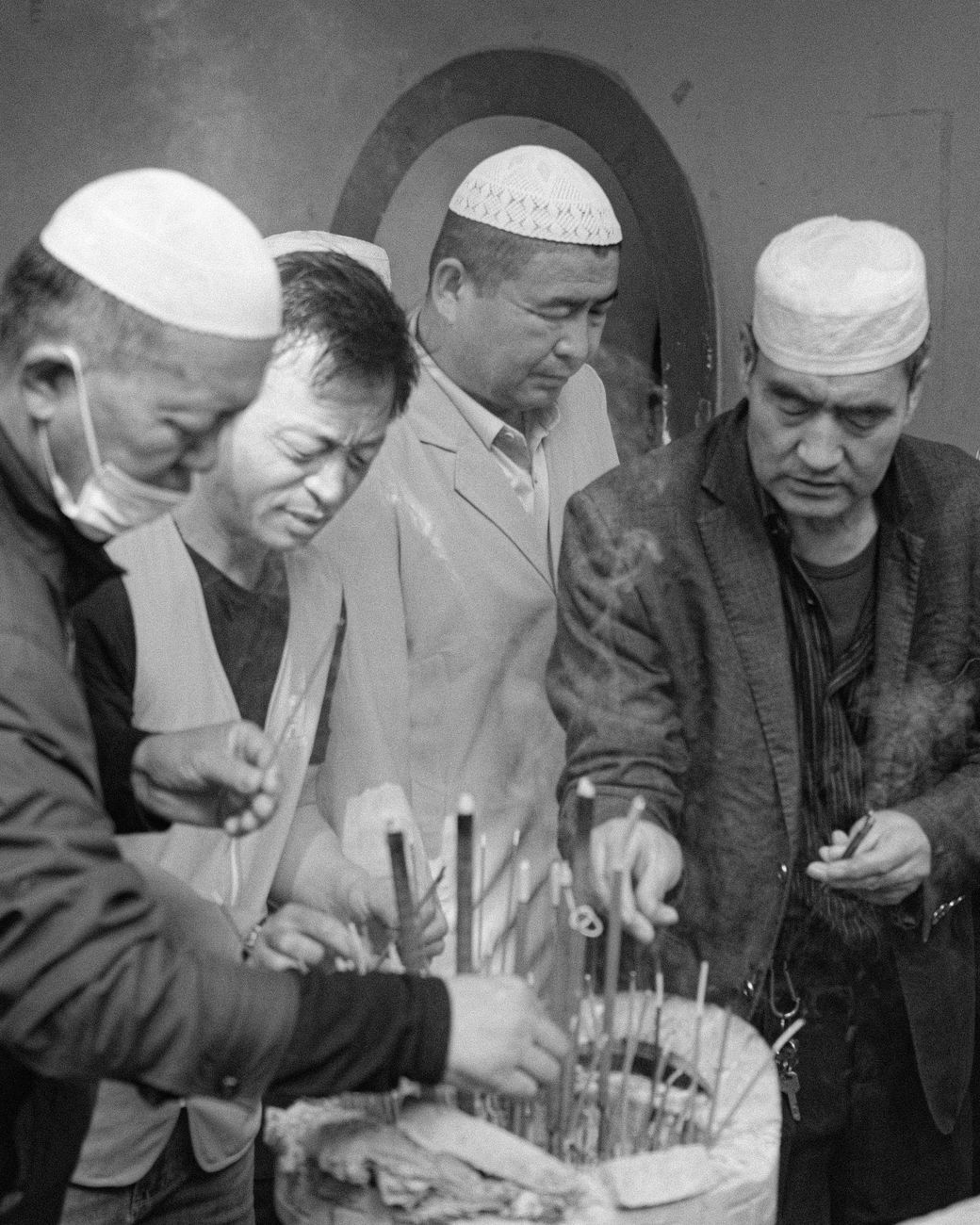
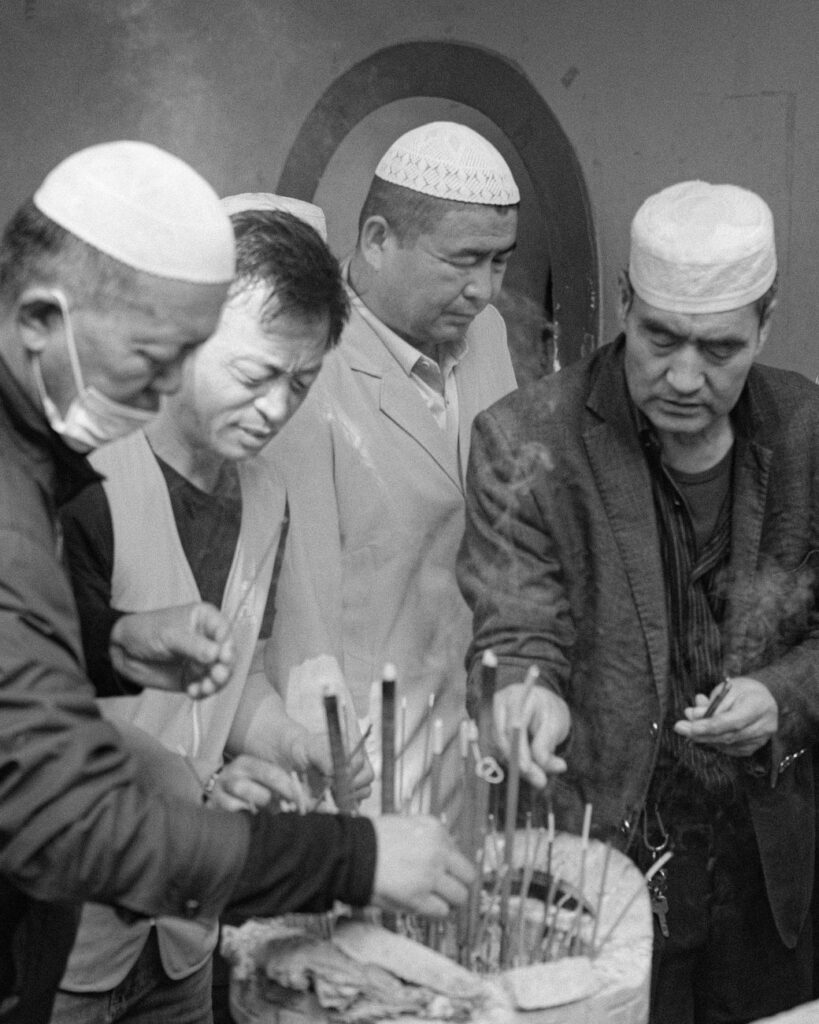
Hui Muslims observe Islamic practices such as:
- Daily prayers
- Ramadan fasting
- Halal dietary rules
- Mosque attendance
As a result, many scholars describe the Hui as culturally Chinese and religiously Muslim.
China’s Famous Halal Food Culture
For many travelers, the easiest way to encounter Hui culture is through food.
Across China, Hui-owned restaurants are famous for their halal cuisine.
Popular dishes include:
- Lanzhou beef noodles
- Lamb skewers
- Hand-pulled noodles
- Beef flatbread sandwiches
- Various mutton dishes
In many cities, signs displaying the Chinese character:
清真 (Qingzhen)
indicate that food is prepared according to Islamic halal standards.
Even non-Muslim Chinese customers frequently visit Hui restaurants because of their reputation for flavorful food.
The Great Mosques of China
The Hui also built some of China’s most remarkable mosques.
Unlike many mosques in the Middle East, some traditional Chinese mosques resemble classical Chinese architecture.
Features may include:
- Courtyards
- Pagoda-style roofs
- Traditional Chinese gates
- Chinese calligraphy
One famous example is the historic mosque district in Xi’an, where Islamic and Chinese architectural traditions blend together in unique ways.
These buildings demonstrate how Islam adapted to local cultural environments over centuries.
Hui Communities Along the Silk Road
Historically, many Hui communities prospered because of trade.
They played important roles along the Silk Road by connecting China with:
- Central Asia
- Persia
- The Middle East
As merchants, translators, and traders, they helped facilitate cultural and economic exchanges between civilizations.
Their history reflects China’s long-standing connections with the wider world.
Modern Hui Identity
Today, Hui communities continue to play important roles in Chinese society.
Many Hui people work in:
- Business
- Education
- Government
- Trade
- Religious institutions
Some live in traditional Muslim neighborhoods, while others live in mixed urban communities.
Like many ethnic groups, Hui identity can vary significantly from person to person.
Some are deeply religious, while others primarily view their Hui heritage as a cultural identity.
Why Foreigners Find the Hui Interesting
Many visitors are surprised to discover that Islam has existed in China for more than a millennium.
The Hui challenge common assumptions that Chinese culture and Islamic culture are completely separate.
Instead, they demonstrate how different civilizations can interact, adapt, and coexist over long periods of time.
Their history provides a unique example of cultural integration while maintaining religious identity.
Conclusion
The Hui Muslims are China’s largest Muslim community and one of its most fascinating ethnic groups.
Descended from centuries of interaction between Chinese society and the Islamic world, they developed a unique identity that combines Chinese language and culture with Islamic faith and traditions.
From the halal restaurants of modern cities to the ancient mosques of the Silk Road, the Hui offer a remarkable window into the diversity and complexity of Chinese civilization.
Understanding the Hui helps us better understand not only China’s ethnic diversity, but also its long history as a crossroads of cultures and religions.