


Introduction: The Breakfast That Lasts for Hours
Imagine inviting your family to breakfast.
You expect a quick meal.
Perhaps coffee and toast.
Maybe eggs and bacon.
Now imagine the breakfast lasts three hours.
The table fills with dozens of dishes.
Nobody seems in a hurry.
People drink tea, chat, laugh, and slowly order more food.
This is not a special occasion.
This is a normal weekend in Hong Kong.
For many visitors, one of the biggest surprises about Hong Kong is that breakfast isn’t always just breakfast.
Instead, it can become a social event known as:
Yum Cha (饮茶)
which literally means:
“Drink Tea.”
Yet tea is only part of the experience.
The real stars are the small dishes known as:
Dim Sum.
Together, Yum Cha and Dim Sum form one of the world’s most beloved food traditions.
What Exactly Is Dim Sum?
The term “Dim Sum” (点心) literally means:
“Touch the Heart.”
Traditionally, these were small snacks served alongside tea.
Over time, the selection expanded dramatically.
Today Dim Sum includes hundreds of dishes, ranging from savory dumplings to sweet desserts.
Unlike a conventional meal where each person orders a main course, Dim Sum is designed for sharing.
Everyone at the table samples a little of everything.
The result is a meal that feels more like a celebration than a breakfast.
What Is Yum Cha?
Many foreigners assume Dim Sum and Yum Cha mean the same thing.
They don’t.
Dim Sum
Refers to the food.
Yum Cha
Refers to the activity of gathering to drink tea and eat Dim Sum.
In other words:
Dim Sum is what you eat.
Yum Cha is what you do.
This distinction helps explain why the experience is so important culturally.
The social interaction matters just as much as the food.
The Ancient Origins of Yum Cha
The roots of Yum Cha stretch back centuries.
Southern China was historically crossed by important trade routes.
Travelers needed places to rest.
Tea houses emerged along these routes.
Visitors could stop for:
- Tea
- Snacks
- Conversation
Over time, these tea houses became gathering places for local communities.
The small snacks eventually evolved into what we now know as Dim Sum.
Why Cantonese Culture Perfected It
Although variations exist elsewhere, Dim Sum became most closely associated with:
Guangdong Province
and later:
Hong Kong
Cantonese cuisine places enormous emphasis on:
- Freshness
- Texture
- Balance
- Presentation
Dim Sum perfectly reflects these values.
Each dish may be small, but great care goes into its preparation.
Why Breakfast Became a Social Event
In many Western countries, breakfast is rushed.
People eat quickly before work.
Traditional Yum Cha follows a different philosophy.
The meal is designed to encourage:
- Family gatherings
- Friendships
- Business discussions
- Community connections
For older generations especially, weekend Yum Cha remains an important ritual.
Some families have maintained the same tradition for decades.
The Rolling Cart Tradition
One of the most iconic aspects of traditional Dim Sum restaurants involves rolling carts.
Servers push carts filled with steaming dishes around the dining room.
Customers simply point at what they want.
The experience feels lively and spontaneous.
You never know what delicious dish might appear next.
Although many modern restaurants now use menus, the cart tradition remains beloved.
The King of Dim Sum: Har Gow
If Dim Sum had a king, it might be:
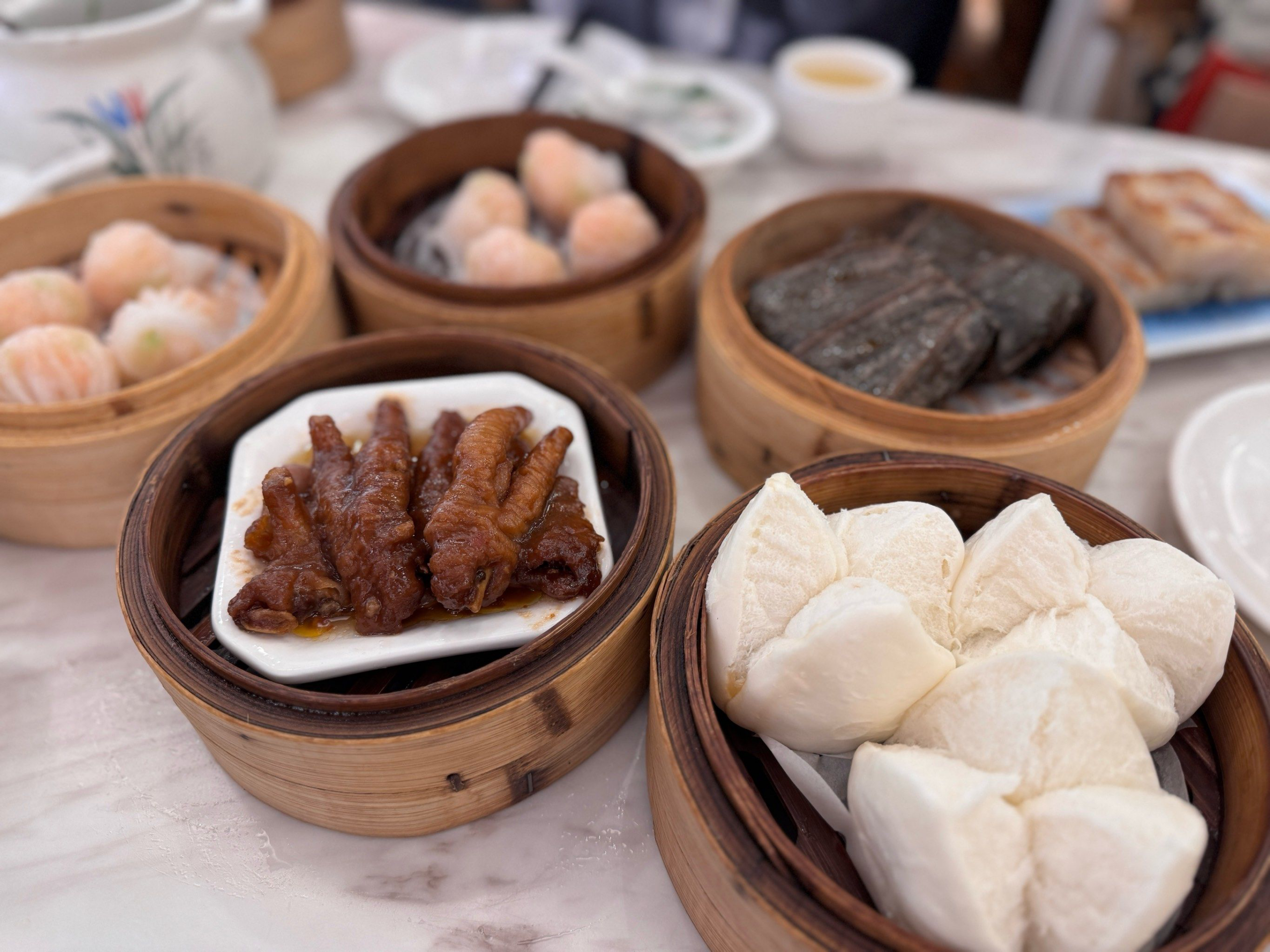
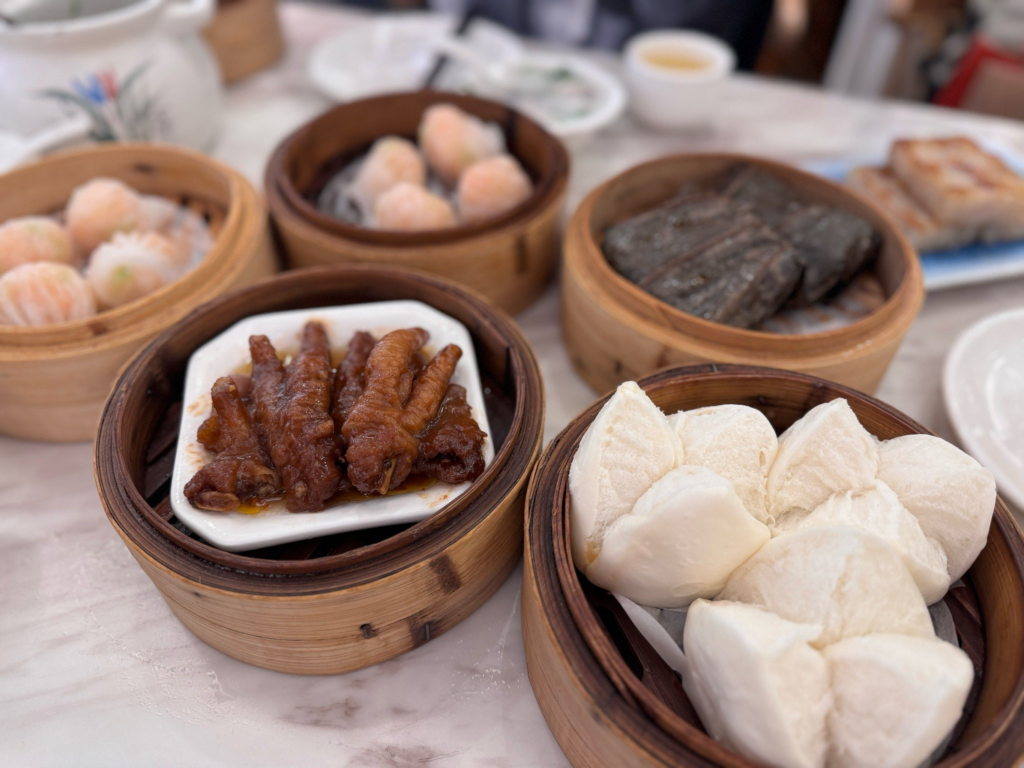
Har Gow (虾饺)
or shrimp dumplings.
These delicate dumplings feature:
- Thin translucent wrappers
- Fresh shrimp filling
- Perfectly folded pleats
Many chefs consider Har Gow one of the most difficult Dim Sum dishes to master.
For experienced diners, the quality of the shrimp dumplings often reveals the quality of the restaurant.
The Queen of Dim Sum: Siu Mai
Alongside Har Gow stands another classic:
Siu Mai (烧卖).
These open-topped dumplings usually contain:
- Pork
- Shrimp
- Mushrooms
Unlike Har Gow, Siu Mai offers a richer and more robust flavor.
Together, these two dishes form the foundation of countless Dim Sum meals.
The Dish That Surprises Foreigners: Chicken Feet
Few Dim Sum dishes generate more curiosity than:
Chicken Feet (凤爪).
Many tourists hesitate when they first see them.
The appearance can be intimidating.
Yet locals adore them.
The feet are typically:
- Deep-fried
- Braised
- Steamed
The result is a tender, flavorful dish with a unique texture.
For adventurous visitors, trying chicken feet often becomes a memorable experience.
Why Everyone Loves Char Siu Bao
One of the most approachable Dim Sum dishes is:
Char Siu Bao (叉烧包).
These fluffy steamed buns contain sweet barbecued pork.
They are:
- Soft
- Slightly sweet
- Richly savory
Many first-time visitors instantly fall in love with them.
For some tourists, Char Siu Bao becomes their gateway into the world of Dim Sum.
The Art of Drinking Tea
Tea is not an afterthought.
It is central to the entire experience.
Popular choices include:
- Jasmine tea
- Pu-erh tea
- Chrysanthemum tea
- Oolong tea
The tea helps cleanse the palate between dishes.
This allows diners to enjoy a wide variety of flavors without becoming overwhelmed.
The Famous Finger-Tapping Tradition
One of the most charming Yum Cha customs surprises many visitors.
When someone pours tea for you, it is polite to express thanks.
Instead of speaking, many Cantonese diners lightly tap two fingers on the table.
The gesture supposedly originated from a story involving an emperor traveling in disguise.
Whether true or not, the custom remains widespread today.
Why Dim Sum Is So Addictive
Part of the appeal comes from variety.
A typical meal may include:
- Dumplings
- Buns
- Rolls
- Rice dishes
- Desserts
Every few minutes, a new flavor arrives.
The constant variety keeps the experience exciting.
Unlike a single large meal, Dim Sum feels like a culinary journey.
The Rise of Dim Sum Around the World
As Cantonese communities migrated overseas, they brought Dim Sum with them.
Today you can find Dim Sum restaurants in:
- London
- New York
- Sydney
- Vancouver
- Singapore
Yet many food lovers still consider Hong Kong the ultimate destination for the experience.
Why Foreign Tourists Are Fascinated
Visitors often expect Chinese food to revolve around:
- Fried rice
- Noodles
- Stir-fries
Dim Sum reveals an entirely different side of Chinese cuisine.
The craftsmanship, variety, and social atmosphere surprise many travelers.
For some, Yum Cha becomes the highlight of their visit.
More Than Food
Dim Sum is not merely a meal.
It is a cultural institution.
It represents:
- Family
- Community
- Hospitality
- Tradition
Many Hong Kong residents associate Dim Sum with childhood memories and family gatherings.
The emotional connection runs deep.
How Modern Hong Kong Is Changing the Tradition
Busy lifestyles have changed eating habits.
Younger generations may not spend entire mornings in tea houses as previous generations did.
Yet Dim Sum remains incredibly popular.
Many families still gather regularly for Yum Cha.
The tradition continues to adapt without disappearing.
What Dim Sum Reveals About Hong Kong
The popularity of Dim Sum reflects important aspects of Hong Kong culture:
- Food is social.
- Meals are meant to be shared.
- Time spent with family matters.
These values remain visible every weekend in restaurants across the city.
Conclusion: A Meal That Touches the Heart
The name Dim Sum means “touch the heart.”
After experiencing a traditional Yum Cha meal, it is easy to understand why.
The food is delicious.
The tea is comforting.
The atmosphere is lively.
But the true magic lies in the people gathered around the table.
For generations, Dim Sum has brought families and friends together.
And in a city famous for its speed and skyscrapers, that may be its greatest achievement.
So the next time you visit Hong Kong, don’t just eat Dim Sum.
Take your time.
Drink the tea.
Share the dishes.
And experience one of the most beloved traditions in Chinese culture.