



Walk into a traditional Chinese restaurant, wedding banquet, family gathering, or business dinner, and you will notice something immediately:
Most people are sitting around a round table.
To many foreigners, this may seem like a simple design choice. In reality, the round table reflects some of the deepest values in Chinese culture.
For centuries, Chinese families have viewed the dining table as more than a place to eat. It is a place where relationships are built, family bonds are strengthened, and social harmony is maintained.
Understanding why Chinese people prefer round tables offers valuable insight into how Chinese society works.
Why Are Chinese Tables Round?
The most obvious reason is practicality.
A round table allows everyone to:
- See each other easily
- Reach shared dishes
- Participate in conversations
Unlike rectangular tables, there is no obvious “end” of the table.
Everyone is physically closer to one another.
However, the deeper reason is cultural rather than practical.
The circle has long symbolized:
- Unity
- Harmony
- Equality
- Family reunion
These values are central to traditional Chinese society.
The Symbolism of the Circle in Chinese Culture
Throughout Chinese history, circular shapes have carried positive meanings.
Examples include:
- Full moons
- Ancient coins
- Family reunions
- Festival celebrations
A common Chinese saying links the full moon with family togetherness.
The idea is that a complete circle represents completeness and harmony.
The round dining table became a natural extension of this symbolism.
When family members sit together around a circular table, it represents a complete and united family.
Family Reunions and the Round Table
Few occasions demonstrate this more clearly than the Lunar New Year.
Every year, millions of people travel long distances to return home for reunion dinners.
The meal often takes place around a large round table filled with dishes.
The symbolism is powerful:
- Everyone gathers together.
- No one is excluded.
- The family forms a complete circle.
For many Chinese people, this meal is the most important family gathering of the year.
Why Chinese Meals Are Shared
Another reason round tables are popular is the communal nature of Chinese dining.
In many Western countries, each person typically orders an individual dish.
Traditional Chinese meals work differently.
Most dishes are placed in the center of the table and shared by everyone.
Guests help themselves from common plates.
This style of dining encourages:
- Conversation
- Interaction
- Cooperation
The meal becomes a collective experience rather than an individual one.
The round table is perfectly suited for this arrangement.
The Invention of the Lazy Susan
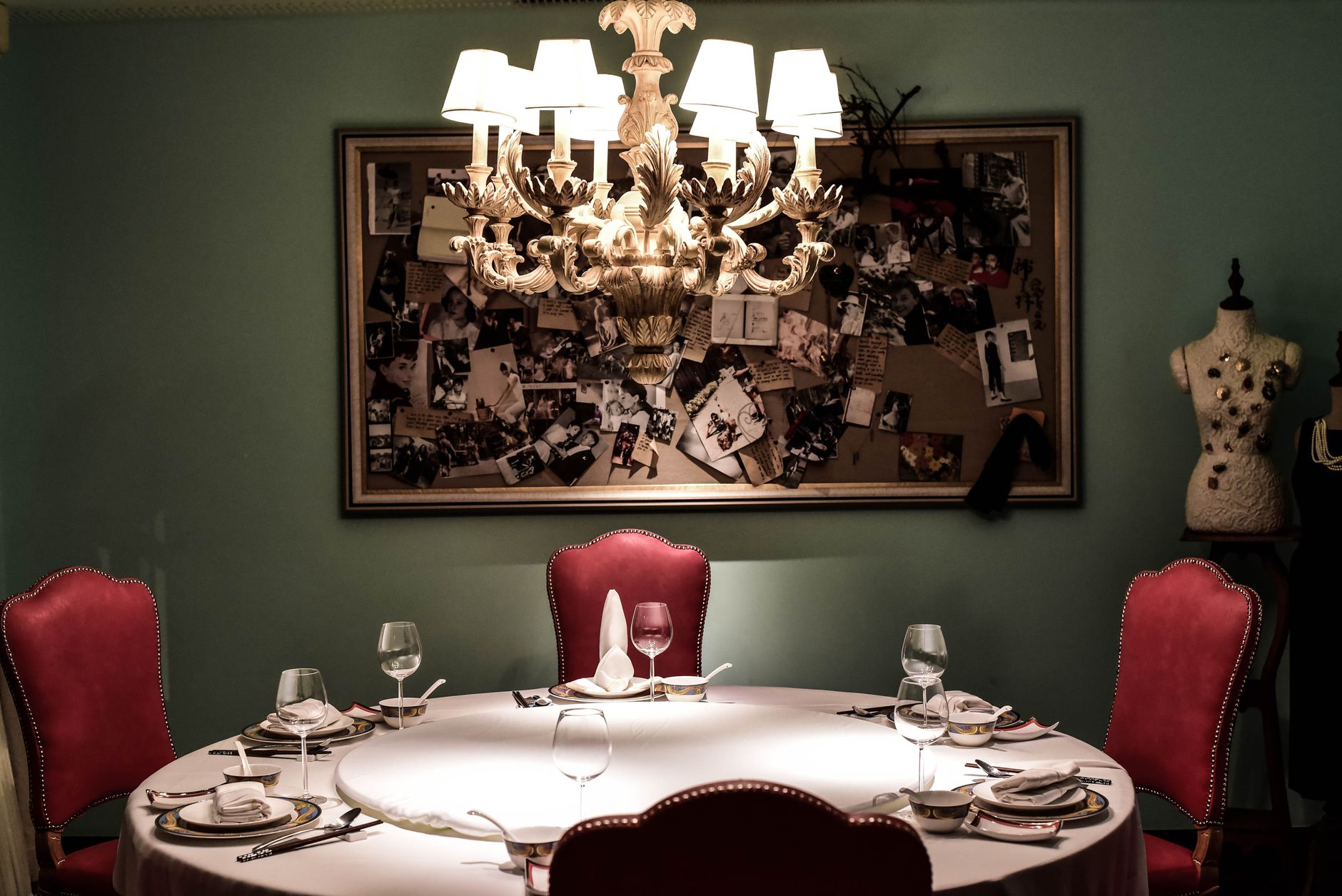
Many Chinese banquet tables feature a rotating tray in the center, often called a Lazy Susan.
The rotating platform allows guests to share dishes more easily.
It also reinforces the idea that food belongs to the entire group rather than to one individual.
Whether dining with family, friends, or business partners, everyone has access to the same dishes.
Round Tables and Chinese Banquets
Large banquets almost always use round tables.
This includes:
- Weddings
- Birthday celebrations
- Business dinners
- Holiday gatherings
A banquet may feature tables seating:
- 8 guests
- 10 guests
- 12 guests
These numbers are often chosen because they are considered auspicious.
The round table helps create a sense of inclusion and community among guests.
Does the Round Table Mean Everyone Is Equal?
Not entirely.
Although round tables symbolize unity, traditional Chinese dining also places importance on hierarchy and respect.
At formal meals:
- The host has a designated seat.
- The guest of honor occupies the most prestigious position.
- Elders are seated in places of respect.
The arrangement balances two important Chinese values:
- Harmony
- Respect for hierarchy
Thus, the round table represents togetherness while still acknowledging social relationships.
Business Dinners and Relationship Building
The round table plays an important role in Chinese business culture.
Business dinners often serve as opportunities to:
- Build trust
- Strengthen relationships
- Discuss future cooperation
In Chinese culture, relationships often develop before contracts are signed.
Sharing food around a round table creates a more personal environment than a formal meeting room.
This is one reason business banquets remain common throughout China today.
Why Foreign Visitors Notice the Difference
Visitors from Western countries are often surprised by several aspects of Chinese dining:
Shared Dishes
Everyone eats from communal plates.
Continuous Serving
New dishes arrive throughout the meal.
Large Groups
Meals frequently involve extended family members or colleagues.
Round Tables
The seating arrangement feels more collective and interactive.
These differences reflect broader cultural values about community and relationships.
Modern Dining Habits
Modern China has become increasingly globalized.
Many restaurants now offer:
- Individual portions
- Western-style seating
- Fast-casual dining formats
Yet round tables remain highly popular for important occasions.
Even in luxury hotels and modern restaurants, banquet halls are still filled with large circular tables.
The tradition continues because it serves both practical and cultural purposes.
What the Round Table Reveals About Chinese Society
The popularity of round tables reflects several key ideas in Chinese culture:
Family Comes First
Meals are often family-centered experiences.
Relationships Matter
Dining is an important social activity.
Harmony Is Valued
The circular arrangement promotes inclusion and interaction.
Sharing Creates Connection
Food is seen as something to be enjoyed collectively.
These principles have influenced Chinese dining culture for centuries.
Final Thoughts
At first glance, a round table may seem like a simple piece of furniture.
In China, however, it represents much more.
It symbolizes family unity, social harmony, hospitality, and the importance of shared experiences.
Whether at a wedding banquet, a Lunar New Year reunion dinner, or a business gathering, the round table continues to bring people together in a way that reflects some of the deepest values in Chinese culture.
To understand Chinese dining culture, it is worth remembering one simple idea:
In China, the meal is important—but the people around the table matter even more.