



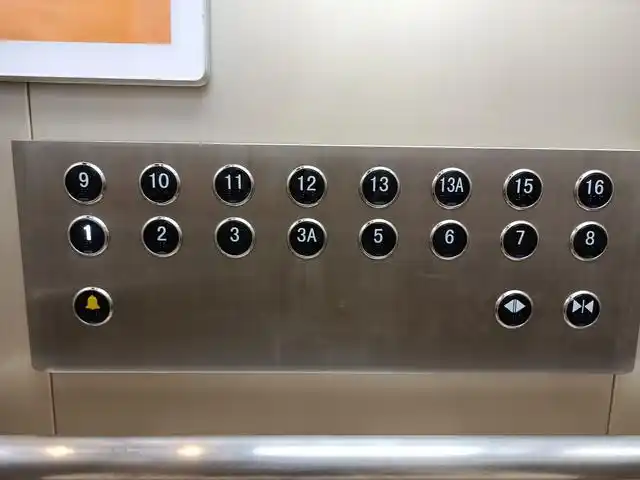
Visitors to China are often surprised when they enter an elevator and notice something unusual. Instead of seeing floors labeled 1, 2, 3, 4, 5, they may find that the number 4 is missing entirely.
In some buildings, the elevator jumps directly from the 3rd floor to the 5th floor. In others, not only is the 4th floor missing, but also the 14th, 24th, and even 44th floors.
So why do many Chinese apartment buildings skip the number 4?
The answer lies in a combination of language, culture, and centuries-old beliefs.
Why Is the Number 4 Considered Unlucky?
The primary reason comes from pronunciation.
In Mandarin Chinese, the number four (四, sì) sounds very similar to the word for death (死, sǐ).
Although the tones are different, the similarity is close enough that many people associate the number with bad luck.
This phenomenon is known as a linguistic superstition, where words that sound alike are believed to share symbolic meanings.
As a result, many Chinese people prefer to avoid the number 4 whenever possible.
The Influence of Chinese Culture
Traditional Chinese culture places significant importance on symbolism.
For centuries, people have believed that certain numbers can influence fortune, prosperity, and success. Just as some cultures avoid the number 13, Chinese culture has long viewed the number 4 as unfortunate.
Because homes are among the most important purchases in a person’s life, many buyers prefer not to live on a floor associated with bad luck.
Property developers understand this preference and often adjust floor numbering to make apartments more attractive to potential buyers.
Which Floors Are Commonly Skipped?
The most common omission is the 4th floor.
However, many buildings also avoid numbers containing 4, including:
- 14th floor
- 24th floor
- 34th floor
- 44th floor
In luxury residential projects, entire sequences of floor numbers may be renamed or omitted.
For example, a building might display:
- 1
- 2
- 3
- 5
- 6
- 7
even though the physical fourth floor still exists.
The floor is there—it simply has a different label.
Does This Happen Everywhere in China?
Not every building skips the number 4.
In modern office buildings and some government facilities, floor numbering may follow a standard sequence without omissions.
However, in residential real estate, hotels, and commercial developments, avoiding the number 4 remains extremely common.
The practice is especially noticeable in cities where property competition is high and developers want to appeal to traditional beliefs.
The Opposite: China’s Favorite Number
While the number 4 is often avoided, the number 8 is widely celebrated.
In Mandarin, eight (八, bā) sounds similar to a word associated with wealth and prosperity (发, fā).
Because of this connection, apartments, phone numbers, and license plates containing multiple eights are often considered highly desirable.
Some people are even willing to pay extra for addresses or phone numbers that include the number 8.
This contrast highlights how strongly language can influence cultural beliefs.
Is It Really Superstition?
Opinions vary.
Some people genuinely believe that certain numbers affect luck and fortune. Others simply follow tradition because it has become a social norm.
Even many younger Chinese who do not personally believe in superstition may still prefer to avoid the number 4 when purchasing a home.
After all, if future buyers also dislike the number, avoiding it can make a property easier to sell.
In this sense, cultural beliefs can have real economic consequences.
Similar Practices Around the World
China is not unique in avoiding certain numbers.
In many Western countries, the number 13 is considered unlucky. Some hotels and office buildings skip the 13th floor entirely.
Similarly:
- Italy has traditions surrounding the number 17.
- Japan and Korea also associate the number 4 with death because of similar pronunciations.
- Some airlines omit certain seat numbers for cultural reasons.
These examples show that number-related beliefs exist in many societies, even if the specific numbers differ.
What Should Travelers Know?
Foreign visitors do not need to worry about accidentally mentioning the number 4.
Most Chinese people understand that cultural beliefs vary across countries.
However, recognizing the significance of numbers can help travelers better understand daily life in China, especially when looking at apartment listings, hotel elevators, or real estate advertisements.
What may seem like a missing floor is actually a fascinating reflection of language and tradition.
Final Thoughts
The reason many Chinese apartment buildings skip the 4th floor is rooted in the close pronunciation between the words for “four” and “death.” Over time, this linguistic similarity evolved into one of China’s most well-known cultural beliefs.
Whether viewed as superstition, tradition, or simple market preference, the influence of the number 4 remains visible throughout modern China.
The next time you step into an elevator and notice that the 4th floor is missing, you’ll know that the floor hasn’t disappeared—it has simply been renamed to avoid one of China’s most famous unlucky numbers.